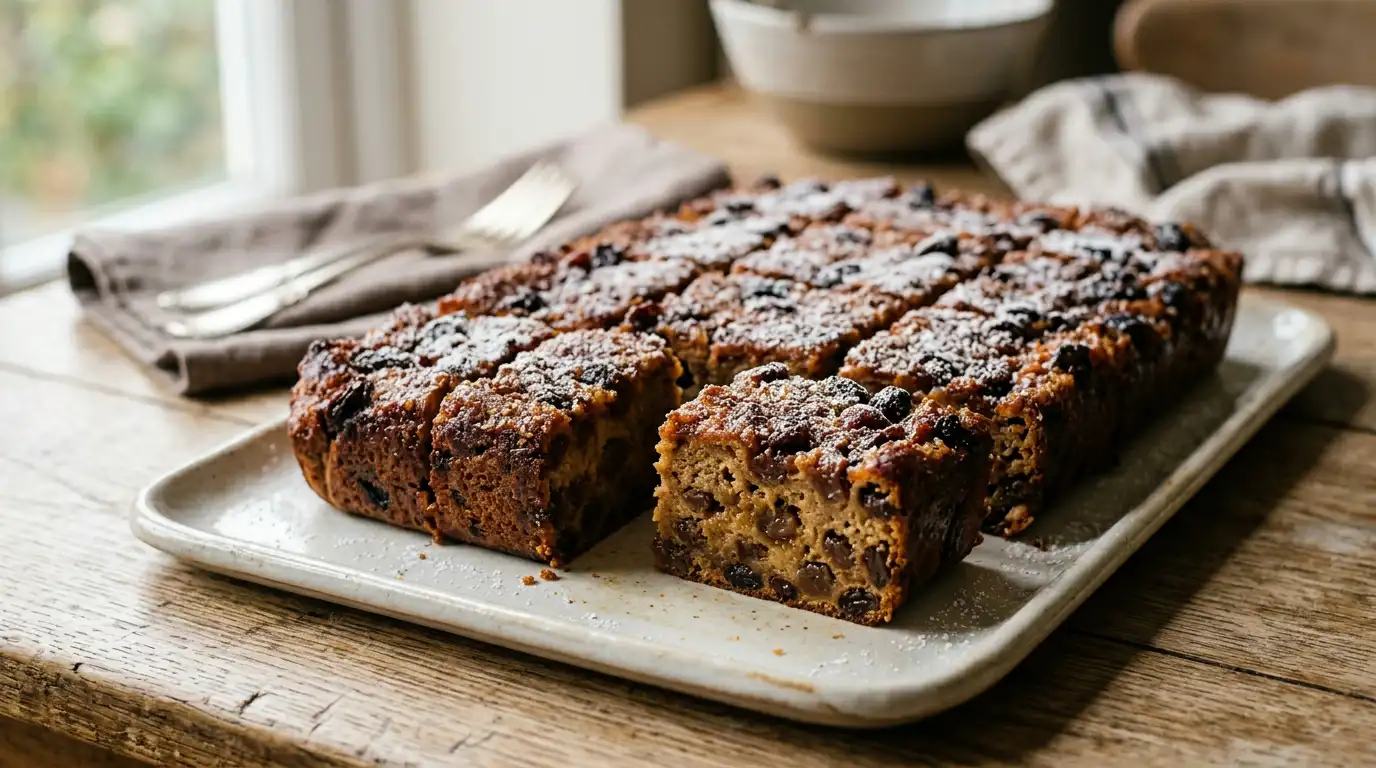
Mary Berry Bread Pudding Recipe
Mary Berry bread pudding is a dense, warmly spiced bake with a dark golden crust and a soft, yielding centre that is rich with dried fruit and the lingering scent of mixed spice and nutmeg. Each square is satisfying in the way only a properly made bread pudding can be, heavy enough to feel indulgent but not cloying, with just enough sweetness to balance the butter.
This version is made for a standard home kitchen. It uses up stale bread efficiently, requires no specialist equipment, and holds its shape when sliced. The demerara sugar crust gives every piece a slightly crunchy finish that contrasts well with the soft interior. From start to finish, it is ready in around 2 hours, including soaking time.
- 450g stale white bread, crusts on, torn into chunks
- 600ml whole milk
- 2 large eggs, beaten
- 75g unsalted butter, melted, plus extra for greasing
- 175g mixed dried fruit (sultanas, raisins, currants)
- 50g mixed peel
- 100g soft dark brown sugar
- 1½ tsp mixed spice
- ½ tsp freshly grated nutmeg
- 2 tbsp demerara sugar, for the crust
- A light dusting of icing sugar, to serve (optional)
How to Make Mary Berry Bread Pudding
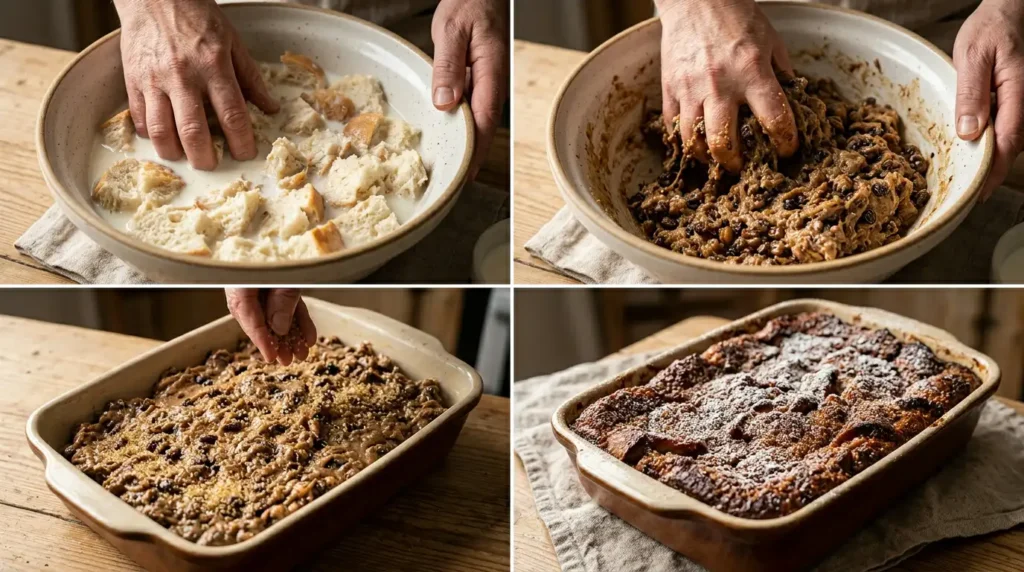
Soak the bread
Place the torn bread into a large mixing bowl and pour over the whole milk. Press the bread down gently so every piece is submerged, then leave to soak for at least 45 minutes, or until completely softened. A longer soak gives the pudding a more cohesive texture once baked.
Prepare the tin
Preheat the oven to 180°C (160°C fan, gas mark 4). Grease a deep rectangular baking tin, approximately 20cm × 30cm, with butter and line the base with baking parchment. Set the tin aside while the bread finishes soaking.
Squeeze and break down the bread
Using clean hands or a fork, squeeze and break down the soaked bread until the mixture resembles a rough, wet paste with no large dry lumps remaining. This step ensures the baked pudding holds together in neat slices rather than crumbling when cut.
Add the remaining ingredients
Add the beaten eggs, melted butter, dark brown sugar, mixed dried fruit, mixed peel, mixed spice, and grated nutmeg to the bread mixture. Stir everything together thoroughly until the sugar has dissolved and the fruit is evenly distributed throughout the mixture.
Transfer to the tin
Spoon the mixture into the prepared tin and spread it level using the back of a spoon. Scatter the demerara sugar evenly over the surface, making sure every corner is covered. The coarse sugar creates the characteristic crunchy, caramel-toned crust as it bakes.
Bake until set
Bake on the middle shelf of the preheated oven for 55 to 65 minutes, until the top is deep golden brown and the centre feels firm when pressed lightly with a finger. If the crust is colouring too quickly after 40 minutes, lay a loose sheet of foil over the tin without sealing the edges.
Cool and slice
Remove the tin from the oven and leave the pudding to cool in the tin for at least 20 minutes before slicing. Cutting it too soon will cause the squares to fall apart; the resting time allows the mixture to firm up fully. Dust with icing sugar if serving warm at the table.
Tips for the Best Mary Berry Bread Pudding
01 Why is my bread pudding still wet and soggy in the middle after the full baking time?
02 Why did my bread pudding crack across the top during baking?
03 How do I stop the dried fruit from sinking to the bottom of the pudding?
04 Why does my bread pudding taste bland even after following the recipe exactly?
05 How do I get the demerara crust to stay crunchy after the pudding has cooled?
Serving Suggestions
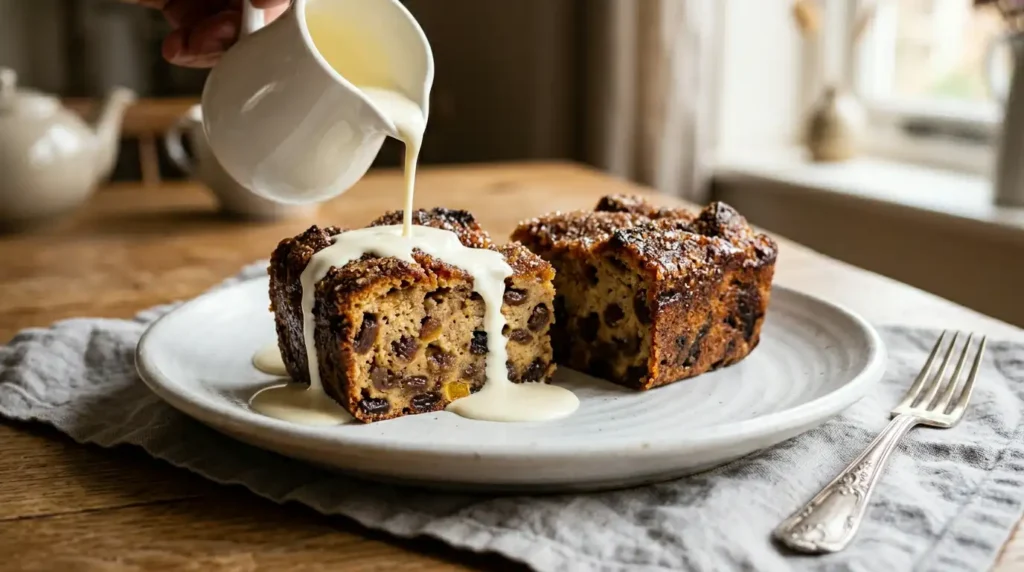
Serve warm with a generous pour of cold double cream, which soaks into the base of each square and contrasts with the spiced warmth of the pudding.
Pair with a pot of strong Assam or Yorkshire tea for a classic afternoon treat that works well through all the cooler months.
Add a scoop of vanilla custard ice cream alongside a warm square for a simple but satisfying dinner party dessert that needs no further decoration.
Slice into smaller fingers and arrange on a board for a packed lunch or picnic; the pudding travels well and tastes just as good at room temperature.
Reheat individual squares in a low oven at 150°C for 10 minutes and serve with a drizzle of warmed golden syrup for a comforting weeknight pudding.
Storage
Room Temperature
Store the cooled pudding in an airtight container at room temperature for up to 3 days. Keep the container away from direct sunlight or heat sources to prevent the fat from separating.
Refrigerator
Wrap the pudding tightly in cling film or place slices in an airtight container and refrigerate for up to 5 days. Bring individual slices back to room temperature for 20 minutes before eating, or warm them briefly in a low oven at 150°C for the best texture.
Freezing
Cut the pudding into individual portions, wrap each one in cling film, then place all portions in a labelled freezer bag and freeze for up to 3 months. Defrost overnight in the refrigerator and warm through in a 150°C oven for 12 to 15 minutes before serving.
Nutrition
FAQs
01 Can I use brown bread or wholemeal bread instead of white bread?
02 Can I make this bread pudding recipe a day ahead?
03 Can I use semi-skimmed milk instead of whole milk in bread pudding?
04 What size tin works best for this bread pudding recipe?
05 Can I add marmalade or jam to a bread pudding recipe?
Conclusion
This Mary Berry bread pudding recipe is a reliable, unfussy bake that produces a spiced, fruit-laden pudding with a crisp demerara crust and a soft, dense centre. The recipe makes approximately 12 generous squares from a standard 20cm × 30cm tin, and every slice keeps well at room temperature or in the refrigerator for several days. Whether served warm from the oven or reheated the following day, the flavour of the mixed spice and fruit only improves with time.
If this recipe has been useful, leave a comment below with any questions or let others know how it turned out. Sharing the recipe with friends and family who enjoy traditional British baking is always welcome. If you enjoyed this, you might also like Mary Berry’s damson jam recipe, another classic from the British preserving tradition that pairs beautifully with a slice of this pudding.
Mary Berry Bread Pudding Recipe
Course: DessertCuisine: BritishDifficulty: Easy12
servings55
minutes1
hour5
minutes310
kcal2
hoursA dense, warmly spiced bake with a dark golden demerara crust and a soft, fruit-laden centre. This classic British bread pudding is beginner-friendly, uses up stale bread, and is rich with mixed spice, nutmeg, and dried fruit.
Ingredients
450g stale white bread, crusts on, torn into chunks
600ml whole milk
2 large eggs, beaten
75g unsalted butter, melted, plus extra for greasing
175g mixed dried fruit (sultanas, raisins, currants)
50g mixed peel
100g soft dark brown sugar
1.5 tsp mixed spice
0.5 tsp freshly grated nutmeg
2 tbsp demerara sugar, for the crust
a light dusting of icing sugar, to serve (optional)
Instructions
- Place the torn bread into a large mixing bowl and pour over the whole milk. Press the bread down gently so every piece is submerged, then leave to soak for at least 45 minutes, or until completely softened.
- Preheat the oven to 180C (160C fan, gas mark 4). Grease a deep rectangular baking tin approximately 20cm x 30cm with butter and line the base with baking parchment.
- Using clean hands or a fork, squeeze and break down the soaked bread until the mixture resembles a rough, wet paste with no large dry lumps remaining.
- Add the beaten eggs, melted butter, dark brown sugar, mixed dried fruit, mixed peel, mixed spice, and grated nutmeg to the bread mixture. Stir everything together thoroughly until the sugar has dissolved and the fruit is evenly distributed.
- Spoon the mixture into the prepared tin and spread it level using the back of a spoon. Scatter the demerara sugar evenly over the surface.
- Bake on the middle shelf of the preheated oven for 55 to 65 minutes, until the top is deep golden brown and the centre feels firm when pressed lightly. If the crust is colouring too quickly after 40 minutes, lay a loose sheet of foil over the tin.
- Remove the tin from the oven and leave the pudding to cool in the tin for at least 20 minutes before slicing. Dust with icing sugar if serving warm at the table.
Notes
- Squeeze the soaked bread very firmly before mixing to avoid a soggy centre.
- A longer soak of up to one hour gives a more cohesive texture once baked.
- Fresh whole nutmeg grated directly into the mixture gives a noticeably better flavour than pre-ground.
- Stir a small pinch of fine salt into the milk before soaking to lift all the flavours.
- Store uncovered at room temperature for the first few hours to keep the demerara crust crunchy.
- The pudding tastes better the next day once the spices have had time to deepen.