Mary Berry Easy Lemon Meringue Pie Recipe
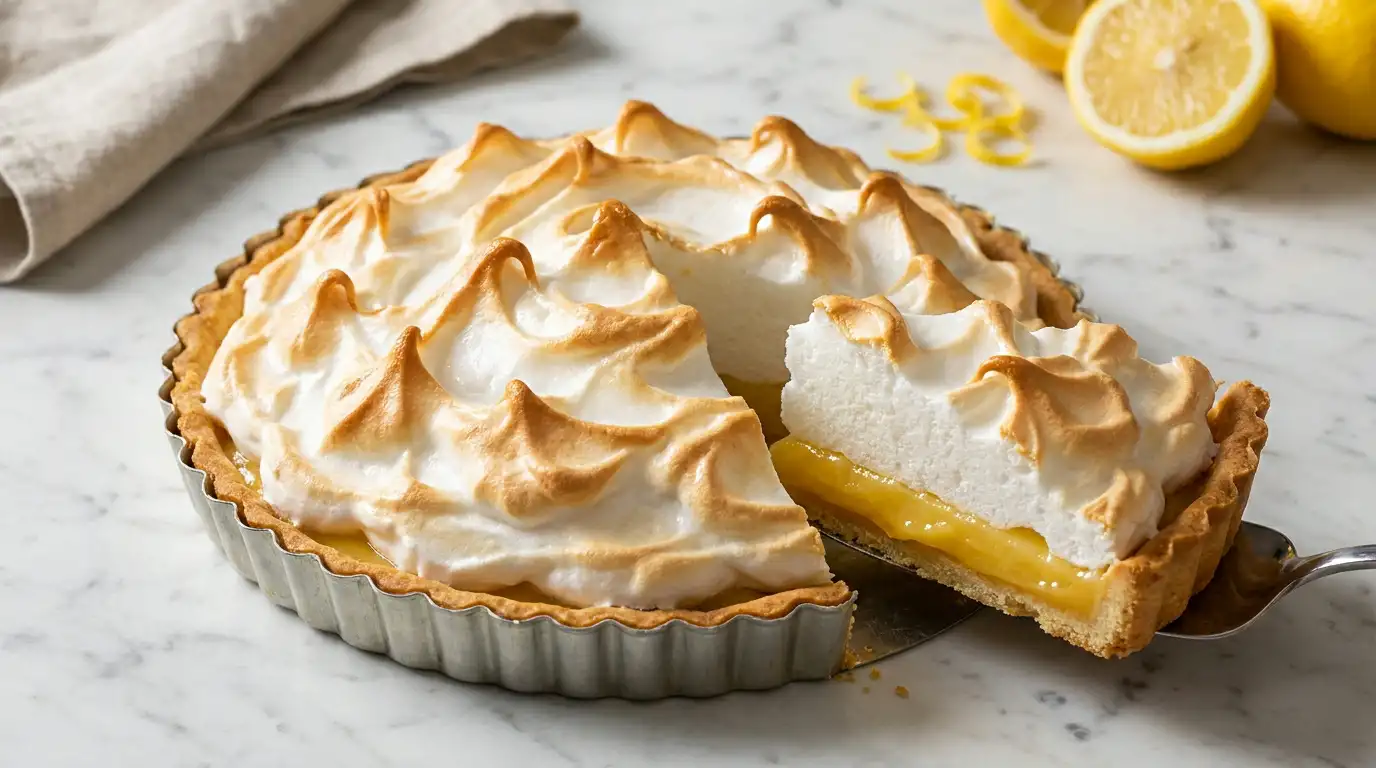
This lemon meringue pie has a sharp, citrus-bright filling that sets to a smooth, trembling curd beneath a cloud of toasted meringue, all held in a crisp, buttery shortcrust base. The contrast between the firm pastry, the glossy lemon layer, and the soft, pillowy top is what makes it such a satisfying bake. It looks ambitious but comes together in a logical, manageable sequence that even a relatively new baker can follow with confidence. From start to finish, including chilling time, it is ready in around 2 hours.
This version keeps the method straightforward without cutting corners on flavour. The filling is made on the hob with fresh lemon juice and zest, giving a cleaner, more vibrant taste than a ready-made mix. The meringue is a classic soft-peak style, steady enough to hold its shape in the oven without weeping.
Ingredients
For the shortcrust pastry
- 175g plain flour, plus extra for dusting
- 85g cold unsalted butter, cut into small cubes
- 30g icing sugar
- 1 large egg yolk
- 2 tbsp cold water
For the lemon filling
- 3 large lemons, zested and juiced (approximately 120ml juice)
- 40g cornflour
- 200g caster sugar
- 300ml cold water
- 3 large egg yolks
- 50g unsalted butter, cut into cubes
For the meringue
- 3 large egg whites, at room temperature
- 175g caster sugar
- 1 tsp cornflour
How to Make Mary Berry Easy Lemon Meringue Pie
- Make the pastry: Rub the cold butter into the flour and icing sugar using your fingertips until the mixture resembles fine, pale breadcrumbs. Add the egg yolk and cold water, then bring the dough together with a light hand. Wrap in cling film and chill for 30 minutes, as a cold, rested dough shrinks far less during blind baking.
- Line and blind bake the tin: Preheat the oven to 190°C (170°C fan). Roll the chilled pastry out on a lightly floured surface to roughly 3mm thickness and use it to line a 20cm loose-bottomed tart tin. Prick the base lightly with a fork, line with baking parchment, fill with baking beans, and bake for 15 minutes. Remove the beans and parchment, then return to the oven for a further 8 minutes until the base is dry and very lightly golden.
- Make the lemon filling: Whisk the cornflour and caster sugar together in a medium saucepan, then gradually stir in the cold water until smooth. Add the lemon juice and zest, then place over a medium heat and stir continuously until the mixture thickens and comes to a gentle bubble, which takes around 5 minutes. Remove from the heat.
- Enrich with egg yolks and butter: Beat the egg yolks lightly, then stir them swiftly into the hot lemon mixture, followed by the butter cubes. Return the pan to a low heat and stir for 2 minutes until glossy and thick, taking care not to let it boil at this stage as the yolks can scramble.
- Fill the pastry case: Pour the warm lemon filling directly into the baked pastry case and smooth it level with a spatula. Set aside briefly while the meringue is made, keeping the filling warm so the meringue seals directly onto it, which helps prevent a weeping layer from forming underneath.
- Whisk the meringue: In a large, completely clean bowl, whisk the egg whites on a medium speed until they reach soft peaks. Gradually add the caster sugar one tablespoon at a time, whisking well between each addition, until the meringue is thick, very glossy, and holds stiff peaks. Fold in the cornflour on the last addition of sugar.
- Top and bake: Spoon the meringue over the warm lemon filling, starting from the edges and working inward so it touches the pastry rim all the way around. Use the back of a spoon to lift it into soft peaks across the surface. Bake at 170°C (150°C fan) for 20 to 25 minutes until the meringue is set with a pale gold, lightly caramelised surface.
- Cool before slicing: Leave the pie to cool in the tin at room temperature for at least 1 hour before removing and slicing. Cutting into a warm meringue pie causes the layers to slide, so patience here makes a visible difference to the final result.
Tips for the Best Lemon Meringue Pie
Why is there a layer of liquid between the meringue and the filling?
This is called weeping and it usually happens because the meringue was spread over a cold or set filling. Always add the meringue while the lemon filling is still warm, as the heat from underneath helps cook the meringue base and seals the two layers together properly.
Why did my meringue shrink away from the pastry edges during baking?
The meringue must be pushed firmly against the pastry crust all the way around before baking. If a gap is left between the meringue and the rim, it pulls inward as it cooks and the filling becomes exposed. Use the back of a spoon to press it gently into the edge.
Why did my lemon filling not set and stay runny when sliced?
The filling needs to reach a proper simmer and be stirred continuously until it thickens noticeably in the pan. If it is undercooked, the cornflour will not activate fully and the set will be too loose. A correctly cooked filling will coat the back of a spoon thickly before the yolks are added.
How do I stop the pastry base from going soggy underneath the filling?
Thorough blind baking is the key step. The base must feel dry and look lightly coloured before the filling goes in. Adding the warm lemon filling immediately, rather than letting both components sit and cool separately, also helps by reducing the time moisture has to soak in.
Why does my meringue have brown beads of moisture on the surface after baking?
This is caused by undissolved sugar, which liquefies under the heat of the oven. Adding the sugar very gradually and whisking thoroughly between each spoonful gives the sugar time to dissolve fully into the egg whites before baking.
Serving Suggestions
- Serve at room temperature on the day of baking, sliced cleanly with a sharp knife wiped between cuts for neat, defined layers.
- Place alongside a small jug of lightly whipped double cream for those who prefer a richer finish alongside the sharp curd.
- Offer thin slices as part of an afternoon tea spread, paired with Earl Grey or a bright Assam for balance against the citrus.
- Present as a dinner party dessert with a dusting of very fine lemon zest over the meringue just before serving for a fresh, fragrant finish.
- Slice into smaller wedges and serve on individual dessert plates with a few fresh raspberries alongside to complement the lemon.
Storage
Room temperature
Cover loosely and keep at room temperature for up to 1 day, as the meringue holds best in the first few hours after baking.
Refrigerator
Store any leftover pie in the fridge, covered loosely with cling film, for up to 2 days. Remove it from the fridge 20 minutes before serving, as cold meringue loses its soft texture and the pastry tastes better closer to room temperature.
Freezing
Lemon meringue pie is not well suited to freezing, as the meringue weeps and collapses upon thawing and the pastry softens significantly. If needed, the blind-baked pastry case and the lemon filling can each be frozen separately, well wrapped, for up to 1 month, then defrosted overnight in the fridge before assembling fresh meringue on top.
Nutrition
- Calories: 390 kcal
- Carbohydrates: 58g
- Protein: 5g
- Fat: 16g
- Saturated Fat: 9g
- Sodium: 65mg
Nutrition values are estimates based on standard ingredients and may vary depending on the specific brands and quantities used.
FAQs
Can I use shop-bought shortcrust pastry instead of making it from scratch?
Yes, a 320g block of ready-made shortcrust pastry works well here if time is short. Roll it to around 3mm and blind bake as instructed. The flavour is slightly less rich than homemade, but the result is still very good.
Can I make the lemon meringue pie the day before serving?
It is best baked on the day, as the meringue begins to soften and weep after 24 hours. The pastry case and lemon filling can both be prepared the day before and stored separately in the fridge, with the meringue made and baked on the day of serving for the best result.
Can I use bottled lemon juice instead of fresh lemons?
Fresh lemon juice gives a noticeably brighter, less flat flavour than bottled. The zest is also essential for depth, which bottled juice cannot replicate. It is worth using fresh lemons if at all possible, as the filling is the centrepiece of the whole pie.
What size tin gives the best result for this recipe?
A 20cm loose-bottomed fluted tart tin is ideal. It gives a generous depth of filling without the pastry sides being too thin, and the loose base makes it much easier to remove the finished pie cleanly for slicing.
Can I double this recipe to make a larger pie?
The recipe can be scaled up for a 24cm tin by increasing all quantities by roughly half again. Bear in mind the blind baking time may increase by 5 minutes and the meringue will take a little longer to colour evenly, so keep a close eye on the oven from the 20-minute mark.
Conclusion
This Mary Berry easy lemon meringue pie brings together three very different textures in one elegant bake: a crumbly, buttery pastry shell, a smooth and intensely citrus-sharp curd, and a light, cloud-like meringue with a golden, softly caramelised surface. Made in a 20cm tart tin, this recipe yields 8 generous slices, making it an ideal centrepiece for a weekend family lunch or a celebratory afternoon tea. Each component is straightforward when approached in the right order, and the result is a pie that looks genuinely impressive without requiring any specialist equipment or advanced technique.
Follow the steps closely, particularly around keeping the filling warm for the meringue and blind baking the pastry thoroughly, and the results will be consistent every time. If this recipe caught your interest, you might also enjoy the Mary Berry chicken hotpot with potato topping recipe, a hearty, comforting bake that is just as satisfying to bring to the table. Share your results in the comments below, or pass this recipe on to someone who has been meaning to try making a meringue pie for the first time.

Mary Berry Easy Lemon Meringue Pie Recipe
Course: DessertCuisine: BritishDifficulty: Easy8
servings40
minutes50
minutes390
kcal2
hoursA classic British dessert with a crisp, buttery shortcrust base, a smooth and intensely citrus-sharp lemon curd filling, and a soft, cloud-like meringue toasted to a pale golden finish. Beginner-friendly steps make this impressive bake achievable for any home cook.
Ingredients
175g plain flour, plus extra for dusting
85g cold unsalted butter, cut into small cubes
30g icing sugar
1 large egg yolk
2 tbsp cold water
3 large lemons, zested and juiced (approximately 120ml juice)
40g cornflour
200g caster sugar
300ml cold water
3 large egg yolks
50g unsalted butter, cut into cubes
3 large egg whites, at room temperature
175g caster sugar
1 tsp cornflour
Instructions
- Rub cold butter into flour and icing sugar until the mixture resembles fine breadcrumbs. Add egg yolk and cold water, bring dough together, wrap in cling film, and chill for 30 minutes.
- Preheat oven to 190C (170C fan). Roll pastry to 3mm thickness and line a 20cm loose-bottomed tart tin. Prick the base, line with baking parchment, fill with baking beans, and bake for 15 minutes. Remove beans and parchment and bake for a further 8 minutes until dry and lightly golden.
- Whisk cornflour and caster sugar in a medium saucepan, gradually stir in cold water until smooth, then add lemon juice and zest. Stir continuously over medium heat until the mixture thickens and comes to a gentle bubble, around 5 minutes. Remove from heat.
- Beat egg yolks lightly and stir quickly into the hot lemon mixture along with the butter cubes. Return to a low heat and stir for 2 minutes until glossy and thick. Do not allow to boil at this stage.
- Pour the warm lemon filling into the baked pastry case and smooth level with a spatula. Set aside briefly while the meringue is prepared, keeping the filling warm.
- Whisk egg whites in a clean bowl to soft peaks. Add caster sugar one tablespoon at a time, whisking well between each addition, until the meringue is thick, very glossy, and holds stiff peaks. Fold in the cornflour with the last addition of sugar.
- Spoon meringue over the warm filling, starting from the edges and pressing to the pastry rim all around. Lift into soft peaks with the back of a spoon. Bake at 170C (150C fan) for 20 to 25 minutes until set with a pale golden surface.
- Leave the pie to cool in the tin at room temperature for at least 1 hour before removing and slicing.
Notes
- Always spread meringue over warm filling to prevent a weeping layer between the two.
- Press meringue firmly to the pastry edges all the way around to prevent shrinkage during baking.
- Blind bake the pastry case thoroughly until dry and lightly coloured to avoid a soggy base.
- Add caster sugar to egg whites one tablespoon at a time to ensure it dissolves fully and prevents surface beading.
- The pie is best served on the day of baking for the finest meringue texture.
- The pastry case and lemon filling can be made the day before and stored separately in the fridge, with fresh meringue added and baked on the day of serving.