Mary Berry Lemon Posset Pots Recipe
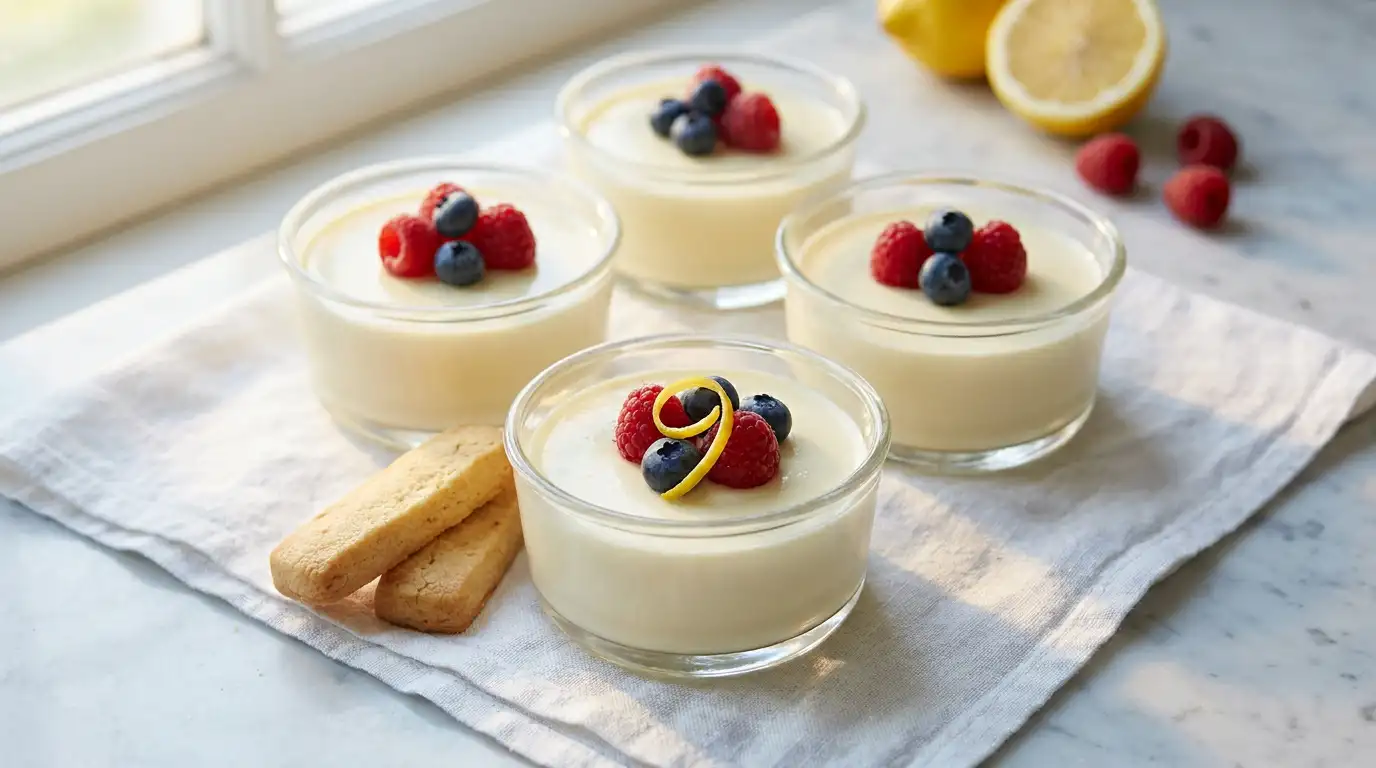
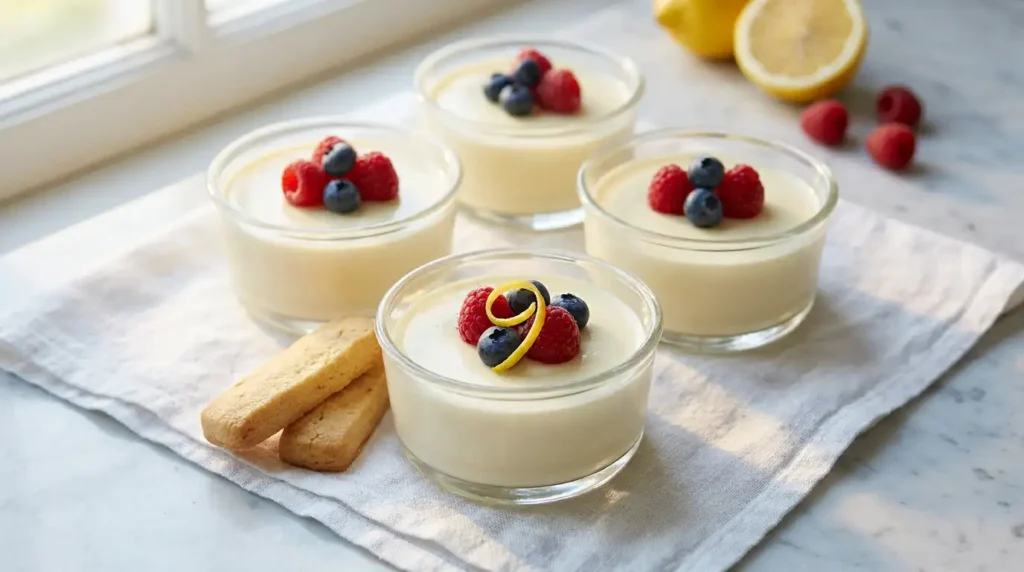
Mary Berry Lemon Posset Pots are silky, ivory-coloured cream desserts with a clean, sharp citrus flavour that sets to a softly trembling, spoonable texture. The sharpness of the lemon cuts through the richness of the double cream, leaving a finish that feels light despite being genuinely indulgent. This version keeps the method brief and the ingredient list short, which makes it reliable for both relaxed weeknight puddings and formal dinner party desserts.
There is no gelatine, no bain-marie, and no timing anxiety here. The setting happens naturally as the mixture cools, which means the possets can be made well ahead of serving. From start to finish, including chilling time, they are ready in around 3 hours and 20 minutes, with only 20 minutes of active work involved.
Ingredients
- 600ml double cream
- 150g caster sugar
- Finely grated zest of 2 unwaxed lemons
- 75ml freshly squeezed lemon juice (approximately 2 large lemons)
- Thin strips of lemon zest, to decorate
- Fresh raspberries or blueberries, to serve
- A few small fresh mint leaves, optional
- 100g plain flour
- 50g unsalted butter, cold and cubed
- 30g icing sugar, sifted
- Pinch of fine salt
How to Make Mary Berry Lemon Posset Pots
- 01
Prepare the pots
Arrange the glasses or ramekins: Set out 6 small glasses, ramekins, or teacups on a tray so they are ready before you begin cooking. Having them in place before the mixture is ready means you can pour quickly without the cream beginning to set unevenly in the pan.
- 02
Zest and juice the lemons
Prepare the citrus: Finely grate the zest from 2 unwaxed lemons directly into a small bowl, then squeeze enough juice to give 75ml, straining out any pips. Measure the juice carefully because the ratio of acid to cream is what causes the posset to set without any added setting agent.
- 03
Heat the cream and sugar
Combine and bring to the boil: Pour the double cream into a medium heavy-based saucepan and add the caster sugar and lemon zest. Place over a medium heat and stir gently until the sugar dissolves. Increase the heat slightly and bring the mixture to a rolling boil, then allow it to boil for exactly 3 minutes, stirring occasionally. This reduces the cream enough to concentrate the fats, which helps the posset hold its set once the lemon juice is added.
- 04
Add the lemon juice
Remove from the heat and stir in the juice: Take the pan off the heat and pour in the measured lemon juice, stirring steadily until fully combined. The mixture will look very liquid at this stage, which is entirely normal. Do not return it to the heat once the juice has been added.
- 05
Pour into the prepared pots
Divide and pour: Allow the mixture to cool for 5 minutes in the pan, then pour it carefully and evenly between the 6 prepared glasses or ramekins. If a light surface skin forms while the mixture cools, gently skim it off before pouring so each posset has a smooth, unblemished top.
- 06
Chill until set
Refrigerate the possets: Leave the pots uncovered on the tray until they reach room temperature, then cover each one loosely with cling film and transfer to the fridge. Chill for at least 3 hours, or overnight for the firmest, cleanest set. The surface should be opaque and pale ivory in colour, with a very slight tremor when the glass is gently moved.
- 07
Make the shortbread (optional)
Rub together and bake: If making the shortbread fingers to serve alongside, heat the oven to 160C fan. Rub the cold butter into the flour and icing sugar with your fingertips until the mixture resembles fine breadcrumbs, then press together into a disc. Roll out to approximately 5mm thickness on a lightly floured surface, cut into thin fingers, and bake on a lined tray for 12 to 14 minutes until pale golden at the edges. Leave on the tray to firm up before moving them, as they are fragile when warm.
- 08
Decorate and serve
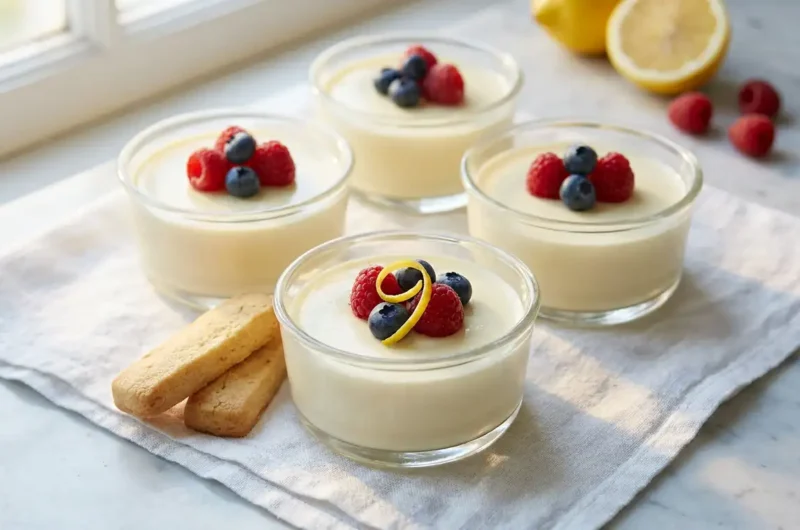
Finish and plate: Remove the possets from the fridge 10 minutes before serving to take the chill off slightly. Arrange a few fresh berries on top of each one and add a thin curl of lemon zest. Lay a shortbread finger across the rim of the glass if using, and serve immediately on small plates or saucers.
Tips for the Best Lemon Posset Pots
-
01 Why has my lemon posset not set properly?
The two most common reasons are insufficient boiling time or too little lemon juice. The cream must boil for the full 3 minutes to reduce properly, and the juice must be measured accurately to 75ml. If using small, dry lemons, squeeze a third lemon to ensure you reach the correct quantity rather than estimating. -
02 Why does my posset have a grainy or curdled texture?
This usually happens when the lemon juice is added while the cream is still at a very high temperature and then stirred too vigorously. Remove the pan from the heat, allow it to sit for 30 seconds, then add the juice and stir with a steady, calm motion rather than whisking sharply. -
03 How do I stop a skin forming on top of the posset?
Press a piece of cling film directly onto the surface of each pot before placing in the fridge. Remove it carefully just before serving and the surface will be perfectly smooth. Alternatively, pour the mixture while it is still warm and place the pots directly in the fridge uncovered for the first 20 minutes so the top sets quickly. -
04 Why does my posset taste too sweet and not sharp enough?
The balance shifts if the lemons are very large and produce more than 75ml of juice, or if the sugar is measured generously. Always use a measuring jug for the juice and weigh the sugar precisely. Adding a little extra finely grated zest to the finished pots just before serving adds sharpness without altering the set. -
05 My posset has set but is very firm and dense. What went wrong?
Over-reducing the cream by boiling for longer than 3 minutes creates a much firmer, almost rubbery texture. Time the boil with a kitchen timer and adjust the heat to maintain a steady rolling boil rather than a violent one that could cause the cream to reduce faster than intended.
Serving Suggestions
Serve alongside crisp homemade shortbread fingers or bought all-butter biscuits for a contrast in texture against the cool, creamy set of the posset.
Arrange a small pile of fresh raspberries or halved strawberries on top just before serving, as the berry acidity complements the lemon without competing with it.
Spoon a thin layer of lemon curd over the set posset for a more intense citrus finish and a golden visual contrast against the pale ivory cream.
Scatter a few toasted flaked almonds or finely crushed amaretti biscuits around the berries on top for a delicate, nutty crunch.
Present in small vintage teacups or espresso glasses for an elegant afternoon tea setting, or use wide champagne saucers when serving as a formal dinner party dessert.
Storage
Room Temperature
Once set, the possets can be left at room temperature for up to 2 hours before serving, provided the kitchen is cool, but should not be kept out longer than this as the cream will begin to soften and may lose its shape.
Refrigerator
Cover each pot tightly with cling film and keep in the fridge for up to 3 days. Remove from the fridge 10 minutes before serving to allow the texture to soften very slightly, which brings out the creaminess and the full lemon flavour.
Freezing
The possets can be frozen in their pots, well wrapped in cling film and then foil, for up to one month. Defrost overnight in the fridge, and note that the texture may be slightly softer once thawed, so they are best served directly from the fridge rather than at room temperature after freezing.
Nutrition
FAQs
01 Can I use single cream instead of double cream for lemon posset?
02 Can I make lemon posset pots the day before serving?
03 Can I use lime juice instead of lemon juice in this posset recipe?
04 Can I halve this recipe if I only need three portions?
05 Is lemon posset suitable for a gluten-free diet?
Conclusion
This Mary Berry Lemon Posset Pots recipe proves that one of the most elegant desserts in the British repertoire requires very little effort to achieve. The posset sets with a clean, trembling consistency, carries a sharp citrus flavour that cuts through the richness of the cream, and looks beautifully composed when decorated with fresh berries and a curl of lemon zest. This recipe makes 6 individual portions, which is a practical number for a dinner party or a family gathering, and every element can be prepared well in advance.
If these pots become a regular in your dessert rotation, try varying the citrus with lime or even a mix of lemon and pink grapefruit for a slightly more bitter, sophisticated finish. Leave a comment below to share how they turned out or to let others know which topping worked best for you. If you enjoyed this, you might also like the Mary Berry Tiramisu Cake Recipe for another make-ahead dessert that delivers impressive results with straightforward steps.
Mary Berry Lemon Posset Pots Recipe
Course: DessertCuisine: BritishDifficulty: Easy6
servings20
minutes10
minutes390
kcal3
hours30
minutesSilky, ivory-coloured cream desserts with a clean, sharp citrus flavour that sets to a softly trembling, spoonable texture. Made with just four ingredients, these elegant individual pots are beginner-friendly, completely make-ahead, and perfect for both weeknight puddings and dinner party desserts.
Ingredients
600ml double cream
150g caster sugar
finely grated zest of 2 unwaxed lemons
75ml freshly squeezed lemon juice approximately 2 large lemons
thin strips of lemon zest to decorate
fresh raspberries or blueberries to serve
a few small fresh mint leaves optional
100g plain flour for shortbread optional
50g unsalted butter cold and cubed for shortbread optional
30g icing sugar sifted for shortbread optional
pinch of fine salt for shortbread optional
Instructions
- Set out 6 small glasses, ramekins, or teacups on a tray so they are ready before you begin cooking.
- Finely grate the zest from 2 unwaxed lemons into a small bowl, then squeeze and strain enough juice to give 75ml.
- Pour the double cream into a medium heavy-based saucepan, add the caster sugar and lemon zest, and stir over a medium heat until the sugar dissolves. Increase the heat and bring to a rolling boil, then boil for exactly 3 minutes, stirring occasionally.
- Remove the pan from the heat and pour in the measured lemon juice, stirring steadily until fully combined.
- Allow the mixture to cool for 5 minutes in the pan, then pour it evenly between the 6 prepared glasses or ramekins.
- Leave the pots uncovered until they reach room temperature, then cover loosely with cling film and refrigerate for at least 3 hours or overnight until set.
- If making shortbread, heat the oven to 160C fan. Rub cold butter into flour and icing sugar until the mixture resembles fine breadcrumbs, press into a disc, roll to 5mm thickness, cut into fingers, and bake on a lined tray for 12 to 14 minutes until pale golden at the edges.
- Remove possets from the fridge 10 minutes before serving, decorate with fresh berries and a curl of lemon zest, and serve with shortbread fingers if using.
Notes
- Measure the lemon juice accurately to 75ml as the ratio of acid to cream is what causes the posset to set.
- Boil the cream mixture for exactly 3 minutes using a kitchen timer to ensure the correct set.
- Press cling film directly onto the surface of each pot before refrigerating to prevent a skin forming.
- The possets can be made a full day ahead and will have an even smoother, firmer set after an overnight chill.
- Add decorations such as berries and zest just before serving so they look fresh.
- Lime juice can replace lemon juice using the same 75ml quantity for a more floral variation.