Mary Berry Date And Walnut Cake Recipe
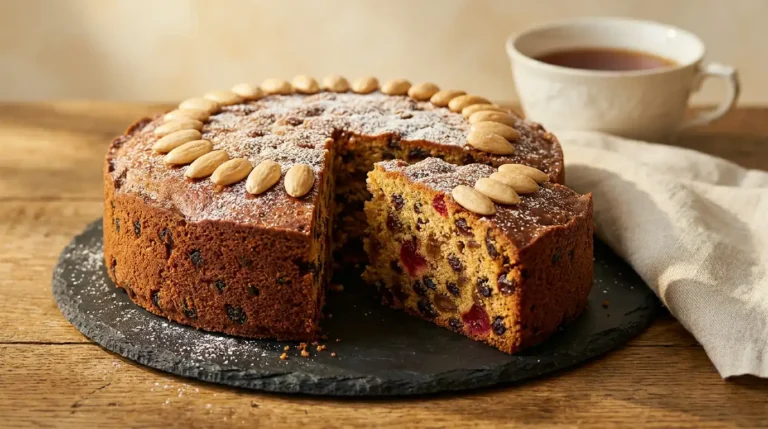
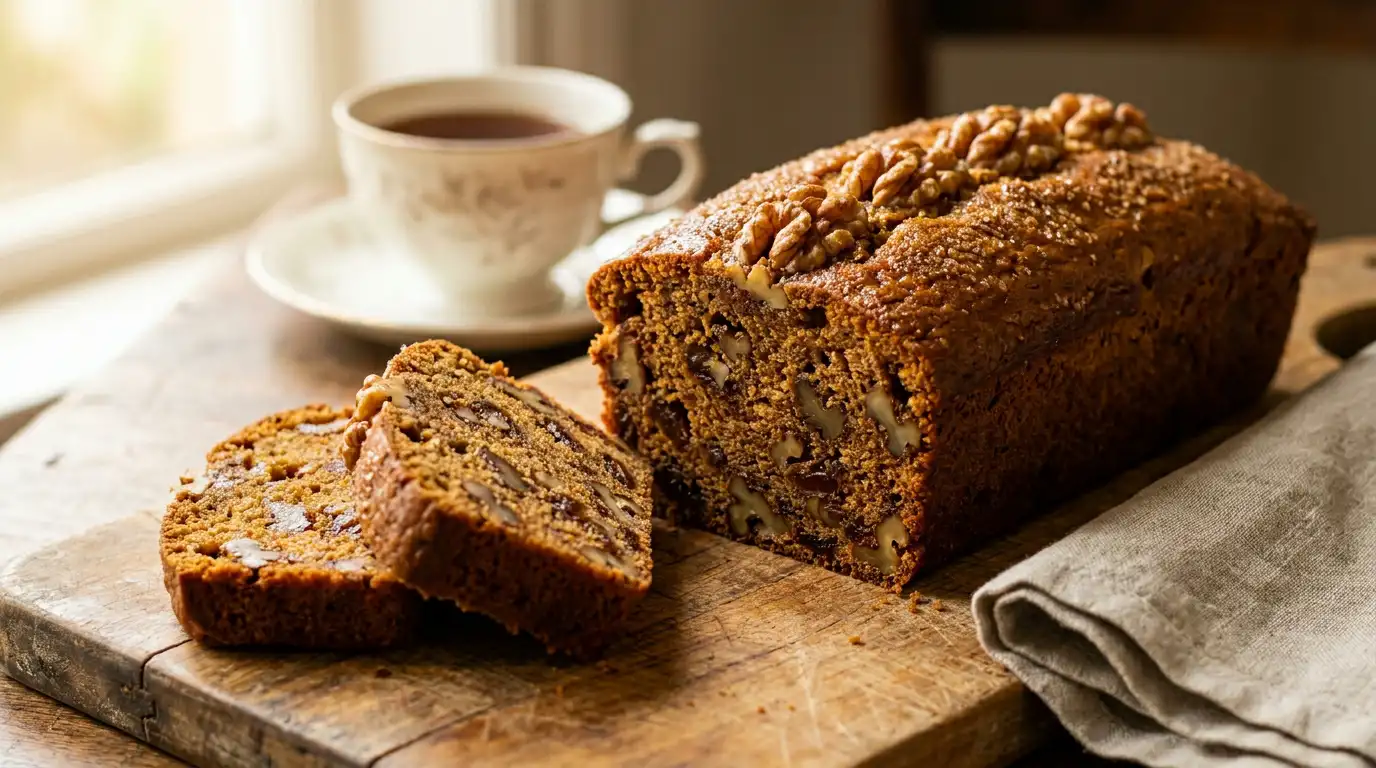
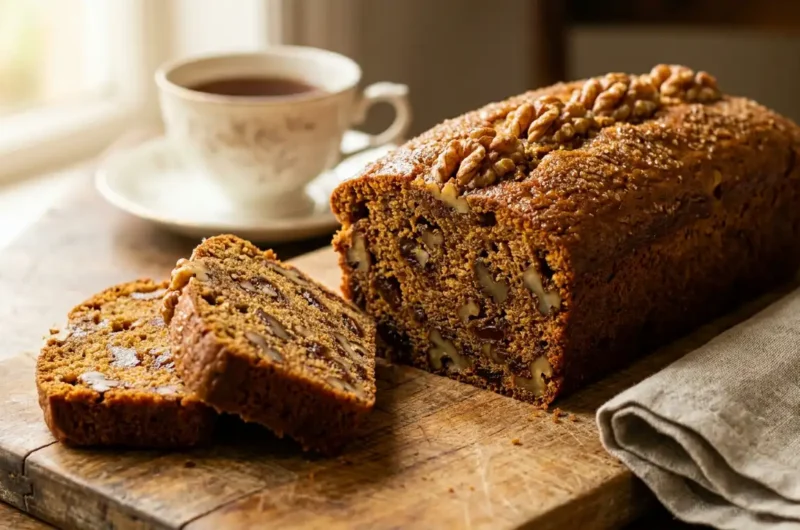
This Mary Berry date and walnut cake is a dense, tender loaf with a deep caramel sweetness from the dates and a satisfying crunch from roughly chopped walnuts running through every slice. The crumb is moist but never sticky, with a lightly golden crust that holds its shape cleanly when cut. It keeps beautifully for several days, making it a reliable bake for afternoon tea, lunchboxes, or a quiet weekend treat. From start to finish, it is ready in around 1 hour 15 minutes.
What makes this version particularly dependable is the method of soaking the dates in boiling water with bicarbonate of soda before mixing. This softens the fruit completely and gives the finished loaf its characteristic depth of colour and gentle stickiness. No electric mixer is needed, and the batter comes together in a single bowl with straightforward folding.
Ingredients
For the cake
- 200g dried dates, pitted and roughly chopped
- 175ml boiling water
- 1 tsp bicarbonate of soda
- 75g unsalted butter, softened
- 150g light soft brown sugar
- 2 large eggs, beaten
- 1 tsp vanilla extract
- 200g self-raising flour
- 1/2 tsp baking powder
- 100g walnuts, roughly chopped
- Pinch of fine salt
To finish
- 8 walnut halves, for pressing onto the top
- 1 tbsp demerara sugar, for scattering
How to Make Mary Berry Date And Walnut Cake
- Prepare the tin and oven: Heat the oven to 170C fan / 190C conventional / gas mark 5. Grease a 900g (2lb) loaf tin and line the base and long sides with a strip of baking parchment, leaving a little overhang on each side for easy lifting.
- Soak the dates: Place the chopped dates in a heatproof bowl and pour the boiling water over them. Stir in the bicarbonate of soda and leave to soak for 10 minutes. The bicarbonate of soda breaks down the fibres in the fruit, giving the finished cake a softer, more even texture throughout.
- Cream the butter and sugar: In a large mixing bowl, beat the softened butter and light brown sugar together until the mixture is pale and slightly fluffy. This takes about 2 minutes by hand with a wooden spoon or a few seconds with a hand whisk.
- Add the eggs and vanilla: Pour in the beaten eggs a little at a time, mixing well between each addition. Stir in the vanilla extract. If the mixture looks slightly curdled at this stage, it will come back together once the flour is added.
- Combine the date mixture: Tip the soaked dates along with all the liquid from the bowl into the butter mixture. Stir until evenly combined. The batter will look quite loose and dark at this point, which is correct.
- Fold in the dry ingredients and walnuts: Sift the self-raising flour, baking powder, and salt directly into the bowl. Fold gently with a large spoon until just combined, then fold in the chopped walnuts. Take care not to overmix, as this can tighten the crumb and make the cake dense rather than tender.
- Transfer to the tin: Pour the batter into the prepared loaf tin and smooth the top with the back of a spoon. Press the walnut halves in a line along the centre of the top and scatter over the demerara sugar for a lightly crisp finish.
- Bake the cake: Place on the middle shelf of the oven and bake for 45 to 55 minutes, until a skewer inserted into the centre comes out clean. If the top starts to brown too quickly after 30 minutes, lay a loose piece of foil over the tin without sealing the edges.
- Cool in the tin: Leave the cake in the tin for 10 minutes before lifting it out using the parchment overhang. Transfer to a wire rack and allow to cool completely before slicing. Cutting too early causes the crumb to compress and tear.
Tips for the Best Date And Walnut Cake
Why is my date and walnut cake sinking in the middle after baking?
A sunken centre is usually caused by underbaking or by opening the oven door during the first 30 minutes. Always test with a skewer before removing from the oven. If it comes out with wet batter, add 5 to 10 more minutes and test again.
Why does my cake taste more of flour than dates?
This happens when the dates have not been soaked long enough or the liquid has not been fully incorporated into the batter. Make sure the dates sit in the boiling water for the full 10 minutes and that all the soaking liquid goes into the mix, not just the fruit.
How do I stop the walnuts on top from burning before the cake is cooked through?
If the nuts on the surface are darkening before the bake is complete, lay a sheet of foil loosely over the top of the tin. This diffuses the direct heat without trapping steam, so the crumb continues to set without the nuts scorching.
Why is my loaf sticking to the tin even with parchment lining?
Greasing the tin before lining is essential. The butter helps the parchment adhere to the sides so it does not shift when the batter is poured in. Without it, the paper can pull away from the corners and allow the batter to seep underneath.
Why is my cake too wet in the centre even after the full baking time?
Overly moist dates or fruit with added syrup can push extra liquid into the batter. Always use plain dried dates without added sugar or coating, and drain any excess liquid cautiously if the soaked mixture looks extremely wet before combining.
Serving Suggestions
- Serve in thick slices with a spread of lightly salted butter at room temperature for a classic afternoon tea pairing.
- Pair with a pot of strong Assam or Yorkshire tea, which balances the sweetness of the dates well.
- Serve slightly warm with a spoonful of clotted cream and a drizzle of dark treacle for a more indulgent dessert plate.
- Cut into thinner slices and pack into lunchboxes alongside a piece of sharp Cheddar, which complements the caramel notes in the fruit.
- Toast a slice lightly and top with a scraping of salted butter and a few extra walnuts for a satisfying morning breakfast.
Storage
Room temperature
Once fully cooled, wrap the loaf tightly in cling film or keep it in an airtight tin at room temperature for up to 4 days.
Refrigerator
Store wrapped in cling film inside an airtight container in the fridge for up to 7 days. Bring to room temperature for at least 30 minutes before serving, as the cold firms the crumb and mutes the flavour of the dates.
Freezing
Wrap individual slices or the whole loaf tightly in cling film, then place inside a zip-lock freezer bag and freeze for up to 3 months. Defrost overnight at room temperature, still wrapped, to prevent condensation from making the surface sticky.
Nutrition
- Calories: 310 kcal
- Carbohydrates: 42g
- Protein: 5g
- Fat: 14g
- Saturated Fat: 5g
- Sodium: 180mg
Nutrition values are estimates based on standard ingredients and may vary depending on the specific brands used and the size of each serving.
FAQs
Can I use medjool dates instead of regular dried dates in this recipe?
Yes, medjool dates work well and give a slightly richer, more caramel flavour. Because they are already softer and more moist than regular dried dates, reduce the soaking time to around 5 minutes to avoid the batter becoming too wet.
Can I replace the walnuts with a different nut if I have an allergy in the family?
Pecans are the closest substitute and work almost identically in texture and flavour. Hazelnuts, roughly chopped, also pair naturally with dates. Avoid very oily nuts such as macadamias, as they can make the crumb greasy.
Can I make this date and walnut cake ahead of time for an event?
This loaf is actually better made a day in advance. Wrapping it overnight allows the moisture from the dates to distribute evenly through the crumb, giving a softer, more even texture the next day. Bake the day before and store at room temperature wrapped tightly.
Can I double this recipe to make a larger cake for a crowd?
Doubling the recipe works well if you use two 900g loaf tins rather than scaling up to a single larger tin. Baking time stays roughly the same. A single very deep tin would require a much longer bake and risks the outside drying before the centre is set.
What size loaf tin is best for this recipe?
A standard 900g (2lb) loaf tin gives the best results. The batter fills it to around two thirds full, which allows room for an even rise without the loaf spilling over the sides or forming a domed top that cracks excessively.
Conclusion
This Mary Berry date and walnut cake is one of those recipes that earns its place in a regular baking rotation. The method is uncomplicated, the ingredients are easy to source, and the result is a loaf with genuine depth of flavour, a moist, close crumb, and a satisfying walnut crunch in every bite. This recipe makes approximately 10 slices from a standard 900g loaf tin, which is enough for a family tea or a few days of casual slicing.
Whether baked for a weekend gathering or made ahead for the week, it slices cleanly and keeps well, which makes it as practical as it is enjoyable. If you try this recipe, leave a comment below to share how it went or any small adjustments that worked well for you. Sharing the recipe with fellow bakers is always appreciated. If you enjoyed this, you might also like the Mary Berry Chocolate Yule Log Recipe for another classic bake with a rich, indulgent finish.
Mary Berry Date And Walnut Cake Recipe
Course: DessertCuisine: BritishDifficulty: Easy10
servings20
minutes55
minutes310
kcal1
hour15
minutesA moist, tender loaf cake packed with soft soaked dates and roughly chopped walnuts. This one-bowl bake has a deep caramel sweetness, a lightly golden crust, and keeps beautifully for several days.
Ingredients
200g dried dates, pitted and roughly chopped
175ml boiling water
1 tsp bicarbonate of soda
75g unsalted butter, softened
150g light soft brown sugar
2 large eggs, beaten
1 tsp vanilla extract
200g self-raising flour
1/2 tsp baking powder
100g walnuts, roughly chopped
Pinch of fine salt
8 walnut halves, for pressing onto the top
1 tbsp demerara sugar, for scattering
Instructions
- Heat the oven to 170C fan / 190C conventional / gas mark 5. Grease a 900g loaf tin and line the base and long sides with baking parchment, leaving a little overhang on each side.
- Place the chopped dates in a heatproof bowl, pour the boiling water over them, stir in the bicarbonate of soda, and leave to soak for 10 minutes.
- In a large mixing bowl, beat the softened butter and light brown sugar together until pale and slightly fluffy.
- Add the beaten eggs a little at a time, mixing well between each addition, then stir in the vanilla extract.
- Tip the soaked dates along with all the soaking liquid into the butter mixture and stir until evenly combined.
- Sift the self-raising flour, baking powder, and salt into the bowl, fold gently until just combined, then fold in the chopped walnuts.
- Pour the batter into the prepared tin, smooth the top, press the walnut halves along the centre, and scatter over the demerara sugar.
- Bake on the middle shelf for 45 to 55 minutes until a skewer inserted into the centre comes out clean, covering loosely with foil if the top browns too quickly.
- Leave in the tin for 10 minutes, then lift out using the parchment overhang and transfer to a wire rack to cool completely before slicing.
Notes
- Always soak the dates for the full 10 minutes to ensure a moist, even crumb.
- Include all the soaking liquid in the batter, not just the softened fruit.
- Do not overmix once the flour is added to keep the crumb tender.
- Cover loosely with foil after 30 minutes if the top is browning too fast.
- This cake tastes better the next day once the moisture from the dates has settled through the crumb.
- Use plain dried dates without added sugar or syrup coating for best results.