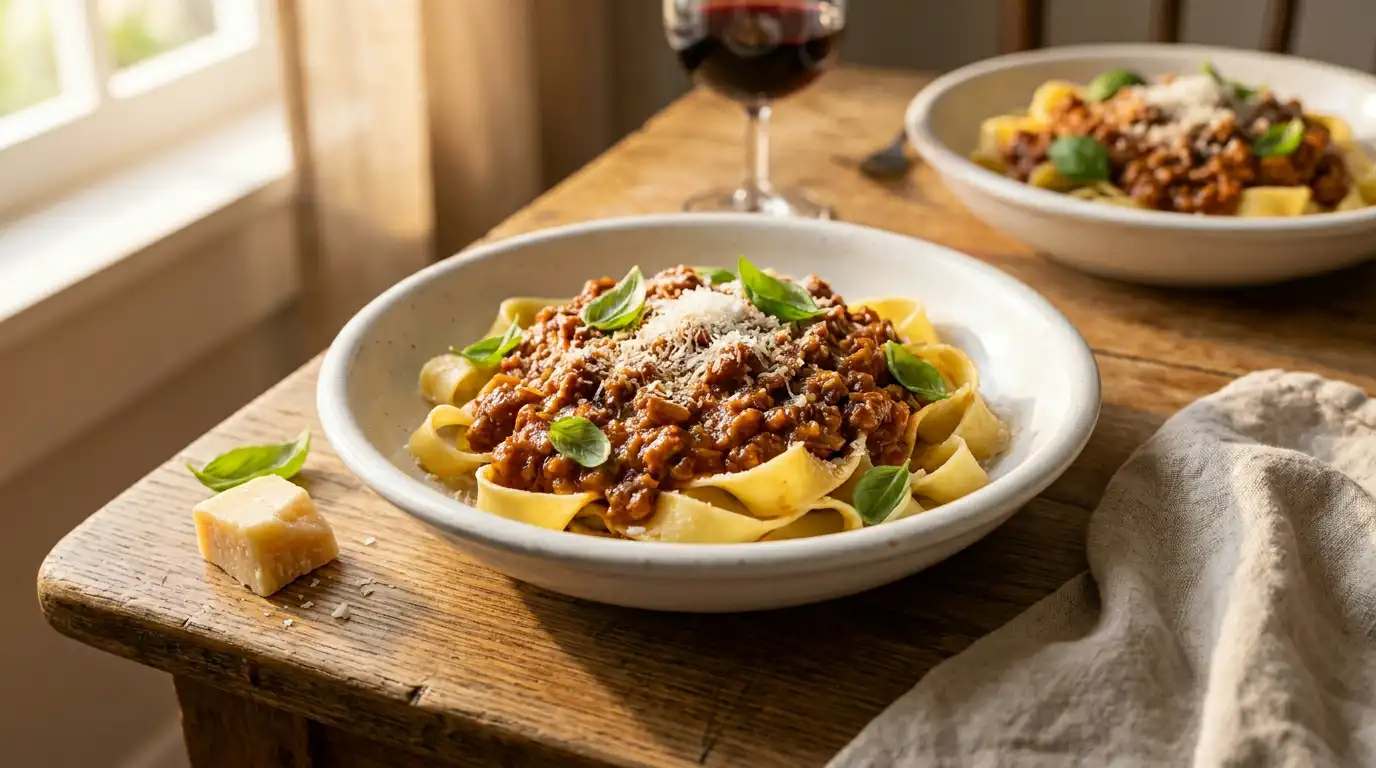
Mary Berry Bolognese Ragu Recipe
Mary Berry Bolognese Ragu is a slow-cooked, deeply savoury meat sauce with a rich, glossy finish and tender strands of beef that coat every strand of pasta. The colour deepens from bright red to a warm, russet-brown as it simmers, and the aroma shifts from sharp tomato to something rounder and more complex.
What makes this version reliable is the low, slow cook time and the careful layering of ingredients from the start. It suits a relaxed Sunday cook as much as a batch-cooking session for the week ahead. From start to finish, the ragu is ready in around 2 hours and 20 minutes.
Ingredients
For the ragu
- 2 tbsp olive oil
- 1 medium onion, finely diced
- 2 celery sticks, finely diced
- 1 medium carrot, finely diced
- 3 garlic cloves, finely chopped
- 500g beef mince, 15–20% fat
- 150g smoked lardons or finely diced streaky bacon
- 2 tbsp tomato puree
- 150ml full-fat milk
- 150ml dry white wine
- 400g tin of chopped tomatoes
- 200ml beef stock
- 1 tsp dried oregano
- 1 bay leaf
- Salt and freshly ground black pepper, to taste
To serve
- 400g dried tagliatelle or pappardelle
- Freshly grated Parmesan, to finish
How to Make Mary Berry Bolognese Ragu Recipe
- Soften the vegetables: Heat the olive oil in a large, heavy-based saucepan or casserole over a medium-low heat. Add the onion, celery, and carrot with a pinch of salt and cook gently for 10 to 12 minutes, stirring occasionally, until the vegetables are completely soft and just beginning to turn golden at the edges. This slow soffritto stage builds the base flavour of the ragu.
- Add the garlic and lardons: Stir in the garlic and lardons and cook for a further 3 to 4 minutes until the lardons have released their fat and the garlic is fragrant but not coloured.
- Brown the mince: Increase the heat to medium-high and add the beef mince. Break it up thoroughly with a wooden spoon and cook, stirring frequently, for 8 to 10 minutes until every piece is well browned with no pink remaining. Allow the meat to catch slightly on the base of the pan before stirring, as this caramelisation adds depth to the finished sauce.
- Add the tomato puree: Stir in the tomato puree and cook it off for 2 minutes, stirring constantly. The puree will darken slightly and lose its raw, sharp smell.
- Pour in the milk: Add the milk and stir well to combine. Cook over a medium heat for 4 to 5 minutes until the milk has been absorbed into the meat mixture. This step is traditional and gives the finished ragu a rounded, less acidic flavour.
- Deglaze with wine: Pour in the white wine and stir, scraping up any sticky bits from the base of the pan. Cook for 3 to 4 minutes until the sharp smell of alcohol has cooked off and the liquid has reduced by about half.
- Add the tomatoes and stock: Tip in the chopped tomatoes and pour in the beef stock. Add the oregano and bay leaf, then season generously with salt and black pepper. Stir everything together and bring to a gentle simmer.
- Simmer low and slow: Reduce the heat to its lowest setting, place a lid on the pan slightly ajar, and leave to simmer for 1 hour 30 minutes, stirring every 20 to 25 minutes. The sauce should bubble very gently throughout. By the end, it will have thickened considerably and the fat will have begun to separate slightly at the surface, which is a good sign.
- Adjust and finish: Remove the bay leaf and taste the ragu. Adjust the seasoning if needed. If the sauce looks too thick, add a splash of hot water or stock and stir through. If it still looks loose, cook uncovered for a further 10 minutes.
- Cook the pasta and serve: Bring a large pan of well-salted water to a rolling boil and cook the tagliatelle according to packet instructions until al dente. Reserve a cupful of the pasta cooking water before draining. Toss the drained pasta through the ragu, adding a little pasta water to loosen if needed, then divide between bowls and finish with freshly grated Parmesan.
Tips for the Best Mary Berry Bolognese Ragu
Why does my bolognese ragu taste acidic even after a long cook?
The most common cause is too much tomato relative to the meat, or skipping the milk step. The milk neutralises the acidity from the tomatoes early in the cooking process. A pinch of sugar stirred in at the end can also balance a sauce that still tastes sharp after simmering.
Why is my ragu watery instead of thick and coating?
This usually happens when the lid is placed fully on the pan, trapping steam and preventing reduction. Always leave the lid slightly ajar during the long simmer, or remove it entirely for the final 15 to 20 minutes to allow the sauce to reduce to the right consistency.
How do I stop the ragu from catching on the bottom of the pan?
Use a heavy-based pan, such as cast iron or a thick stainless steel casserole, which distributes heat evenly and reduces hot spots. If the ragu begins to catch, reduce the heat immediately and add a small splash of water or stock before stirring.
Why does my mince end up in large clumps rather than fine and tender?
This happens when the mince is added to the pan cold or in one large piece. Break it apart into small pieces as soon as it hits the pan and keep working it with a wooden spoon as the heat rises. Adding cold mince to a hot pan can also cause it to steam rather than brown, so bring it closer to room temperature first if possible.
Why does my bolognese taste flat even though I followed the recipe?
Flat-tasting ragu almost always comes down to under-seasoning at the start. Salt the soffritto vegetables early in the cooking and taste again before serving. Freshly grated Parmesan stirred through the sauce just before serving also adds a savoury, rounded finish that lifts the whole dish.
Serving Suggestions
- Toss through wide, flat pasta such as tagliatelle or pappardelle for the most traditional result, as the ribbons hold the sauce well
- Spoon over a generous base of creamy soft polenta for a hearty alternative to pasta
- Use as the meat layer in a classic lasagne, layered with béchamel and pasta sheets
- Serve in toasted ciabatta rolls with a little Parmesan for a satisfying informal lunch
- Pair with a simple green salad dressed with lemon and olive oil to cut through the richness of the sauce
Storage
Room temperature
Leave the ragu to cool completely, then store in an airtight container at room temperature for no longer than 2 hours before refrigerating or freezing.
Refrigerator
Transfer the cooled ragu to an airtight container and refrigerate for up to 3 days. Reheat gently in a saucepan over a low heat, stirring frequently, and add a splash of water or stock if the sauce has thickened in the fridge.
Freezing
Portion the cooled ragu into freezer-safe containers or zip-lock bags, label with the date, and freeze for up to 3 months. Defrost overnight in the refrigerator and reheat thoroughly in a pan before serving, ensuring it is piping hot all the way through.
Nutrition
- Calories: 480 kcal
- Carbohydrates: 42g
- Protein: 32g
- Fat: 18g
- Saturated Fat: 6g
- Sodium: 620mg
Nutrition values are estimates and may vary depending on the specific ingredients and serving sizes used.
FAQs
Can I use pork mince or a beef and pork mix instead of all beef?
Yes, a 50/50 mix of beef and pork mince is a very common variation and gives the ragu a slightly sweeter, more delicate flavour. Keep the total mince weight the same and follow the same method. All-pork mince works too, though the sauce will be a little lighter in colour and less robust in flavour.
Can I make this bolognese ragu ahead of time?
This ragu actually improves with time. Making it a day ahead allows the flavours to deepen and settle together. Cool it, refrigerate overnight, and reheat gently before serving. Many cooks find the second-day sauce noticeably better than the freshly made one.
Can I make this bolognese ragu without wine?
Yes. Replace the white wine with an equal quantity of good beef stock or a splash of red wine vinegar diluted in water. The sauce will be slightly less complex but still very flavourful after a long simmer. Avoid simply leaving out the liquid, as it is needed for deglazing and building the sauce base.
Can I cook this bolognese ragu in a slow cooker?
Yes, the long gentle heat of a slow cooker suits this sauce well. Brown the mince and cook the soffritto on the hob first, then transfer everything to the slow cooker and cook on low for 6 to 8 hours. Remove the lid for the final 30 minutes to allow the sauce to thicken before serving.
Can I double this recipe for batch cooking?
Yes, this recipe doubles well. Use a wider, deeper casserole to ensure even browning of the mince, and expect the initial browning stage to take slightly longer. The simmering time stays roughly the same. Divide into portions before freezing for the most convenient storage.
Conclusion
This Mary Berry Bolognese Ragu Recipe brings together a simple set of ingredients and a patient, low-heat method to produce a sauce with real depth of colour, texture, and flavour. The soffritto base, the milk step, and the long simmer each play a specific role, and the result is a ragu that coats pasta properly and tastes far more complex than the time it takes to prepare. This recipe makes 4 generous servings, each one satisfying enough to stand on its own without anything more than a bowl of pasta and a grating of Parmesan.
If you try this recipe, leave a comment below and let us know how it turned out. Feel free to share it with anyone who enjoys a proper, slow-cooked pasta sauce. If you enjoyed this, you might also like the Mary Berry Fish Pie with Leeks Recipe, another classic comfort dish with a careful, reliable method.
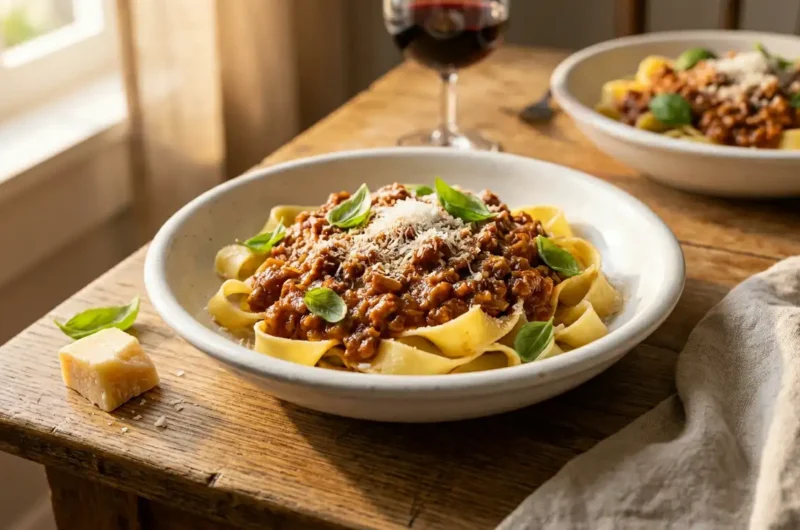
Mary Berry Bolognese Ragu Recipe
Course: Main CourseCuisine: ItalianDifficulty: Easy4
servings20
minutes2
hours480
kcal2
hours20
minutesA rich, slow-cooked meat sauce with deeply savoury flavour, tender beef, and a glossy finish. This classic bolognese ragu simmers low and slow for a sauce that coats pasta beautifully every time.
Ingredients
2 tbsp olive oil
1 medium onion, finely diced
2 celery sticks, finely diced
1 medium carrot, finely diced
3 garlic cloves, finely chopped
500g beef mince, 15-20% fat
150g smoked lardons or finely diced streaky bacon
2 tbsp tomato puree
150ml full-fat milk
150ml dry white wine
400g tin of chopped tomatoes
200ml beef stock
1 tsp dried oregano
1 bay leaf
salt and freshly ground black pepper to taste
400g dried tagliatelle or pappardelle
freshly grated Parmesan to finish
Instructions
- Heat the olive oil in a large heavy-based saucepan over a medium-low heat. Add the onion, celery, and carrot with a pinch of salt and cook gently for 10 to 12 minutes until completely soft and just turning golden at the edges.
- Stir in the garlic and lardons and cook for a further 3 to 4 minutes until the lardons have released their fat and the garlic is fragrant but not coloured.
- Increase the heat to medium-high and add the beef mince. Break it up thoroughly and cook for 8 to 10 minutes, stirring frequently, until well browned with no pink remaining.
- Stir in the tomato puree and cook for 2 minutes, stirring constantly, until it darkens slightly and loses its raw smell.
- Add the milk and stir well to combine. Cook over a medium heat for 4 to 5 minutes until the milk has been fully absorbed into the meat mixture.
- Pour in the white wine and stir, scraping up any sticky bits from the base of the pan. Cook for 3 to 4 minutes until the alcohol smell has cooked off and the liquid has reduced by about half.
- Add the chopped tomatoes and beef stock. Stir in the oregano and bay leaf, season generously with salt and black pepper, and bring to a gentle simmer.
- Reduce the heat to its lowest setting, place the lid slightly ajar, and simmer for 1 hour 30 minutes, stirring every 20 to 25 minutes, until the sauce has thickened and deepened in colour.
- Remove the bay leaf and taste the ragu. Adjust seasoning if needed. If the sauce is too thick, add a splash of hot water or stock. If still loose, cook uncovered for a further 10 minutes.
- Cook the tagliatelle in well-salted boiling water until al dente. Reserve a cupful of pasta water before draining, then toss the pasta through the ragu, adding a little pasta water to loosen if needed. Serve with freshly grated Parmesan.
Notes
- Always cook the soffritto vegetables low and slow for at least 10 minutes to build the base flavour.
- Do not skip the milk step as it neutralises acidity from the tomatoes and gives the sauce a rounder finish.
- Leave the lid slightly ajar during simmering to allow the sauce to reduce properly.
- Use a heavy-based pan such as cast iron to prevent the ragu from catching on the bottom.
- This ragu tastes even better the next day once the flavours have had time to settle.
- A 50/50 mix of beef and pork mince can be used in place of all beef for a slightly sweeter flavour.