Mary Berry Frittata Recipe
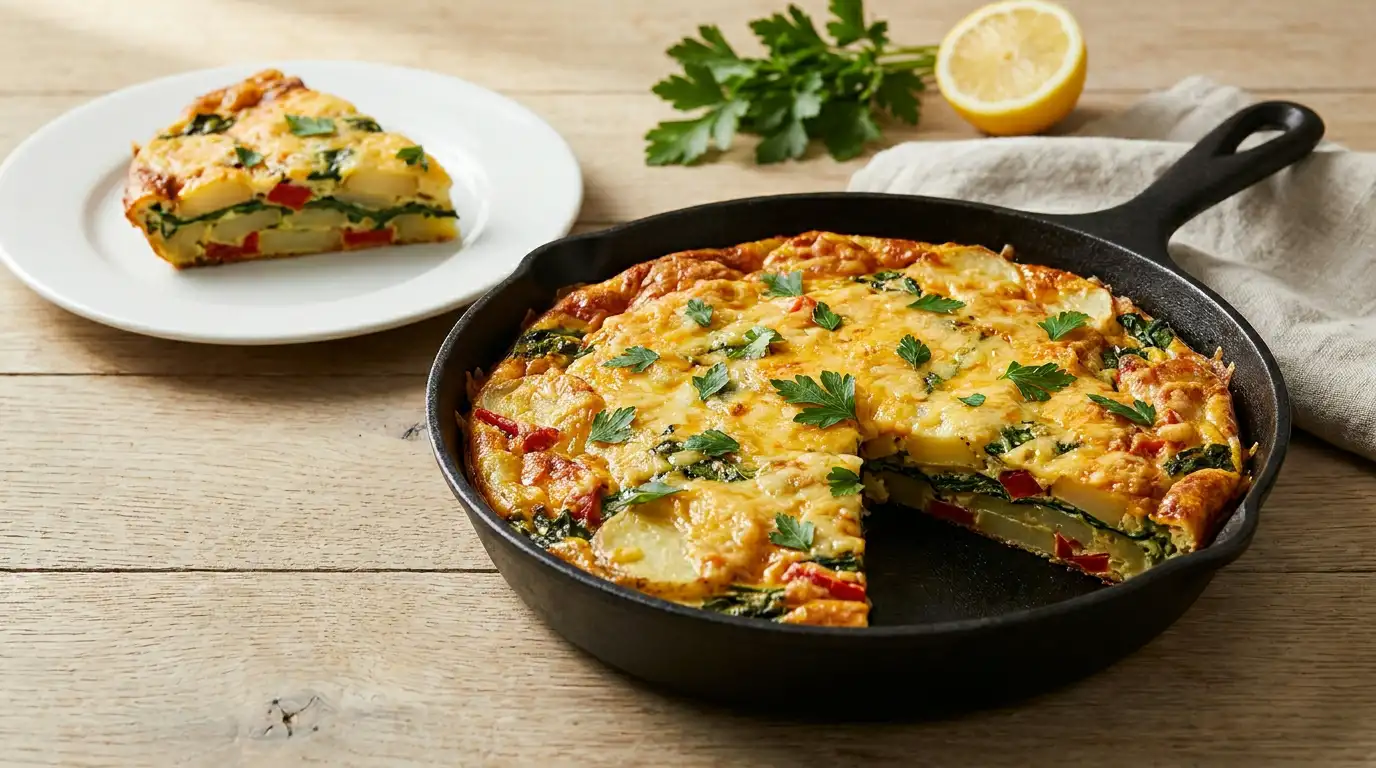
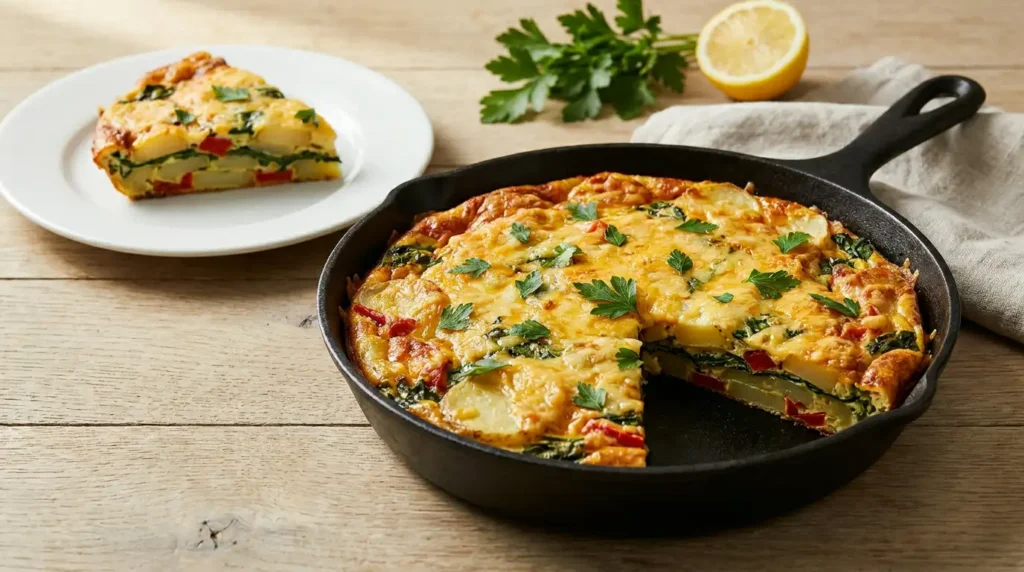
This Mary Berry frittata is a golden, set egg dish with a firm yet tender interior, flecked with softened vegetables and streaks of melted cheese that pull apart gently with a fork. It is light without being insubstantial, and the surface turns a pale amber-gold in the pan, with just enough colour to give each slice a satisfying finish.
What makes this version reliable is the balance of eggs to filling, which keeps the frittata set through the centre without turning rubbery. It works equally well as a relaxed weekend brunch, a light midweek supper, or a cold addition to a packed lunch. The ingredients are straightforward and easy to adapt around what is already in the kitchen. From start to finish, it is ready in around 30 minutes.
Ingredients
- 6 large eggs
- 3 tablespoons whole milk
- Salt and black pepper, to season
- 1 tablespoon olive oil
- 1 medium onion, finely sliced
- 1 red pepper, deseeded and thinly sliced
- 100g baby spinach leaves
- 150g cooked new potatoes, sliced into rounds
- 2 garlic cloves, finely chopped
- 75g mature Cheddar, coarsely grated
- Small handful of fresh flat-leaf parsley, roughly chopped
How to Make Mary Berry Frittata
Crack the eggs into a large jug or bowl, add the milk, and season generously with salt and black pepper. Whisk together until the yolks and whites are fully combined and the mixture is slightly frothy. Whisking in the milk keeps the texture light rather than dense once the frittata sets.
Heat the olive oil in a 24cm ovenproof frying pan over a medium heat. Add the onion and red pepper and cook for 7 to 8 minutes, stirring occasionally, until both are soft and the onion is translucent at the edges. Add the garlic and cook for a further minute.
Scatter the spinach into the pan and stir gently until it wilts down, which takes about 2 minutes. Add the sliced cooked potatoes and arrange them so they sit evenly across the base of the pan. Spreading the filling evenly at this stage means every slice will have a balanced mix of ingredients.
Set the oven grill to high and allow it to come to full heat before the eggs go in. A fully preheated grill finishes the top of the frittata quickly without overcooking the base in the pan below.
Reduce the hob heat to low. Pour the whisked egg mixture evenly over the vegetables in the pan. Leave to cook undisturbed for 4 to 5 minutes, until the edges are set and pulling away slightly from the sides, but the centre still has a gentle wobble.
Scatter the grated Cheddar evenly across the surface. Transfer the pan to the grill and cook for 3 to 4 minutes, until the cheese has melted and the top is golden with a few lightly bronzed patches. Watch closely as grill temperatures vary, and the cheese can go from golden to overdone quickly.
Remove the pan from the grill and leave the frittata to rest for 2 minutes before slicing. Scatter the chopped parsley over the top and cut into wedges directly in the pan. Resting allows the egg proteins to settle, which makes the frittata easier to slice cleanly.
Tips for the Best Mary Berry Frittata
01 Why is my frittata rubbery and tough? +−
02 Why is my frittata still runny in the middle after grilling? +−
03 How do I stop the frittata from sticking to the pan? +−
04 Why does my frittata look pale and not golden on top? +−
05 Why does my frittata collapse and lose its height after slicing? +−
Serving Suggestions
Serve warm, cut into generous wedges, alongside a simple green salad dressed with a light white wine vinegar and olive oil dressing.
Pair with crusty sourdough bread or a few slices of good white bloomer to soak up the soft egg and melted cheese from each slice.
Cut into smaller squares and serve at room temperature as part of a brunch spread alongside smoked salmon and sliced tomatoes.
Slice cold and tuck into a packed lunch box with some dressed rocket leaves and a small pot of chutney on the side.
Serve alongside a bowl of roasted cherry tomatoes cooked with a little olive oil and a pinch of sugar, which adds a bright, slightly sweet contrast to the richness of the egg and cheese.
Storage
Room Temperature
Store leftover frittata in an airtight container at room temperature for no more than one day, away from direct sunlight.
Refrigerator
Wrap the frittata tightly or place slices in an airtight container and refrigerate for up to three days. Bring back to room temperature for around 15 minutes before eating for the best texture, or warm gently in a dry frying pan over a low heat for 2 to 3 minutes.
Freezing
Slice the cooled frittata into individual portions, wrap each tightly in cling film, and freeze for up to two months. Defrost overnight in the refrigerator and reheat in a dry frying pan over a low heat until warmed through, or eat cold once fully thawed.
Nutrition
FAQs
01 Can I use different vegetables in this frittata? +−
02 Can I make this frittata ahead of time? +−
03 Can I use a different cheese instead of Cheddar? +−
04 Can I make this frittata without an ovenproof pan? +−
05 Is this Mary Berry frittata suitable for a gluten-free diet? +−
Conclusion
This Mary Berry frittata is a dependable, versatile dish that earns a regular place in any home kitchen. With a golden surface, a tender set interior, and a filling of softened vegetables and melted Cheddar, it delivers a satisfying result every time without requiring special equipment or advanced technique. This recipe makes 4 generous portions, ideal for a family supper or a brunch that feeds a small group.
If you try this recipe, leave a comment below to share how it turned out. Any variations or additions you discovered along the way are always worth sharing. For another classic that is equally straightforward and crowd-pleasing, you might also enjoy the Mary Berry Limoncello Trifle recipe, which makes a wonderfully light and elegant dessert to round off the same meal.
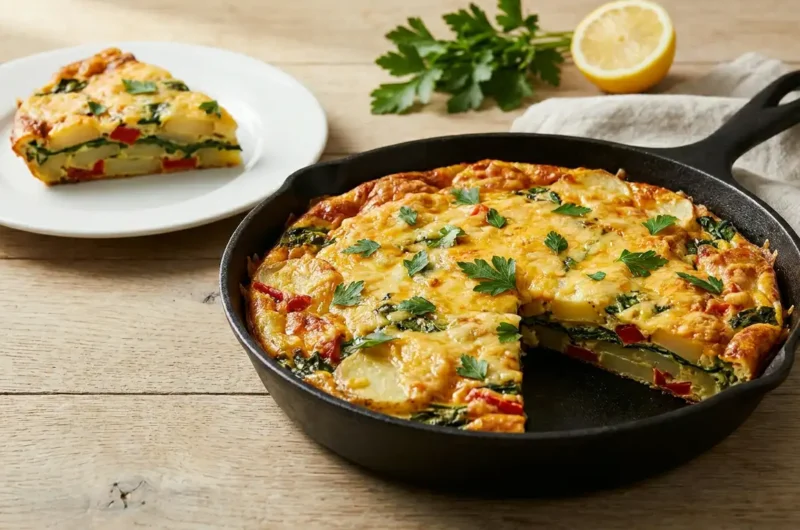
Mary Berry Frittata Recipe
Course: Main CourseCuisine: BritishDifficulty: Easy4
servings10
minutes20
minutes220
kcal30
minutesA golden, set egg dish with a firm yet tender interior, filled with softened vegetables, cooked new potatoes, and melted Cheddar cheese. Ready in just 30 minutes, this reliable frittata works equally well as a brunch, light supper, or cold packed lunch.
Ingredients
6 large eggs
3 tablespoons whole milk
salt and black pepper to season
1 tablespoon olive oil
1 medium onion finely sliced
1 red pepper deseeded and thinly sliced
100g baby spinach leaves
150g cooked new potatoes sliced into rounds
2 garlic cloves finely chopped
75g mature Cheddar coarsely grated
small handful of fresh flat-leaf parsley roughly chopped
Instructions
- Crack the eggs into a large jug or bowl, add the milk, and season generously with salt and black pepper. Whisk together until the yolks and whites are fully combined and the mixture is slightly frothy.
- Heat the olive oil in a 24cm ovenproof frying pan over a medium heat. Add the onion and red pepper and cook for 7 to 8 minutes, stirring occasionally, until both are soft and the onion is translucent at the edges. Add the garlic and cook for a further minute.
- Scatter the spinach into the pan and stir gently until it wilts down, about 2 minutes. Add the sliced cooked potatoes and arrange them so they sit evenly across the base of the pan.
- Set the oven grill to high and allow it to come to full heat before the eggs go in.
- Reduce the hob heat to low. Pour the whisked egg mixture evenly over the vegetables in the pan. Leave to cook undisturbed for 4 to 5 minutes, until the edges are set and pulling away slightly from the sides, but the centre still has a gentle wobble.
- Scatter the grated Cheddar evenly across the surface. Transfer the pan to the grill and cook for 3 to 4 minutes, until the cheese has melted and the top is golden with a few lightly bronzed patches.
- Remove the pan from the grill and leave the frittata to rest for 2 minutes before slicing. Scatter the chopped parsley over the top and cut into wedges directly in the pan.
Notes
- Use a good-quality non-stick ovenproof frying pan to prevent sticking and allow the pan to transfer safely under the grill.
- Keep the hob heat on low once the egg mixture is added to avoid a rubbery texture.
- Allow the grill to fully preheat for at least 5 minutes before placing the pan underneath for an even golden colour.
- Rest the frittata for 2 full minutes after grilling before slicing so the wedges hold their shape cleanly.
- Any vegetables with high water content such as courgette or tomatoes should be cooked until most moisture has evaporated before adding the egg.
- Gruyere, Parmesan, feta, or hard goats cheese can be used in place of Cheddar depending on preference.