Mary Berry Yorkshire Pudding Recipe
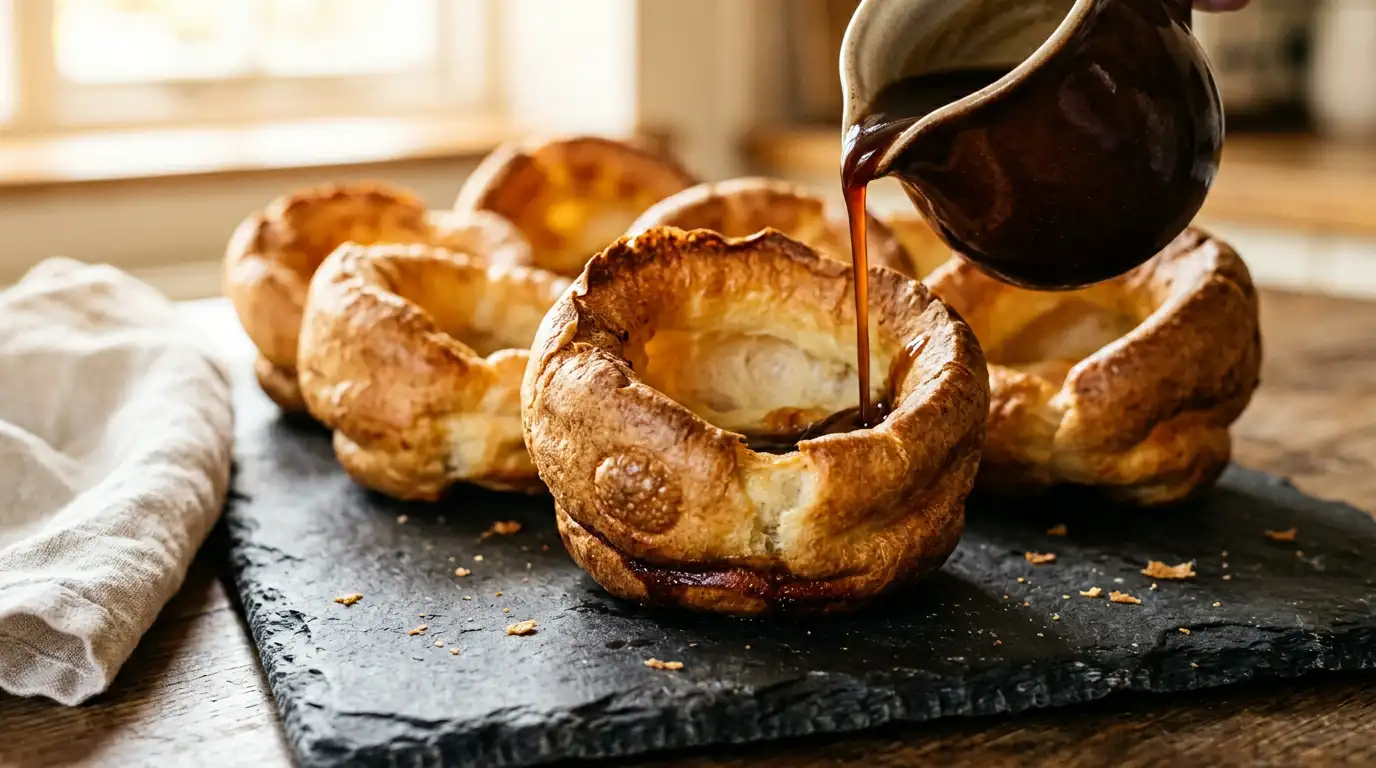
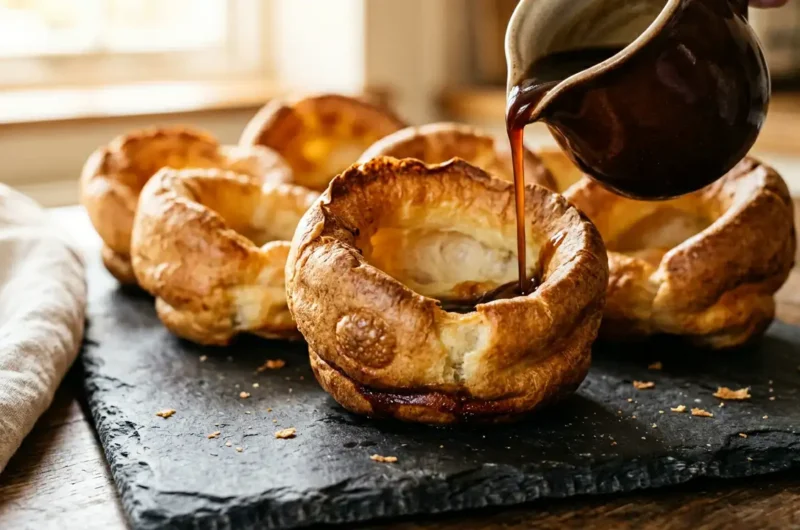
Mary Berry Yorkshire pudding recipe produces tall, hollow puddings with a deep golden shell, a soft and slightly chewy interior, and a crisp rim that holds its shape on the plate. The batter is simple, just eggs, flour, and milk, but the technique behind it makes every difference to the final rise and colour.
This version is reliable even for first-timers because it uses an equal-volume ratio of eggs, flour, and milk, which takes the guesswork out of proportions. It works for a Sunday roast, a midweek dinner alongside leftover beef, or as a starter filled with onion gravy. From start to finish, including resting time, it is ready in around 55 minutes.
Ingredients
- For the batter
- 3 large eggs
- 100g plain flour
- 100ml whole milk
- 100ml cold water
- a pinch of fine sea salt
- 3 tablespoons sunflower oil or beef dripping (for the tin)
How to Make Mary Berry Yorkshire Pudding Recipe
- Make the batter: Measure the flour and salt into a large mixing bowl and make a well in the centre. Crack in the eggs and whisk from the centre outward, gradually drawing in the flour until a thick, smooth paste forms.
- Add the liquid: Pour in the milk and cold water a little at a time, whisking continuously until the batter is completely lump-free and has the consistency of single cream. This gradual addition prevents lumps from forming before the batter is fully combined.
- Rest the batter: Cover the bowl and leave the batter to rest at room temperature for at least 30 minutes. Resting allows the flour to fully absorb the liquid, which gives the puddings a more even rise in the oven.
- Heat the tin: Preheat the oven to 220°C (200°C fan, Gas Mark 7). Add roughly half a teaspoon of sunflower oil or beef dripping to each cup of a 12-hole bun tin, then place the tin on the top shelf of the oven for 10 to 12 minutes, until the fat is smoking hot. The fat must be visibly smoking before the batter goes in, or the puddings will not rise properly.
- Fill the tin: Working quickly, pour the rested batter into a jug for easier pouring, then fill each cup about one-third full. Do not overfill, as the batter needs room to puff up and over the rim.
- Bake the puddings: Return the tin to the top shelf immediately and bake for 20 to 22 minutes. Do not open the oven door during baking, as the sudden drop in temperature will cause the puddings to collapse before the structure sets.
- Check and serve: The finished puddings should be deep golden brown on the outside, hollow in the centre, and fully risen above the tin. Serve straight from the oven, as they will begin to deflate slightly once removed from the heat.
Tips for the Best Yorkshire Pudding
Why are my Yorkshire puddings not rising?
The most common cause is fat that was not hot enough before the batter went in. The fat must be visibly smoking in the tin. If the puddings sit flat, increase the oven temperature by 10°C and heat the fat for a full 12 minutes on the next attempt.
Why did my Yorkshire puddings go flat after coming out of the oven?
Some deflation is normal, but puddings that collapse completely are usually underbaked. The internal structure needs to be fully set before removal. Extend baking by 2 to 3 minutes and check that the exterior is a rich, even brown rather than pale gold.
Why are my Yorkshire puddings tough and dense instead of light?
Overmixing after the liquid is added can overdevelop the gluten, making the batter heavy. Whisk only until smooth, then stop. Resting the batter for 30 minutes also helps relax the gluten before baking, which produces a lighter crumb.
Why are my Yorkshire puddings unevenly risen across the tin?
Uneven rising usually means the oven has a hot spot or the tin was not fully preheated. Rotate the tin halfway through baking only if your oven is known to run unevenly, doing it quickly so the door is open for as little time as possible.
Why is the bottom of my Yorkshire pudding still soft and pale?
A pale bottom means the tin was placed too high in the oven, away from the direct heat source at the bottom. The top shelf works well for the rise, but if the base is consistently underdone, move the tin to the upper-middle shelf instead.
Serving Suggestions
- Serve alongside a classic roast beef with a jug of dark, glossy beef gravy poured into the hollow centre.
- Fill with a thick, well-seasoned onion gravy and serve as a starter course before a Sunday lunch.
- Pair with roasted root vegetables and sliced pork loin for a midweek dinner that uses up the puddings the same day.
- Serve smaller versions from a 24-hole mini tin as a party canapé, filled with a spoonful of creamed horseradish and thin slices of rare beef.
- Enjoy alongside buttered mashed potato and braised red cabbage for a comforting autumnal plate.
Storage
Room Temperature
Store cooled Yorkshire puddings in an airtight container at room temperature for up to one day.
Refrigerator
Place in an airtight container and refrigerate for up to 3 days. To bring them back to life, reheat in a hot oven at 200°C for 4 to 5 minutes until the shell crisps up again. Avoid microwaving, as this makes the pastry-like shell chewy rather than crisp.
Freezing
Allow the puddings to cool completely, then arrange in a single layer in a freezer-safe bag or container and freeze for up to 3 months. Reheat from frozen in an oven preheated to 200°C for 8 to 10 minutes, without defrosting first, until fully heated through and the exterior is crisp.
Nutrition
- Calories: 78 kcal
- Carbohydrates: 8g
- Protein: 3g
- Fat: 4g
- Saturated Fat: 0.7g
- Sodium: 55mg
Nutrition values are estimates based on one pudding from a 12-hole tin and may vary depending on the ingredients and oil used.
FAQs
Can I make the Yorkshire pudding batter the night before?
Yes, the batter can be made the evening before and kept covered in the fridge overnight. Remove it from the fridge about 20 minutes before using so it returns to room temperature, which helps the puddings rise evenly.
Can I use semi-skimmed milk instead of whole milk?
Semi-skimmed milk works, though the puddings may be very slightly less rich in flavour. The structure and rise will not be noticeably affected. Avoid plant-based milks, as the lower protein content can reduce the height of the rise.
Can I use a muffin tin instead of a bun tin?
A muffin tin produces fewer but larger puddings, each with a deeper well. The baking time stays roughly the same, though the larger volume may need an extra 2 to 3 minutes. Make sure the tin is preheated just as thoroughly as a bun tin.
Can I double this recipe to make more Yorkshire puddings?
The batter doubles easily. Use two separate tins and place them on the same shelf side by side, or bake in two batches. Avoid crowding the oven, as this lowers the temperature and affects how the puddings rise.
Is this recipe suitable for a gluten-free diet?
Plain flour can be replaced with a good-quality gluten-free plain flour blend. The puddings may not rise quite as high, but the result is still golden and well-flavoured. Check that the baking tin is fully hot before adding the batter, as gluten-free batters need that initial blast of heat even more than standard batter.
Conclusion
This Mary Berry Yorkshire pudding recipe comes down to three things: a well-rested batter, smoking-hot fat, and an oven that is left well alone while the puddings bake. Follow those principles and the result is a tin of tall, golden, hollow puddings with a crisp rim and a soft centre. This recipe makes 12 puddings from a standard bun tin, which is enough to serve 4 to 6 people as part of a roast dinner.
Whether it is a Sunday roast or a simple weeknight meal, a good Yorkshire pudding turns an ordinary plate into something far more satisfying. If this recipe worked well for you, share it with someone who has been searching for a reliable version, or leave a comment below with any questions. If you enjoyed this, you might also like the Mary Berry all-in-one chocolate cake recipe for your next baking session.
Mary Berry Yorkshire Pudding Recipe
Course: Side DishCuisine: BritishDifficulty: Easy12
servings35
minutes22
minutes78
kcal57
minutesA classic British batter pudding with a deep golden shell, soft chewy interior, and a crisp risen rim. Made with a simple equal-volume ratio of eggs, flour, and milk for reliable results every time.
Ingredients
3 large eggs
100g plain flour
100ml whole milk
100ml cold water
a pinch of fine sea salt
3 tablespoons sunflower oil or beef dripping (for the tin)
Instructions
- Measure the flour and salt into a large mixing bowl and make a well in the centre. Crack in the eggs and whisk from the centre outward, gradually drawing in the flour until a thick, smooth paste forms.
- Pour in the milk and cold water a little at a time, whisking continuously until the batter is completely lump-free and has the consistency of single cream.
- Cover the bowl and leave the batter to rest at room temperature for at least 30 minutes.
- Preheat the oven to 220°C (200°C fan, Gas Mark 7). Add roughly half a teaspoon of sunflower oil or beef dripping to each cup of a 12-hole bun tin, then place the tin on the top shelf of the oven for 10 to 12 minutes until the fat is smoking hot.
- Pour the rested batter into a jug and fill each cup about one-third full.
- Return the tin to the top shelf immediately and bake for 20 to 22 minutes without opening the oven door.
- Serve straight from the oven once the puddings are deep golden brown, hollow in the centre, and fully risen above the tin.
Notes
- The fat must be visibly smoking before the batter goes in or the puddings will not rise properly.
- Do not open the oven door during baking as the drop in temperature will cause the puddings to collapse.
- Rest the batter for at least 30 minutes to allow the flour to fully absorb the liquid.
- Whisk only until smooth and stop to avoid overdeveloping the gluten.
- Batter can be made the night before and kept covered in the fridge overnight.
- Remove batter from the fridge 20 minutes before using so it returns to room temperature.
- Reheat frozen puddings from frozen at 200°C for 8 to 10 minutes without defrosting first.