Mary Berry Raspberry Roulade Recipe
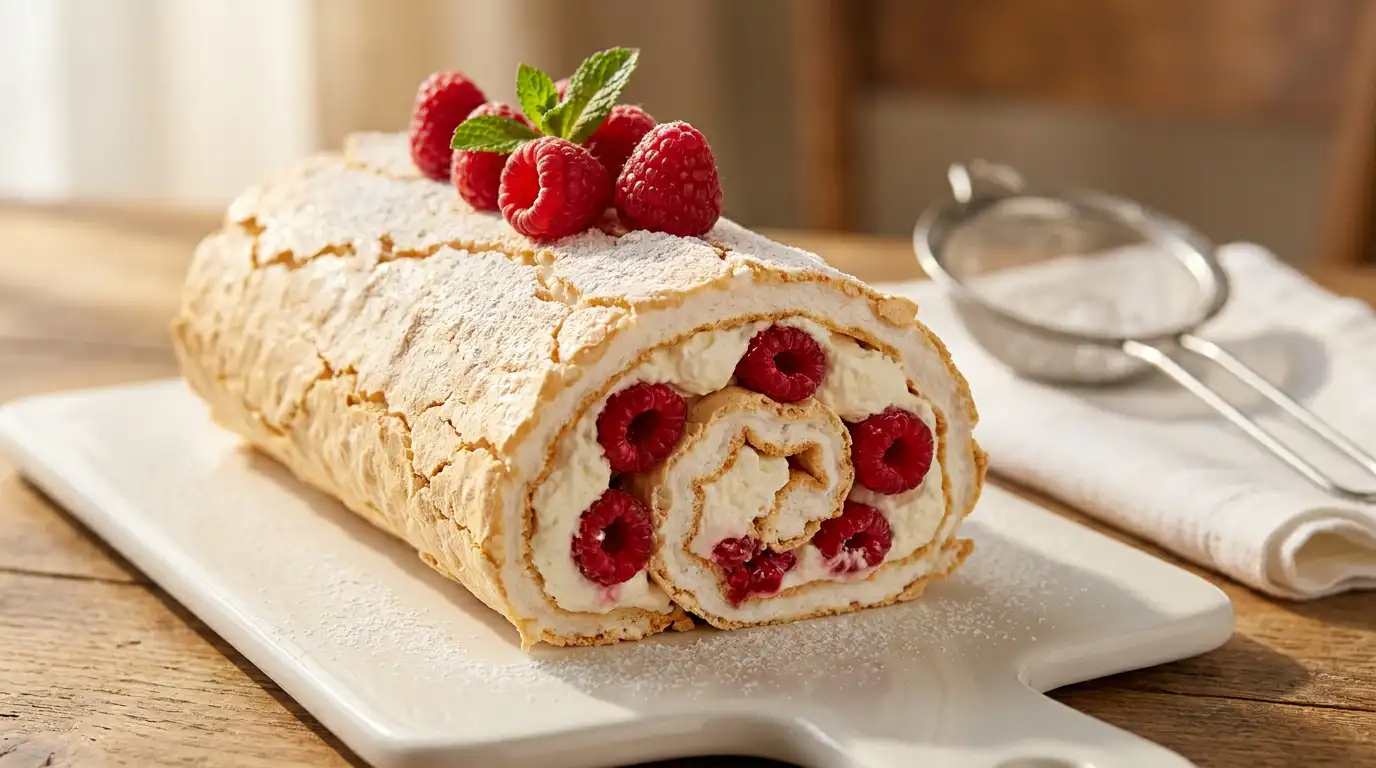
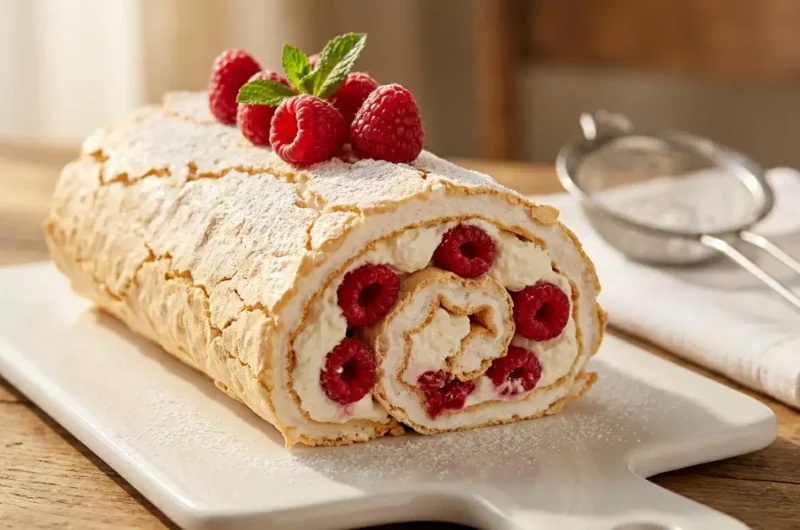
This raspberry roulade is a cloud-light meringue, crisp at the edges and marshmallowy within, rolled around a generous layer of softly whipped cream and sharp, jewel-bright raspberries. The contrast of textures, airy meringue against cool cream and bursting fruit, makes it one of the most satisfying summer desserts to slice and serve. It holds its shape beautifully on a board, with the spiral of cream and berries visible at each cut end.
This version of the mary berry raspberry roulade recipe is straightforward enough for a first-time meringue maker, yet polished enough for a garden party or celebration table. The method is forgiving, requiring no specialist equipment beyond a Swiss roll tin and a hand whisk. From start to finish, it is ready in around 1 hour, plus cooling time.
Ingredients
For the meringue
- 4 large egg whites, at room temperature
- 225g caster sugar
- 1 tsp white wine vinegar
- 1 tsp cornflour
- 1 tsp vanilla extract
For the filling
- 300ml double cream
- 1 tbsp icing sugar, sifted
- 200g fresh raspberries
To finish
- 2 tbsp icing sugar, for dusting
- A small handful of fresh raspberries
How to Make Mary Berry Raspberry Roulade
- Prepare the tin: Heat the oven to 200°C (180°C fan, gas mark 6). Line a 33 x 23cm Swiss roll tin with non-stick baking paper, pressing it firmly into the corners and leaving a slight overhang at each end.
- Whisk the egg whites: Place the egg whites in a large, clean bowl and whisk on a high speed until stiff peaks form. The mixture should be glossy and hold its shape firmly when the whisk is lifted, with no liquid pooling at the base.
- Add the sugar: Add the caster sugar one tablespoon at a time, whisking well between each addition. This gradual method helps dissolve the sugar fully into the whites, giving the meringue a smooth, stable texture rather than a grainy one.
- Fold in the flavourings: Sprinkle the cornflour, white wine vinegar, and vanilla extract over the meringue and fold in gently using a large metal spoon. These additions give the interior that characteristic soft, marshmallow-like chew once baked.
- Spread and bake: Pour the meringue into the prepared tin and spread it evenly to the edges using a palette knife or the back of a spoon. Bake in the centre of the oven for 8 minutes, then reduce the temperature to 160°C (140°C fan, gas mark 3) and bake for a further 15 minutes, until the surface is lightly golden and set.
- Turn out and cool: Place a sheet of non-stick baking paper on a clean work surface and dust it generously with icing sugar. Carefully invert the meringue onto the dusted paper and peel away the lining paper. Leave to cool for at least 20 minutes before filling. Cooling on the paper prevents the surface from drying out and cracking during the roll.
- Whip the cream: Whisk the double cream with the icing sugar until it holds soft, billowy peaks. It should be thick enough to spread without running but not so stiff that it becomes grainy.
- Fill and roll: Spread the whipped cream evenly over the cooled meringue, leaving a 2cm border along one of the short edges. Scatter the raspberries over the cream, distributing them as evenly as possible. Using the paper to help, roll the meringue up firmly from the short edge opposite the border, keeping the roll as tight as you can without pressing out the cream.
- Serve and finish: Transfer the roulade to a serving board with the seam facing down. Dust with icing sugar through a fine sieve and arrange a few fresh raspberries along the top. Slice with a sharp serrated knife using a gentle sawing motion.
Tips for the Best Raspberry Roulade
Why did my meringue crack badly when I rolled it?
A small amount of cracking is completely normal and part of the roulade’s character. Significant cracking usually means the meringue was either overbaked or had cooled too long and dried out. Roll it while it is still slightly warm and pliable, around 20 minutes after coming out of the oven.
Why is my meringue weeping or going sticky after rolling?
This is caused by undissolved sugar drawing in moisture from the air. Make sure each tablespoon of caster sugar is fully whisked in before adding the next, and use the roulade within a few hours of assembly to keep it at its best.
How do I stop my roulade from unrolling once it is on the board?
Place the roulade seam-side down on the serving board straight away and give it a moment to settle before dusting and slicing. Chilling it in the fridge for 20 minutes after rolling also helps it hold its shape firmly.
Why is my meringue flat rather than thick and puffy?
The most common cause is grease in the bowl or on the whisk, which prevents egg whites from reaching full volume. Wipe the bowl and whisk attachments with a little white vinegar on kitchen paper before starting, then make sure no yolk has slipped into the whites.
Why does my roulade look pale rather than golden on top?
The initial high-temperature blast at 200°C is what gives the surface its light golden colour. If the oven temperature was too low from the start, the surface stays very pale. An oven thermometer is the most reliable way to check your oven runs true to temperature.
Serving Suggestions
- Serve chilled, cut into generous slices, with a spoonful of lightly crushed fresh raspberries alongside to act as a sauce.
- Dust with extra icing sugar just before bringing to the table, as it absorbs into the meringue quickly.
- Pair with a pot of Earl Grey or a light Darjeeling for an afternoon tea setting.
- Arrange on a long rectangular board with a few mint leaves and extra berries scattered around it for a centrepiece dessert.
- Serve alongside a small jug of raspberry coulis for those who prefer a sharper fruit finish against the cream.
Storage
Room temperature
Once assembled, the roulade should not be left at room temperature for more than 2 hours, as the cream filling will soften and the meringue will begin to absorb moisture.
Refrigerator
Cover the roulade loosely with cling film and refrigerate for up to 24 hours. The meringue will soften slightly overnight but the flavour remains good. Remove from the fridge 10 minutes before serving to take the chill off the cream.
Freezing
The unfilled meringue sheet can be wrapped tightly in cling film and frozen for up to one month. Defrost at room temperature for around an hour, then fill and roll as directed once fully thawed.
Nutrition
- Calories: 310 kcal
- Carbohydrates: 42g
- Protein: 4g
- Fat: 14g
- Saturated Fat: 9g
- Sodium: 55mg
Nutrition values are estimates based on standard ingredient brands and may vary depending on the specific products used and the exact serving size.
FAQs
Can I use frozen raspberries instead of fresh in this roulade?
Frozen raspberries can be used but they release a lot of liquid as they thaw, which can make the cream watery and cause the meringue to go soggy quickly. If using frozen, defrost them fully and pat dry on kitchen paper before scattering over the cream, and assemble no more than an hour before serving.
Can I make this roulade the day before a party?
The meringue base can be baked, cooled, and left unrolled (covered with the paper) the night before. Fill and roll it on the morning of the event and refrigerate until needed. Assembling it fully more than 24 hours ahead is not recommended, as the meringue begins to lose its texture.
Can I swap the raspberries for other fruit in this recipe?
Strawberries, sliced and lightly sugared, work very well in place of raspberries. Passion fruit pulp spooned over the cream before rolling also gives a beautiful sharp contrast. Avoid very wet fruits such as tinned peaches without draining thoroughly, as excess juice will break down the cream and soften the meringue too quickly.
What size Swiss roll tin works best for this roulade?
A 33 x 23cm Swiss roll tin gives a meringue with the right thickness, around 1.5cm deep once spread, that rolls without splitting excessively. A tin that is too small will give a thicker meringue that is harder to roll, while a larger tin spreads it too thin and risks overbaking.
Can I flavour the cream differently for a variation?
A teaspoon of rose water or a tablespoon of elderflower cordial folded through the whipped cream works particularly well with raspberries. Keep any added liquid minimal so the cream stays thick enough to hold during rolling.
Conclusion
This mary berry raspberry roulade recipe delivers a dessert that is visually striking but genuinely achievable at home. The meringue is forgiving enough for beginners once you understand the simple technique of adding sugar gradually, and the combination of crisp edges, soft centre, cool cream, and sharp raspberries makes every slice worth the effort. This recipe yields 8 generous slices, making it ideal for a family pudding or a small gathering.
Whether it is for a summer lunch, a birthday spread, or an afternoon tea table, this roulade always draws attention when it is brought out. The small cracks and imperfections are part of its charm rather than a flaw. Try making it once and it will quickly become part of your regular repertoire. If you give it a go, leave a comment below with how it turned out, and share the recipe with anyone who loves a good meringue dessert. If you enjoyed this, you might also like Mary Berry Parkin Recipe.
Mary Berry Raspberry Roulade Recipe
Course: DessertCuisine: BritishDifficulty: Easy8
servings20
minutes23
minutes310
kcal1
hourA cloud-light meringue rolled around softly whipped cream and sharp fresh raspberries. This classic roulade is beginner-friendly, visually stunning, and ready in around 1 hour plus cooling time.
Ingredients
4 large egg whites at room temperature
225g caster sugar
1 tsp white wine vinegar
1 tsp cornflour
1 tsp vanilla extract
300ml double cream
1 tbsp icing sugar sifted
200g fresh raspberries
2 tbsp icing sugar for dusting
a small handful of fresh raspberries to finish
Instructions
- Heat the oven to 200C (180C fan gas mark 6) and line a 33 x 23cm Swiss roll tin with non-stick baking paper pressing it into the corners with a slight overhang at each end.
- Whisk the egg whites in a large clean bowl on high speed until stiff glossy peaks form with no liquid pooling at the base.
- Add the caster sugar one tablespoon at a time whisking well between each addition until fully dissolved and the meringue is smooth and stable.
- Sprinkle the cornflour white wine vinegar and vanilla extract over the meringue and fold in gently using a large metal spoon.
- Pour the meringue into the prepared tin spread evenly to the edges then bake for 8 minutes before reducing the temperature to 160C (140C fan gas mark 3) and baking for a further 15 minutes until lightly golden and set.
- Place a sheet of non-stick baking paper on a clean surface dust generously with icing sugar then invert the meringue onto it and peel away the lining paper. Leave to cool for at least 20 minutes.
- Whisk the double cream with the icing sugar until it holds soft billowy peaks thick enough to spread without running.
- Spread the whipped cream evenly over the cooled meringue leaving a 2cm border along one short edge then scatter the raspberries over the cream.
- Using the paper to assist roll the meringue firmly from the short edge opposite the border keeping the roll as tight as possible without pressing out the cream.
- Transfer to a serving board seam-side down dust with icing sugar through a fine sieve arrange fresh raspberries on top and slice with a sharp serrated knife.
Notes
- Roll the meringue while still slightly warm around 20 minutes out of the oven to prevent excessive cracking.
- Add caster sugar one tablespoon at a time to ensure it dissolves fully and gives a smooth stable meringue.
- Wipe the bowl and whisk with white vinegar on kitchen paper before starting to remove any trace of grease.
- Chill the rolled roulade in the fridge for 20 minutes before slicing to help it hold its shape.
- Assemble no more than 24 hours ahead as the meringue softens and loses texture beyond that point.
- Use a sharp serrated knife with a gentle sawing motion for clean even slices.