Mary Berry Marmalade Recipe
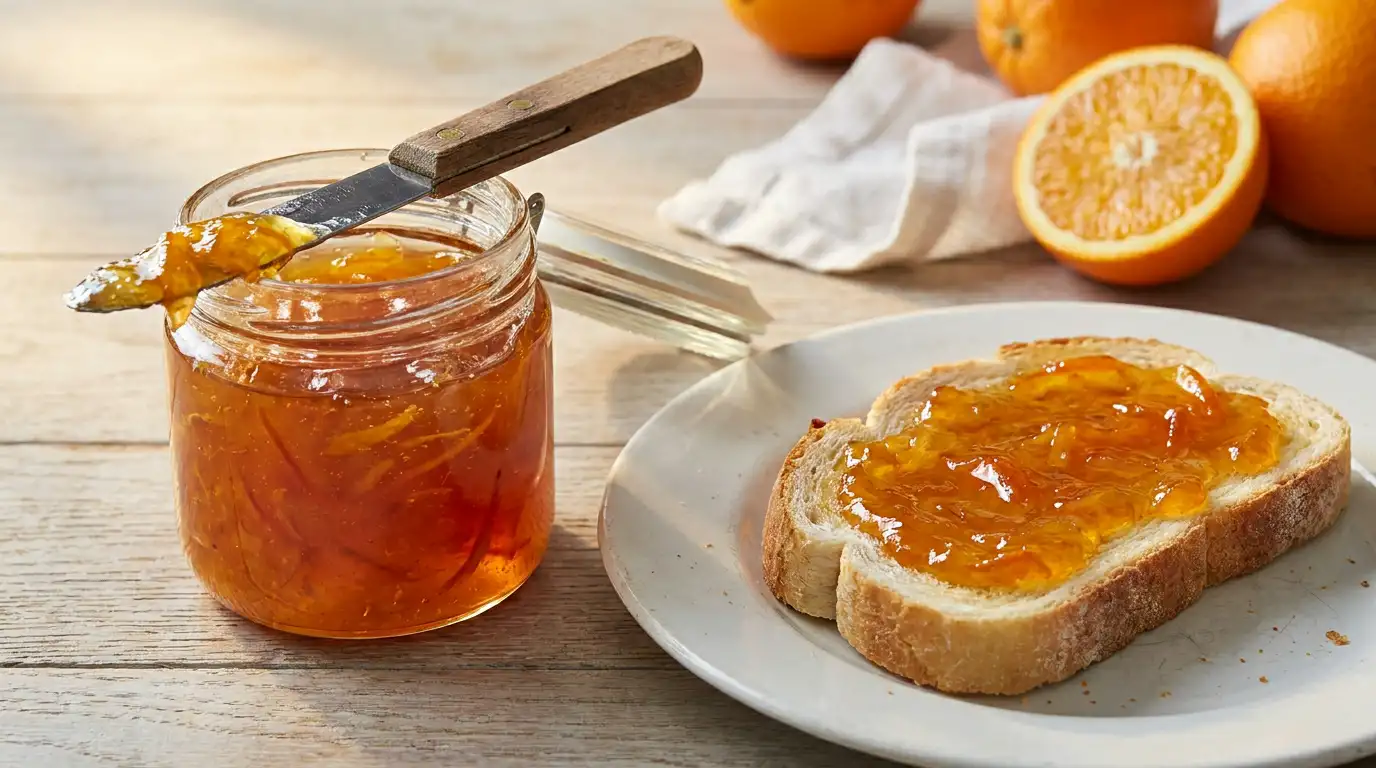
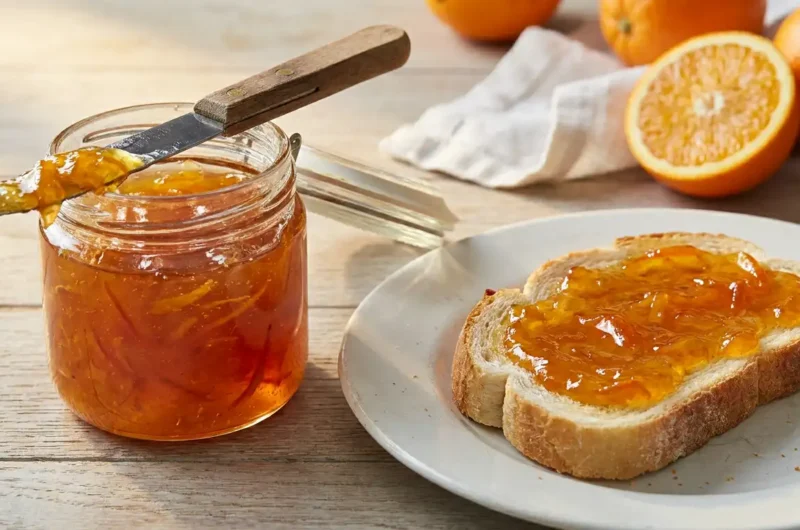
Mary Berry marmalade recipe produces a deeply citrus preserve with a glossy, amber-orange set that catches the light beautifully in the jar. The peel is tender without being soft, the set is firm enough to hold on a spoon, and the bitter edge of Seville orange balances cleanly against the sweetness of the sugar. This version is straightforward to follow, even for a first-time marmalade maker, and the method is reliable across batches. It suits toast on a weekday morning, a filling in a Victoria sponge, or a glaze brushed over a roast ham joint. From start to finish, the whole process takes around 2 hours and 30 minutes.
What sets this approach apart is the shredding technique and the balance of peel to liquid. Using a thin, even shred creates a preserve that spreads without tearing bread. The setting point is easy to test at home and the result is consistently firm rather than runny or overset.
Ingredients
For the marmalade
- 1kg Seville oranges, scrubbed
- 2 unwaxed lemons, scrubbed
- 1.5 litres cold water
- 1.5kg granulated white sugar
How to Make Mary Berry Marmalade Recipe
- Prepare the fruit: Halve all the oranges and lemons, then squeeze out the juice and pips into a large, heavy-based saucepan or preserving pan. Tie the pips and any white pith that falls away into a square of muslin and secure tightly with kitchen string, because the pectin inside the pips is essential for a firm set.
- Shred the peel: Slice the squeezed orange halves into thin strips, roughly 3mm wide. Aim for even shreds so the peel softens uniformly during cooking. Add the shredded peel to the pan along with the muslin bag, strained juice, and the cold water.
- Soften the peel: Bring the pan to a gentle boil over medium heat, then reduce to a steady simmer. Cook uncovered for approximately 1 hour 30 minutes until the peel is completely soft and the liquid has reduced by roughly a third. The peel is ready when it crushes easily between two fingers.
- Remove the muslin bag: Lift out the muslin bag using tongs and squeeze it firmly against the side of the pan to push out as much pectin-rich liquid as possible. Discard the bag. This step ensures the marmalade has enough natural pectin to reach setting point without additional help.
- Add the sugar: Pour in all the granulated sugar and stir over a low heat until every grain has dissolved before letting the mixture boil. If the sugar boils before it fully dissolves, the set may become grainy.
- Boil to setting point: Increase the heat and bring the marmalade to a rapid, rolling boil. Boil hard for 15 to 25 minutes, skimming off any foam that rises. Begin testing for a set after 15 minutes by placing a small spoonful onto a cold saucer, leaving it for 1 minute, then pushing it gently with a fingertip. If the surface wrinkles and holds its shape, setting point has been reached.
- Rest and pot: Remove the pan from the heat and leave the marmalade to rest for 10 minutes before ladling into warm, sterilised jars. This brief rest allows the peel to distribute evenly rather than floating to the top of each jar. Seal immediately with clean lids.
Tips for the Best Mary Berry Marmalade Recipe
Why has my marmalade not set after cooling completely?
The most common cause is insufficient pectin or not reaching a true rolling boil. Return the open jars of soft marmalade to the pan, bring it back to a rapid boil for a further 5 to 10 minutes, then retest on a cold saucer before re-potting into freshly sterilised jars.
Why is the peel tough and chewy in the finished jar?
The peel was not softened for long enough before the sugar was added. Sugar firms peel very quickly once it enters the pan. Always check that the shreds crush with almost no resistance before adding the sugar.
Why does my marmalade look cloudy rather than clear and amber?
Cloudiness usually comes from the sugar boiling before it had dissolved, or from not squeezing and removing the muslin bag cleanly. Stir over low heat until no grains are visible at the base of the pan before increasing the temperature.
Why is there a thick layer of white foam on top of the marmalade in the jar?
Foam forms during the rolling boil and needs skimming with a spoon as the marmalade cooks. Adding a small knob of unsalted butter, about 5g, at the end of boiling also helps the foam disperse before potting.
Why does the peel float to the top of the jar instead of being evenly distributed?
The marmalade was potted while still too hot and liquid. Allowing it to rest in the pan for 10 minutes before ladling gives the preserve enough body to hold the peel in suspension as it cools in the jar.
Serving Suggestions
- Spread over thick slices of warm, crusty white toast with a layer of good salted butter underneath
- Stir one tablespoon into the glaze for a roast duck or gammon joint during the final 20 minutes of roasting
- Use as a filling between the layers of a light Victoria sponge in place of, or alongside, jam
- Spoon over a warm plain scone with clotted cream for a citrus-forward afternoon tea variation
- Stir a teaspoon into a mug of hot water with a slice of fresh ginger as a soothing winter drink
Storage
Room temperature
Store sealed, unopened jars in a cool, dark cupboard for up to 12 months.
Refrigerator
Once a jar is opened, keep it in the refrigerator and use within 6 to 8 weeks. Bring the jar to room temperature for 10 minutes before spreading, as the cold thickens the set slightly and makes it harder to use straight from the fridge.
Freezing
Marmalade can be frozen in freezer-safe containers, leaving a 2cm gap at the top for expansion, and kept for up to 1 year. Defrost overnight in the refrigerator and stir gently before use, as the texture may separate slightly on thawing.
Nutrition
- Calories: 52 kcal
- Carbohydrates: 13g
- Protein: 0.1g
- Fat: 0g
- Saturated Fat: 0g
- Sodium: 1mg
Nutrition values are estimates based on a standard 15g serving and may vary depending on the specific ingredients used and the final yield of the batch.
FAQs
Can I use regular oranges instead of Seville oranges?
Seville oranges are preferred because they are naturally high in pectin and have a sharp, bitter flavour that balances well against the sugar. If Seville oranges are out of season, use a mix of sweet oranges and one extra lemon, and add a 400ml carton of commercial apple juice to boost the pectin level. The result will be slightly sweeter and milder in flavour.
Can I make this marmalade ahead of time?
Yes. Properly potted and sealed marmalade keeps for up to 12 months unopened, which makes it an excellent make-ahead preserve. Many people make a large batch in January and February when Seville oranges are at their best and store it for the rest of the year.
Can I halve this recipe to make a smaller batch?
Yes, the recipe halves reliably. Use 500g oranges, 1 lemon, 750ml water, and 750g sugar. The softening time remains roughly the same, but watch the boiling stage carefully as smaller volumes can reach setting point faster, sometimes within 10 to 12 minutes.
What type of jar works best for homemade marmalade?
Standard glass jam jars with twist-off lids work well and are the most common choice. Sterilise them by washing in hot soapy water, rinsing, and placing upright in an oven at 140C for 15 minutes. Fill and seal the jars while both the jars and the marmalade are still warm for the best seal.
Can I add whisky or ginger to this marmalade recipe?
Both work as additions stirred in after the marmalade reaches setting point and is taken off the heat. Use 2 to 3 tablespoons of a good blended Scotch whisky, or 30g of finely chopped stem ginger, per kilogram of oranges. Stir in during the 10-minute rest before potting.
Conclusion
This Mary Berry marmalade recipe produces a classic, well-set preserve with a clean citrus flavour and a satisfying bitter edge. The peel is tender, the set is firm, and the method is consistent enough to repeat batch after batch with the same result. This recipe yields approximately 4 to 5 standard 340g jars, depending on how long the boil is sustained and the juiciness of the fruit.
Give this a go the next time Seville oranges appear in the shops, usually from late January through to early March. Share your results in the comments below, including any variations you tried. If you enjoyed this, you might also like the Mary Berry Bakewell Tart Recipe for another reliable, classic bake from the same kitchen tradition.
Mary Berry Marmalade Recipe
Course: PreserveCuisine: BritishDifficulty: Easy4
servings30
minutes2
hours52
kcal2
hours30
minutesA classic homemade Seville orange marmalade with a glossy amber set, tender peel, and a clean bitter edge. Reliable, beginner-friendly, and perfect for spreading, glazing, or gifting.
Ingredients
1kg Seville oranges, scrubbed
2 unwaxed lemons, scrubbed
1.5 litres cold water
1.5kg granulated white sugar
Instructions
- Halve all the oranges and lemons, then squeeze out the juice and pips into a large heavy-based saucepan or preserving pan. Tie the pips and any fallen pith into a muslin square and secure with kitchen string.
- Slice the squeezed orange halves into thin strips roughly 3mm wide. Add the shredded peel, muslin bag, strained juice, and cold water to the pan.
- Bring the pan to a gentle boil over medium heat, then reduce to a steady simmer. Cook uncovered for approximately 1 hour 30 minutes until the peel is completely soft and the liquid has reduced by roughly a third.
- Lift out the muslin bag using tongs and squeeze it firmly against the side of the pan to extract the pectin-rich liquid. Discard the bag.
- Pour in all the granulated sugar and stir over a low heat until every grain has fully dissolved before allowing the mixture to boil.
- Increase the heat and bring the marmalade to a rapid rolling boil. Boil hard for 15 to 25 minutes, skimming off any foam. Begin testing for a set after 15 minutes by placing a small spoonful onto a cold saucer, waiting 1 minute, then pushing with a fingertip. If the surface wrinkles and holds, setting point is reached.
- Remove the pan from the heat and leave the marmalade to rest for 10 minutes. Ladle into warm sterilised jars and seal immediately with clean lids.
Notes
- Use Seville oranges for the best pectin level and classic bitter flavour.
- Always soften the peel fully before adding sugar or it will remain tough in the finished jar.
- Dissolve the sugar completely over low heat before raising the temperature to avoid a grainy set.
- Add a small knob of unsalted butter around 5g at the end of boiling to help disperse surface foam.
- Rest the marmalade for 10 minutes before potting to prevent the peel from floating to the top of the jars.
- Sterilise jars at 140C for 15 minutes and fill while both jars and marmalade are still warm for the best seal.