Mary Berry Lancashire Hotpot Recipe
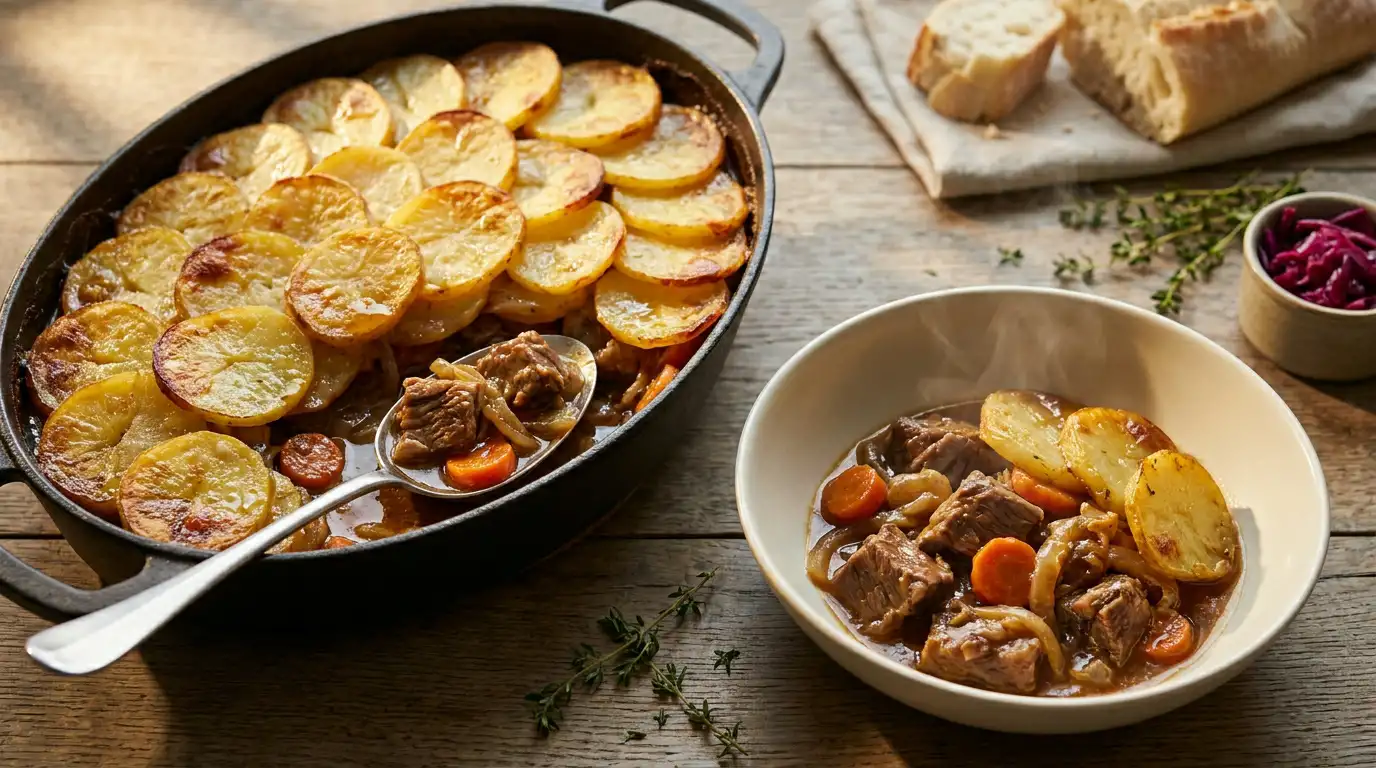
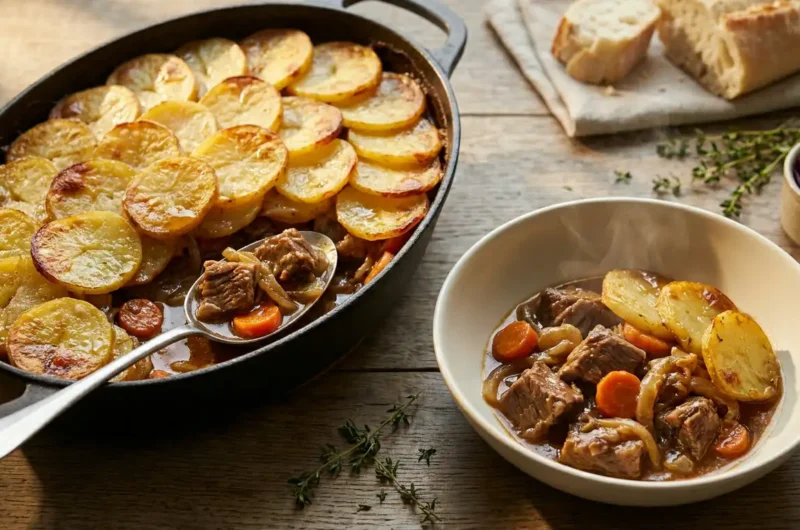
Mary Berry Lancashire Hotpot is a deeply comforting, slow-cooked dish of tender lamb layered beneath a golden, crisp potato topping that gives way to a rich, savoury gravy underneath. The meat turns fall-apart soft during its long time in the oven, and the whole pot fills the kitchen with a warm, herby aroma that signals something proper and satisfying is on the way.
This version is straightforward to put together, with no complicated techniques and no specialist equipment beyond a sturdy casserole dish. It suits a relaxed Sunday afternoon just as well as a midweek dinner when the oven can do the hard work. From start to finish, it is ready in around 2 hours 30 minutes.
Ingredients
For the filling
- 700g lamb shoulder, cut into 3cm chunks
- 2 tablespoons plain flour
- 1 teaspoon salt
- half a teaspoon black pepper
- 2 tablespoons sunflower oil
- 2 medium onions, peeled and sliced into half-moons
- 2 medium carrots, peeled and sliced into rounds
- 2 bay leaves
- 2 sprigs fresh thyme
- 1 tablespoon Worcestershire sauce
- 500ml lamb stock
For the topping
- 800g Maris Piper potatoes, peeled and sliced 4mm thick
- 25g unsalted butter, melted
- half a teaspoon fine sea salt
- a few grinds of black pepper
How to Make Mary Berry Lancashire Hotpot
- Preheat the oven: Set the oven to 170C fan or 190C conventional and place a rack in the lower third. A lower temperature is important here, as the lamb needs a long, gentle heat to turn tender without drying out.
- Coat the lamb: Tip the lamb chunks into a large bowl. Add the plain flour, salt, and black pepper, then toss everything together until each piece is lightly but evenly dusted.
- Brown the meat: Heat one tablespoon of sunflower oil in a wide, heavy-based casserole over a high heat. Add the lamb in two batches, browning each piece for 2 to 3 minutes on each side until deeply coloured. Transfer the browned pieces to a plate and repeat with the second batch, adding a little more oil if needed. This step builds colour and depth into the finished gravy.
- Soften the vegetables: Reduce the heat to medium and add the remaining oil to the same casserole. Add the sliced onions and carrots and cook for 6 to 8 minutes, stirring occasionally, until the onions are soft and just beginning to colour at the edges.
- Build the gravy: Return the browned lamb to the casserole along with the bay leaves, thyme sprigs, and Worcestershire sauce. Pour over the lamb stock and stir gently to combine. The liquid should just about reach the top of the meat.
- Layer the potato topping: Arrange the potato slices over the surface of the filling in overlapping circles, working from the outside in. Brush the top generously with the melted butter and season with salt and pepper. Neat, overlapping slices will create a more even golden crust as they cook.
- Cover and bake: Place a lid on the casserole and transfer to the oven. Bake for 1 hour 30 minutes, then remove the lid and cook for a further 30 to 40 minutes until the potato topping is golden and catching at the edges. The gravy underneath should be bubbling gently around the sides of the dish.
- Rest before serving: Leave the hotpot to rest uncovered for 10 minutes before serving. This allows the gravy to settle slightly and the layers to hold together when spooned into bowls.
Tips for the Best Lancashire Hotpot
Why is my lamb still tough after cooking for the full time?
Lamb shoulder contains connective tissue that needs sustained heat to break down properly. If the meat is still firm, cover the pot again and return it to the oven for a further 20 to 30 minutes. Every oven runs slightly differently, and older or thicker cuts of lamb may need a little more time.
Why has my potato topping gone soft instead of crispy on top?
This usually happens when too much steam is trapped under the lid for too long in the final stage. Make sure the lid comes off for at least the last 30 to 40 minutes of cooking and that the oven is hot enough to dry and colour the surface of the potatoes. If they are still pale, place the dish under a medium grill for 5 minutes at the end.
Why does my gravy taste thin and watery?
The flour coating on the lamb is what thickens the gravy as it cooks. If the gravy still seems thin after the full cooking time, remove the lid and continue baking for an extra 15 minutes to allow some of the liquid to reduce. Using a good-quality lamb stock rather than a very diluted version also makes a noticeable difference to depth of flavour.
Why are my potato slices breaking apart instead of holding their shape?
This is a sign the potatoes were sliced too thin or that a floury variety was used. Maris Piper is the best choice here because it holds its shape under prolonged heat. Aim for slices of around 4mm, which is roughly the thickness of a pound coin.
Why is there not enough gravy left by the time the hotpot finishes cooking?
If the lid does not fit tightly on the casserole, more liquid evaporates during the covered stage. Try covering the surface tightly with a sheet of foil before pressing the lid on top to create a better seal. You can also add an extra 50ml of stock before placing the potato topping if the liquid level looks low.
Serving Suggestions
- Spoon into deep bowls and serve alongside pickled red cabbage, which cuts through the richness of the lamb with a sharp, vinegary contrast.
- Pair with a simple side of buttered green beans or steamed savoy cabbage for a complete meal.
- Serve with thick slices of crusty white bread to mop up the gravy at the bottom of each bowl.
- Add a spoonful of wholegrain mustard on the side for those who prefer a sharper, more pungent finish.
- Finish the meal with a pot of strong Yorkshire tea, which suits the hearty, warming character of this dish.
Storage
Room temperature
Leave the hotpot to cool fully before covering, then store in an airtight container at room temperature for no longer than 2 hours after cooking.
Refrigerator
Transfer cooled leftovers to an airtight container and refrigerate for up to 3 days. To reheat, spoon the portions into an oven-proof dish, cover loosely with foil, and warm at 180C for 20 to 25 minutes until piping hot throughout. Allow the dish to come to room temperature for 20 minutes before reheating for the best results.
Freezing
Portion the cooled hotpot into freezer-safe containers, seal tightly, and freeze for up to 3 months. Defrost overnight in the refrigerator before reheating in the oven as above, making sure the centre is fully hot before serving.
Nutrition
- Calories: 480 kcal
- Carbohydrates: 38g
- Protein: 32g
- Fat: 22g
- Saturated Fat: 9g
- Sodium: 620mg
Nutrition values are estimates based on standard ingredients and may vary depending on the specific products used and the portion size served.
FAQs
Can I use lamb neck fillet instead of lamb shoulder in this recipe?
Yes, lamb neck fillet works well and has a similarly good fat content that keeps the meat moist during slow cooking. Cut it into generous chunks of roughly 3cm so that the pieces do not dry out before the cooking time is up.
Can I make this Lancashire Hotpot the day before?
This is one of those dishes that genuinely benefits from being made ahead. Cook the hotpot fully, leave it to cool, then refrigerate it overnight. The next day, reheat it covered in the oven at 180C for 25 to 30 minutes, then remove the lid for a final 10 minutes to crisp up the potato topping again.
Can I use beef instead of lamb in this recipe?
Braising beef, such as chuck or blade steak, can be used as an alternative. The cooking time stays roughly the same, though the flavour will be distinctly different since beef does not have the same richness as lamb. Use a good beef stock to compensate and keep all the other ingredients the same.
What size casserole dish works best for this recipe?
A 2.5 to 3 litre casserole dish with a well-fitting lid gives the best results at these quantities. Too small a dish means the layers get cramped and the potato topping can buckle. Too large and the gravy spreads thin and risks drying out before the lamb is fully tender.
Can I make this Lancashire Hotpot without alcohol or Worcestershire sauce?
Worcestershire sauce adds a savoury, slightly tangy depth to the gravy. If you need to leave it out, a teaspoon of tomato puree stirred into the stock gives a comparable richness. The dish will still be full of flavour from the browned lamb and the slow cooking time.
Conclusion
Mary Berry Lancashire Hotpot is everything a proper cold-weather dish should be. Tender lamb, a thick and well-seasoned gravy, soft-cooked vegetables, and a golden, butter-crisped potato crust on top all come together in one pot with very little hands-on effort. This recipe makes 4 generous portions, enough to feed a family comfortably or to give two people a meal with welcome leftovers for the next day.
If you give this a go, leave a comment below to share how it turned out or whether you tried any variations. Passing on a well-tested recipe to someone who will enjoy it is always a good thing, so do feel free to share this with anyone who loves a reliable, warming supper. If you enjoyed this, you might also like the Mary Berry Sweet Shortcrust Pastry Recipe, which is another classic worth having in your baking repertoire.
Mary Berry Lancashire Hotpot Recipe
Course: Main CourseCuisine: BritishDifficulty: Easy4
servings20
minutes2
hours10
minutes480
kcal2
hours30
minutesA deeply comforting, slow-cooked dish of tender lamb layered beneath a golden, crisp potato topping with a rich, savoury gravy underneath. Simple to prepare and perfect for family dinners.
Ingredients
700g lamb shoulder, cut into 3cm chunks
2 tablespoons plain flour
1 teaspoon salt
half a teaspoon black pepper
2 tablespoons sunflower oil
2 medium onions, peeled and sliced into half-moons
2 medium carrots, peeled and sliced into rounds
2 bay leaves
2 sprigs fresh thyme
1 tablespoon Worcestershire sauce
500ml lamb stock
800g Maris Piper potatoes, peeled and sliced 4mm thick
25g unsalted butter, melted
half a teaspoon fine sea salt
a few grinds of black pepper
Instructions
- Preheat the oven to 170C fan or 190C conventional and place a rack in the lower third.
- Tip the lamb chunks into a large bowl, add the plain flour, salt, and black pepper, then toss until each piece is lightly dusted.
- Heat one tablespoon of sunflower oil in a wide, heavy-based casserole over a high heat. Brown the lamb in two batches for 2 to 3 minutes each side until deeply coloured, then transfer to a plate.
- Reduce the heat to medium, add the remaining oil, then cook the sliced onions and carrots for 6 to 8 minutes until soft and just beginning to colour at the edges.
- Return the browned lamb to the casserole along with the bay leaves, thyme sprigs, and Worcestershire sauce. Pour over the lamb stock and stir gently to combine.
- Arrange the potato slices over the filling in overlapping circles, brush generously with melted butter, and season with salt and pepper.
- Cover with a lid and bake for 1 hour 30 minutes, then remove the lid and cook for a further 30 to 40 minutes until the potato topping is golden and the gravy is bubbling at the sides.
- Leave the hotpot to rest uncovered for 10 minutes before serving.
Notes
- Brown the lamb in two batches to avoid steaming, which prevents proper colour and depth of flavour.
- Use Maris Piper potatoes sliced to 4mm thickness for a topping that holds its shape and crisps evenly.
- If the potato topping is still pale after the full cooking time, place the dish under a medium grill for 5 minutes.
- Cover the casserole with foil before pressing the lid on if it does not fit tightly, to prevent too much liquid evaporating.
- This dish tastes even better the next day once the gravy has had time to deepen in flavour.
- Lamb neck fillet can be used in place of shoulder and gives equally tender results.