Mary Berry Cheese and Onion Quiche Recipe
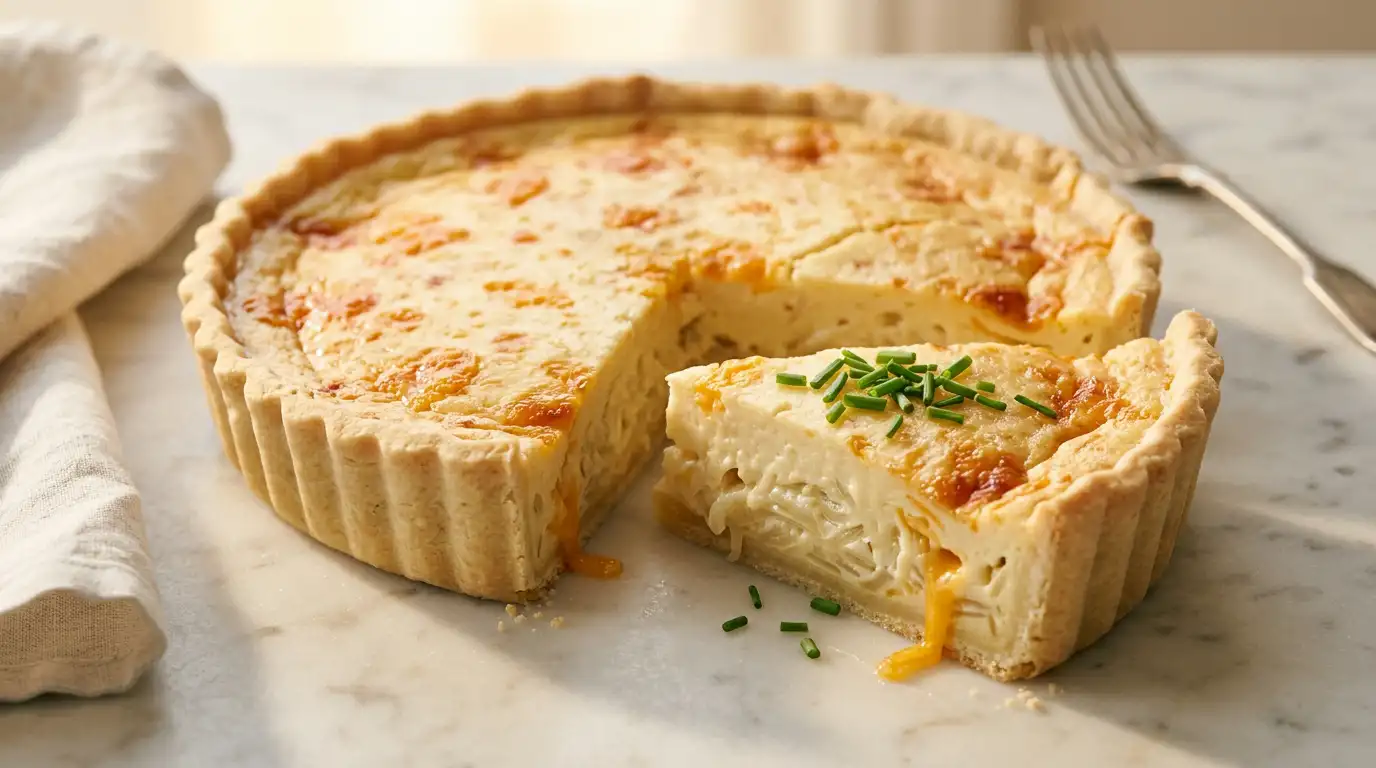
This cheese and onion quiche has a crisp, golden shortcrust pastry shell filled with a silky, set egg custard packed with softened onions and melted mature cheddar. The filling is creamy without being heavy, with a lightly browned top and a clean, savoury flavour all the way through. It holds its shape neatly when sliced, making it just as suitable for a picnic as it is for a weekday lunch.
What makes this version so reliable is the straightforward method. The pastry is made by hand in minutes and blind baked before the filling goes in, which keeps the base firm and prevents any sogginess. It works equally well served warm from the oven or at room temperature the next day. From start to finish, it is ready in around 1 hour 30 minutes.
Ingredients
- For the pastry
- 200g plain flour, plus extra for dusting
- 100g cold unsalted butter, cut into small cubes
- 1 medium egg yolk
- 2 to 3 tablespoons cold water
- Pinch of salt
- For the filling
- 2 medium onions, peeled and finely sliced
- 25g unsalted butter
- 3 large eggs
- 200ml double cream
- 100ml whole milk
- 150g mature cheddar, grated
- Salt and freshly ground black pepper
- A pinch of freshly grated nutmeg
How to Make Mary Berry Cheese and Onion Quiche
- Prepare the pastry: Put the flour, salt, and cold butter into a large mixing bowl. Rub the butter into the flour using your fingertips until the mixture resembles coarse breadcrumbs with no large lumps of butter remaining. This is best done quickly to keep the butter cold.
- Bring the dough together: Add the egg yolk and two tablespoons of cold water, then mix with a palette knife until the dough just begins to clump. Add the third tablespoon of water only if needed. Press the dough gently into a flat disc, wrap in cling film, and chill in the fridge for 20 minutes.
- Line the tin: Preheat the oven to 200C fan 180C. Roll the chilled pastry out on a lightly floured surface to about 3mm thickness and use it to line a 23cm loose-bottomed fluted tart tin. Press it gently into the edges, leaving a small overhang. Prick the base all over with a fork, line with baking paper, fill with baking beans, and bake for 15 minutes. Remove the beans and paper, then return to the oven for a further 5 minutes until the base looks dry and pale golden. Blind baking seals the pastry base and prevents the filling from making it soggy.
- Soften the onions: While the pastry bakes, melt the butter in a frying pan over a low to medium heat. Add the sliced onions and a pinch of salt. Cook gently for 12 to 15 minutes, stirring occasionally, until they are completely soft and translucent but not coloured. Set aside to cool slightly.
- Make the custard: Crack the eggs into a jug and beat lightly. Add the double cream, whole milk, a good pinch of nutmeg, and a generous amount of black pepper. Stir to combine. This ratio of cream to milk gives a set that is firm enough to slice but still rich and smooth in texture.
- Assemble the quiche: Reduce the oven temperature to 180C fan 160C. Scatter the softened onions evenly over the blind-baked pastry base. Reserve a small handful of the grated cheddar and sprinkle the rest over the onions. Pour the egg custard slowly and evenly over the top, then scatter the reserved cheese across the surface.
- Bake the quiche: Place the tin on a baking sheet and bake for 25 to 30 minutes, until the filling is just set with a very slight wobble in the centre and the top is lightly golden brown. Remove from the oven and leave to rest in the tin for at least 10 minutes before slicing, which allows the custard to firm up fully.
Tips for the Best Mary Berry Cheese and Onion Quiche
Why is my quiche filling runny in the middle after baking?
The custard needs enough time at the right temperature to set through to the centre. If the oven is too hot, the edges cook and puff before the middle is ready. Bake at no higher than 180C fan and always leave the quiche to rest in the tin for at least 10 minutes after it comes out of the oven, as it continues to set as it cools.
How do I stop the pastry base from turning soggy?
Thorough blind baking is the key step. The base must look dry and feel firm to the touch before the filling goes in. If it still looks pale and slightly damp after removing the baking beans, put it back for an extra 3 to 5 minutes before adding the custard.
Why does my pastry shrink down the sides of the tin during blind baking?
Pastry shrinks when it has not been chilled for long enough before baking. Always rest the lined tart tin in the fridge for at least 15 minutes after lining it, even if you have already chilled the dough. This relaxes the gluten and holds the shape.
Why does the top of my quiche crack during baking?
Cracking usually means the oven temperature is too high or the quiche has been left in too long. A few small cracks do not affect the flavour, but to avoid them, check the quiche at the 25-minute mark and remove it as soon as the centre has a gentle wobble rather than waiting for it to look completely firm.
Why is the custard grainy or curdled in texture after baking?
A grainy or curdled texture means the eggs have overcooked. This happens when the oven is too hot, causing the proteins in the eggs to tighten and separate from the cream. Keeping the temperature at 180C fan 160C and watching the bake carefully prevents this from happening.
Serving Suggestions
- Serve warm, cut into generous wedges alongside a lightly dressed green salad with a sharp mustard vinaigrette.
- Pair with a bowl of simple tomato soup for a satisfying lunch that works through the cooler months.
- Bring to room temperature and pack into a picnic box with some dressed watercress and crusty white bread.
- Serve alongside roasted cherry tomatoes on the vine for a simple, colourful weekday dinner.
- Offer a small pot of chutney on the side, such as a caramelised onion or spiced apple variety, to complement the cheddar filling.
Storage
Room Temperature
Once cooled completely, the quiche can be kept in an airtight container at room temperature for up to 1 day.
Refrigerator
Store the cooled quiche, loosely covered with foil or in an airtight container, in the fridge for up to 3 days. Bring it to room temperature for 20 to 30 minutes before serving for the best texture, as the custard firms considerably when cold.
Freezing
Once fully cooled, wrap individual slices or the whole quiche tightly in cling film and then a layer of foil, and freeze for up to 2 months. Defrost overnight in the fridge and warm gently in an oven at 160C fan 140C for 10 to 15 minutes before serving.
Nutrition
- Calories: 420 kcal
- Carbohydrates: 28g
- Protein: 14g
- Fat: 29g
- Saturated Fat: 16g
- Sodium: 380mg
Nutrition values are estimates and may vary depending on the specific ingredients used and serving size.
FAQs
Can I use ready-made shortcrust pastry instead of making my own?
Yes, a block of good-quality shop-bought shortcrust pastry works well here and cuts the preparation time significantly. Roll it out and blind bake it in exactly the same way as the homemade version. Pre-rolled pastry sheets can also be used, though they may need trimming to fit a 23cm tin.
Can I make the quiche ahead of time?
The quiche can be made up to a day in advance and stored in the fridge. It actually slices more cleanly once it has had time to cool completely and firm up. Warm it gently before serving or serve it at room temperature.
Can I use a different cheese instead of mature cheddar?
Gruyere works beautifully in this recipe and gives a slightly nuttier, more complex flavour. A combination of half cheddar and half gruyere is a good option. Avoid very soft or wet cheeses, as they can make the custard watery.
What size tin works best for this quiche?
A 23cm loose-bottomed fluted tart tin is the ideal size for this quantity of filling. A 20cm tin can be used but the filling will be deeper and may need an extra 5 to 8 minutes in the oven. Avoid springform cake tins, as the base is not flat enough to give a neat result.
Can I add other vegetables or extras to the filling?
Cooked leeks, lightly sauteed mushrooms, or a small handful of fresh thyme leaves all pair well with the cheese and onion base. Keep any additions well cooked and drained before adding them to avoid introducing excess moisture into the custard.
Conclusion
This mary berry cheese and onion quiche brings together a crisp homemade pastry shell and a creamy, savoury filling in a recipe that is straightforward enough for beginners but produces results worth sharing. The slow-cooked onions mellow into the custard, the cheddar gives a deep, rounded flavour, and the whole thing bakes to a clean, golden finish. This recipe makes 6 generous slices, which is ideal for a family lunch or a light supper with a side salad.
Whether it ends up on a picnic blanket, a weekday table, or a weekend spread, a well-made quiche is always a reliable choice. If you try this recipe, leave a comment below and let us know how it turned out. Share it with someone who loves a proper homemade pastry dish. If you enjoyed this, you might also like the Mary Berry Chocolate Biscuit Cake Recipe, another classic that requires no oven and comes together with minimal effort.
Mary Berry Cheese and Onion Quiche Recipe
Course: Main CourseCuisine: BritishDifficulty: Easy6
servings30
minutes1
hour420
kcal1
hour30
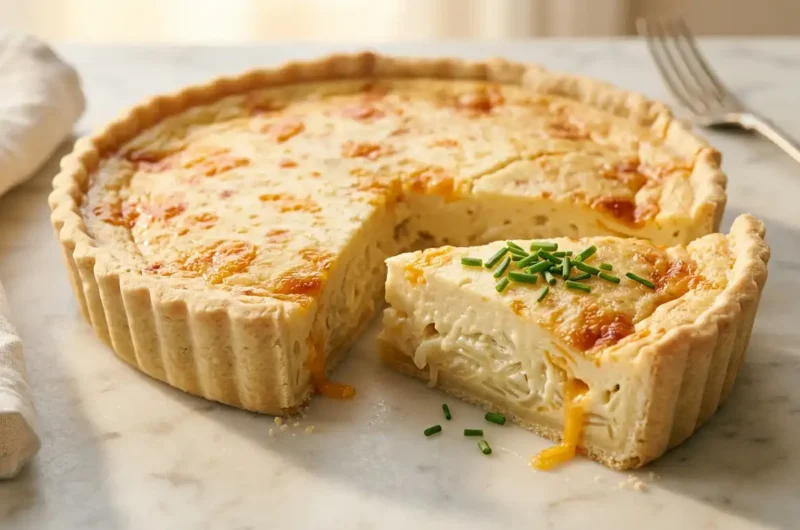
minutesA crisp homemade shortcrust pastry shell filled with a silky egg custard, slow-cooked onions, and melted mature cheddar. This classic British quiche is straightforward to make, holds its shape neatly when sliced, and works equally well warm or at room temperature.
Ingredients
200g plain flour, plus extra for dusting
100g cold unsalted butter, cut into small cubes
1 medium egg yolk
2 to 3 tablespoons cold water
pinch of salt
2 medium onions, peeled and finely sliced
25g unsalted butter
3 large eggs
200ml double cream
100ml whole milk
150g mature cheddar, grated
salt and freshly ground black pepper
a pinch of freshly grated nutmeg
Instructions
- Put the flour, salt, and cold butter into a large mixing bowl and rub together with your fingertips until the mixture resembles coarse breadcrumbs with no large lumps of butter remaining.
- Add the egg yolk and two tablespoons of cold water, then mix with a palette knife until the dough just begins to clump. Press into a flat disc, wrap in cling film, and chill in the fridge for 20 minutes.
- Preheat the oven to 200C fan 180C. Roll the chilled pastry to about 3mm thickness and line a 23cm loose-bottomed fluted tart tin. Prick the base with a fork, line with baking paper, fill with baking beans, and bake for 15 minutes. Remove the beans and paper, then bake for a further 5 minutes until dry and pale golden.
- Melt the butter in a frying pan over a low to medium heat. Add the sliced onions and a pinch of salt and cook gently for 12 to 15 minutes, stirring occasionally, until completely soft and translucent. Set aside to cool slightly.
- Beat the eggs in a jug, then add the double cream, whole milk, nutmeg, and black pepper. Stir to combine.
- Reduce the oven to 180C fan 160C. Scatter the softened onions over the pastry base. Reserve a small handful of cheddar and sprinkle the rest over the onions. Pour the egg custard slowly and evenly over the top, then scatter the reserved cheese across the surface.
- Place the tin on a baking sheet and bake for 25 to 30 minutes until the filling is just set with a very slight wobble in the centre and the top is lightly golden brown. Rest in the tin for at least 10 minutes before slicing.
Notes
- Always blind bake the pastry until it looks dry and firm before adding the filling to prevent a soggy base.
- Chill the lined tart tin in the fridge for 15 minutes before blind baking to stop the pastry shrinking down the sides.
- Cook the onions low and slow until fully soft and translucent, not coloured, for the best flavour in the filling.
- Remove the quiche from the oven while the centre still has a very slight wobble, as it firms up as it cools.
- Gruyere can be used in place of or alongside cheddar for a nuttier, more complex flavour.
- The quiche slices more cleanly once fully cooled, making it an ideal make-ahead dish.