Mary Berry Salmon Mousse Recipe
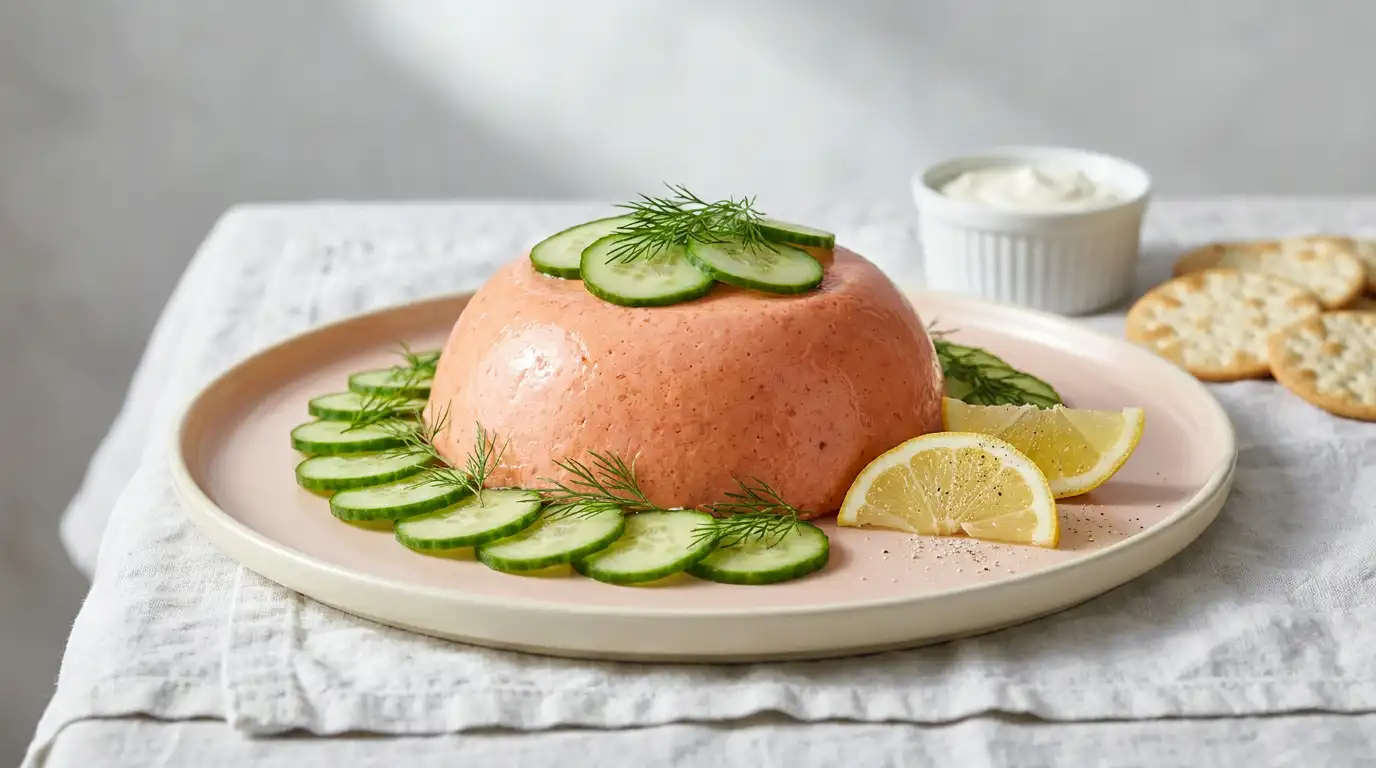
This salmon mousse is a cool, cloud-light starter with a pale rose colour, a silky smooth texture, and a clean, gently savoury flavour that comes from fresh lemon and a touch of Worcestershire sauce. The mixture sets firmly enough to hold its shape when turned out, yet melts on the tongue without any heaviness. It works equally well as an elegant dinner party first course or a centrepiece for a summer buffet spread. From start to finish, including chilling time, it is ready in around 3 hours.
What sets this version apart is its simplicity. There are no complicated techniques here, just careful folding and patient chilling. The result is a mousse that looks far more involved than it actually is, with a uniform, satiny consistency throughout.
Ingredients
For the mousse
- 400g tinned pink salmon, drained and skin removed
- 200g full-fat cream cheese, softened
- 100ml double cream
- 2 teaspoons powdered gelatine
- 3 tablespoons cold water
- 2 tablespoons fresh lemon juice
- 1 teaspoon Worcestershire sauce
- 1 teaspoon tomato puree
- Salt and white pepper, to season
To finish
- Thin cucumber slices, for garnishing
- A few sprigs of fresh dill
- Lemon wedges, to serve
How to Make Mary Berry Salmon Mousse Recipe
- Prepare the gelatine: Sprinkle the powdered gelatine over 3 tablespoons of cold water in a small heatproof bowl. Leave it to swell for 5 minutes, then set the bowl over a pan of barely simmering water and stir gently until the gelatine has completely dissolved into a clear liquid with no visible granules. Set aside to cool slightly but do not allow it to set.
- Flake the salmon: Tip the drained salmon into a large mixing bowl and remove any stray bones and skin. Break the fish into small, even flakes using a fork, working through the whole amount until no large chunks remain. A fine, even texture here means a smoother finished mousse.
- Blend the base: Add the softened cream cheese, lemon juice, Worcestershire sauce, and tomato puree to the flaked salmon. Beat everything together with a wooden spoon until the mixture is fairly smooth and evenly combined, with the cream cheese fully incorporated.
- Add the gelatine: Pour the cooled, dissolved gelatine slowly into the salmon mixture in a thin, steady stream, stirring continuously as you pour. This gradual addition prevents the gelatine from setting unevenly in stringy patches before it is fully mixed in.
- Whip the cream: In a separate clean bowl, whip the double cream to soft peaks, stopping just before it becomes stiff. The cream should hold a gentle droop when you lift the whisk, not stand in firm points.
- Fold in the cream: Add the whipped cream to the salmon mixture in two additions, using a large metal spoon to fold it in with gentle, sweeping motions. Work lightly to keep as much air in the mixture as possible, which gives the finished mousse its lifted texture.
- Season and taste: Season with salt and white pepper, tasting as you go. White pepper is preferable to black here as it blends invisibly into the pale mixture and gives a cleaner warmth.
- Set the mousse: Lightly oil a 600ml mould or six individual ramekins with a flavourless oil, then pour in the mousse mixture. Smooth the top with a small palette knife and cover with cling film. Refrigerate for at least 2 hours, or until completely firm to the touch in the centre.
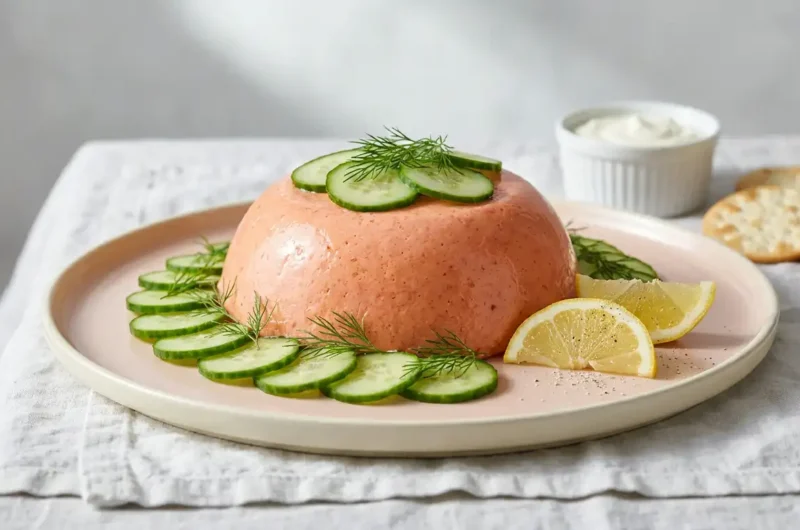
- Turn out and garnish: To unmould, run a thin knife around the edge of the mould, then place a serving plate on top and invert sharply. Decorate with overlapping cucumber slices and sprigs of fresh dill just before bringing to the table.
Tips for the Best Mary Berry Salmon Mousse Recipe
Why has my salmon mousse not set properly after chilling?
The most likely cause is gelatine that was added to the mixture while it was still too warm, which weakens its setting ability. Make sure the dissolved gelatine has cooled to roughly room temperature before adding it to the salmon base, and ensure the mousse chills for the full 2 hours rather than being rushed.
Why does my mousse have a grainy or lumpy texture rather than a smooth finish?
This usually happens when the cream cheese is cold and stiff rather than properly softened before mixing. Take the cream cheese out of the fridge at least 30 minutes before you start, and beat it thoroughly into the salmon before adding any other ingredients.
How do I stop the mousse from sticking to the mould when I turn it out?
A light coating of flavourless oil on the inside of the mould before filling makes a real difference. If the mousse still clings, briefly press a warm, damp cloth against the outside of the mould for about 10 seconds before inverting, which gently loosens the edges.
Why does my mousse taste flat, even after seasoning?
Chilled dishes always need slightly more seasoning than warm ones because cold temperatures dull flavour. Taste the mixture again just before it goes into the fridge and add an extra squeeze of lemon juice if it needs lifting. Worcestershire sauce and a little extra salt often bring the flavour into sharper focus.
Why is the cream sinking to the bottom of the mousse rather than blending evenly?
This happens when the cream is folded in while the salmon mixture is still warm, causing the cream to deflate and settle. Allow the salmon base to cool to room temperature before folding in the whipped cream, and fold gently rather than stirring to keep the mixture stable.
Serving Suggestions
- Serve on individual plates with thin, lightly toasted Melba toast or fine water crackers alongside for scooping
- Spoon onto small rounds of cucumber as individual canapé portions for a drinks party starter
- Accompany with a small green salad dressed in a simple lemon vinaigrette to balance the richness
- Offer a pot of good horseradish cream or crème fraiche on the side for those who enjoy a little heat
- Present on a slate board garnished with lemon wedges and fresh dill for a buffet centrepiece
Storage
Room temperature
The mousse should not be left at room temperature for more than 1 hour once set, as the gelatine and cream will begin to soften and the texture will deteriorate.
Refrigerator
Keep the mousse covered with cling film in the refrigerator for up to 2 days. If stored in the mould, cover it tightly. If it has already been turned out, cover loosely with cling film and serve directly from the fridge, as it does not need to come to room temperature before eating.
Freezing
This mousse does not freeze well because the gelatine and cream separate upon thawing, producing a watery and grainy result. It is best prepared fresh and kept refrigerated until needed.
Nutrition
- Calories: 210 kcal
- Carbohydrates: 2g
- Protein: 14g
- Fat: 16g
- Saturated Fat: 9g
- Sodium: 380mg
Nutrition values are estimates only and may vary depending on the brand of ingredients used and the exact serving size.
FAQs
Can I use fresh salmon instead of tinned salmon in this mousse?
Yes, you can use cooked, cooled fresh salmon fillets instead of tinned. Poach or steam around 350g of fresh salmon until just cooked through, then allow it to cool completely before flaking. The flavour will be slightly more delicate and the colour a little deeper than with tinned fish.
Can I make this salmon mousse the day before serving?
This mousse is actually better made ahead, as an overnight chill allows it to set more firmly and the flavours to develop. Prepare it fully, cover tightly in the mould, and keep it in the fridge for up to 24 hours before turning out and garnishing just before serving.
Can I use agar agar instead of gelatine to make this recipe vegetarian?
Agar agar can be substituted, but it sets firmer and faster than gelatine, which can make the mousse slightly denser in texture. Use around half the quantity that the gelatine calls for, dissolve it in warm water as directed on the packet, and work quickly once it is added to the mixture.
Can I make this mousse in individual ramekins rather than a large mould?
Individual ramekins work very well and make serving much simpler. Six small ramekins of around 100ml each are ideal. The setting time may be reduced by about 20 minutes compared to a single large mould, so check the centre with a light press before removing from the fridge.
Can I add smoked salmon to this recipe for a stronger flavour?
Replacing up to half the tinned salmon with finely chopped smoked salmon gives the mousse a more pronounced, smoky depth. Use around 150g of tinned salmon and 150g of smoked salmon, and reduce the added salt slightly as smoked salmon is already fairly salty.
Conclusion
This Mary Berry salmon mousse recipe is a reliable, elegant dish that delivers a smooth, delicately flavoured result with very little effort. The combination of cream cheese and lightly whipped cream gives the mousse its characteristic silky body, while the lemon juice and Worcestershire sauce keep the flavour bright and clean. The recipe makes one large mould serving 6 people, or 6 individual ramekin portions, making it well suited to dinner parties and buffet tables alike.
Whether presented as a formal starter or part of a relaxed summer spread, this mousse is one of those recipes that looks considerably more impressive than the work involved. Give it a go and let others know how it turned out in the comments below. If you enjoyed this, you might also like the Mary Berry Raspberry Roulade Recipe for another classic that turns heads at the table.
Mary Berry Salmon Mousse Recipe
Course: StarterCuisine: BritishDifficulty: Easy6
servings30
minutes10
minutes210
kcal3
hoursA cool, cloud-light salmon mousse with a pale rose colour, silky smooth texture, and a clean, gently savoury flavour. Made with cream cheese, double cream, and fresh lemon, this elegant starter sets firmly enough to turn out and melts on the tongue without any heaviness.
Ingredients
400g tinned pink salmon, drained and skin removed
200g full-fat cream cheese, softened
100ml double cream
2 teaspoons powdered gelatine
3 tablespoons cold water
2 tablespoons fresh lemon juice
1 teaspoon Worcestershire sauce
1 teaspoon tomato puree
salt and white pepper to season
thin cucumber slices for garnishing
a few sprigs of fresh dill
lemon wedges to serve
Instructions
- Sprinkle the powdered gelatine over 3 tablespoons of cold water in a small heatproof bowl. Leave to swell for 5 minutes, then set over a pan of barely simmering water and stir until fully dissolved into a clear liquid. Set aside to cool slightly.
- Tip the drained salmon into a large mixing bowl, remove any stray bones and skin, then break into small even flakes using a fork until no large chunks remain.
- Add the softened cream cheese, lemon juice, Worcestershire sauce, and tomato puree to the flaked salmon. Beat together with a wooden spoon until smooth and evenly combined.
- Pour the cooled dissolved gelatine into the salmon mixture in a thin steady stream, stirring continuously as you pour to prevent uneven setting.
- In a separate clean bowl, whip the double cream to soft peaks, stopping just before it becomes stiff.
- Add the whipped cream to the salmon mixture in two additions, folding with a large metal spoon using gentle sweeping motions to retain as much air as possible.
- Season with salt and white pepper, tasting as you go and adjusting to your preference.
- Lightly oil a 600ml mould or six individual ramekins, pour in the mousse mixture, smooth the top, cover with cling film, and refrigerate for at least 2 hours until completely firm.
- To unmould, run a thin knife around the edge, place a serving plate on top and invert sharply. Decorate with overlapping cucumber slices and fresh dill sprigs just before serving.
Notes
- Make sure the cream cheese is fully softened before mixing to avoid a lumpy texture.
- Allow the dissolved gelatine to cool to room temperature before adding it to the salmon base.
- Lightly oil the mould before filling to make turning out easier.
- White pepper is preferable to black as it blends invisibly into the pale mixture.
- Taste and adjust seasoning just before refrigerating as cold temperatures dull flavour.
- The mousse is better made the day before as it sets more firmly and the flavours develop overnight.
- This mousse does not freeze well as the gelatine and cream separate upon thawing.