Mary Berry Chicken Soup Recipe
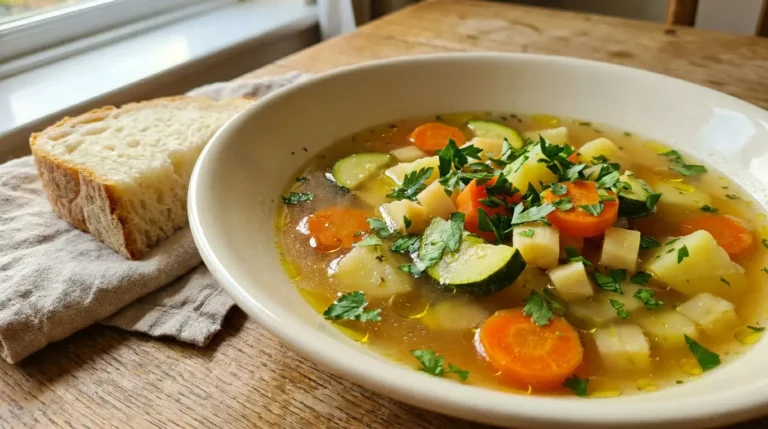
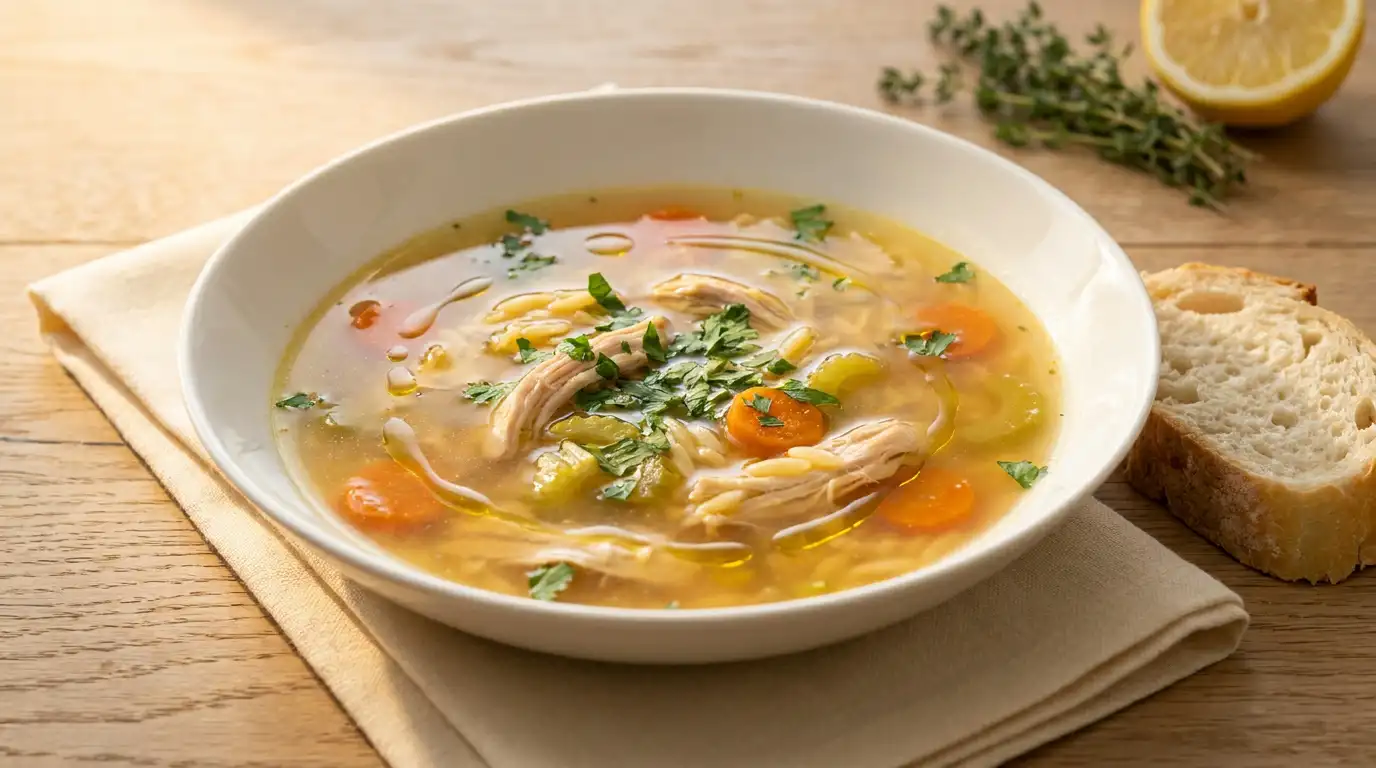
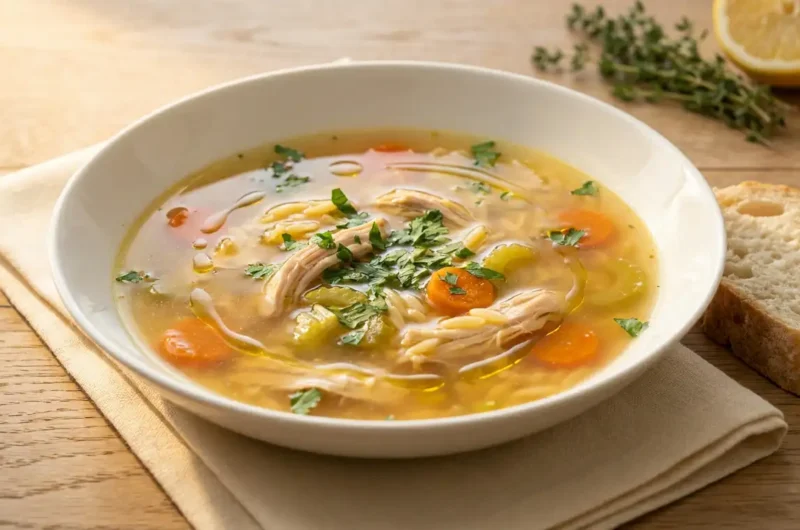
This Mary Berry chicken soup recipe produces a golden, gently fragrant broth with tender shreds of chicken, soft vegetables, and a clean, savoury finish that coats the back of a spoon. The liquid is clear but rich, not heavy, and the vegetables hold their shape without turning mushy.
What sets this version apart is its straightforward method and reliable results every time. There are no complicated techniques and no hard-to-find ingredients, making it well suited to a weekday evening or a slow Sunday cook. From start to finish, it is ready in around 1 hour 15 minutes.
Ingredients
For the soup base
- 1.2 litres cold water
- 900ml good-quality chicken stock
- 600g bone-in chicken thighs, skin removed
- 2 medium carrots, peeled and sliced into rounds about 5mm thick
- 2 sticks celery, sliced
- 1 medium onion, peeled and finely diced
- 2 garlic cloves, peeled and lightly crushed
- 1 bay leaf
- 4 sprigs fresh thyme
- 1 tsp fine sea salt
- ½ tsp ground white pepper
To finish
- 80g dried small pasta or orzo
- 2 tbsp flat-leaf parsley, finely chopped
- 1 tsp fresh lemon juice
- Salt and black pepper to taste
How to Make Mary Berry Chicken Soup Recipe
- Combine the stock and water: Pour the cold water and chicken stock into a large, heavy-based saucepan and place over a medium-high heat. This blend gives you depth of flavour without the soup tasting overly salty from a concentrate alone.
- Add the chicken: Lower the bone-in thighs into the liquid and bring everything slowly to a gentle simmer. Skim off any grey foam that rises to the surface using a spoon, as removing this keeps the broth clear and clean-tasting.
- Add the aromatics and vegetables: Once the liquid is skimmed and simmering steadily, add the diced onion, carrots, celery, garlic, bay leaf, thyme, salt, and white pepper. Stir once, then leave the pot largely undisturbed.
- Simmer the chicken through: Cook on a low, steady simmer for 35 to 40 minutes, keeping the heat low enough that only small, occasional bubbles break the surface. A rolling boil will make the broth cloudy and toughen the chicken.
- Remove and shred the chicken: Lift the thighs out with tongs and place on a board. Pull the meat away from the bones using two forks, discarding the bones and any cartilage. Tear the chicken into rough, generous shreds rather than small pieces so it stays moist.
- Discard the aromatics: Fish out the bay leaf and thyme sprigs from the pan, then return the shredded chicken to the broth.
- Cook the pasta: Increase the heat slightly so the soup returns to a gentle simmer, then stir in the dried pasta. Cook for 8 to 10 minutes, or until the pasta is just tender, stirring occasionally to prevent it sticking to the base.
- Finish and season: Stir through the lemon juice and chopped parsley, then taste and adjust the seasoning. The lemon lifts the whole pot and brightens the savoury notes without making the soup taste citrusy.
Tips for the Best Mary Berry Chicken Soup
Why does my chicken soup taste bland even though I followed the recipe?
Seasoning at the end is just as important as seasoning at the start. Taste the finished soup and add salt in small pinches, stirring after each addition, until the broth tastes full and rounded. The lemon juice also plays a key role here, as it sharpens and defines the flavour.
Why is my broth cloudy instead of clear and golden?
A cloudy broth almost always results from too much heat. If the soup boils vigorously at any point during cooking, the proteins and fat from the chicken emulsify into the liquid and turn it opaque. Keep the heat at a gentle simmer throughout, and skim the foam in the first ten minutes.
Why has my chicken gone dry and stringy in the soup?
Chicken that is overcooked in a simmering broth loses moisture quickly and becomes dry. Remove the thighs from the pot as soon as they are cooked through, around the 35-minute mark, and rest them on a board before shredding. Adding the shreds back in at the end means they only warm through, not cook again.
Why does my soup taste flat after it has been refrigerated overnight?
Cold dulls flavour, especially salt and acidity. Reheat the soup fully over a medium heat, then taste and add a small squeeze of lemon juice and a fresh pinch of salt before serving. A few extra leaves of chopped parsley added at the end also revive the freshness.
Why has my pasta turned mushy and swollen the next day?
Pasta continues to absorb liquid as it sits in the broth. If planning to store the soup, cook the pasta separately and add it to individual bowls at serving time, or stir it into freshly reheated soup just before ladling out.
Serving Suggestions
- Serve in deep warmed bowls with a thick slice of crusty white bread or a soft bread roll for soaking up the broth.
- Ladle over a small handful of freshly cooked egg noodles in the bowl for a more filling, warming meal on cold days.
- Finish each bowl with a few drops of good olive oil and a grind of black pepper just before bringing to the table.
- Pair with a simple green salad dressed in lemon and mustard for a balanced, light lunch.
- Serve alongside plain crackers or oatcakes for a lighter option that works well as a starter course.
Storage
Room Temperature
Leave the soup to cool completely, then transfer to an airtight container and store at room temperature for no more than 2 hours before refrigerating.
Refrigerator
Store the cooled soup in a sealed airtight container in the refrigerator for up to 3 days. If the pasta has been cooked directly in the soup, it will swell and soften further, so reheat gently over a low heat and add a splash of extra stock or water to loosen the consistency before serving.
Freezing
For best results, freeze the soup without the pasta, as cooked pasta does not hold well through freezing and defrosting. Ladle the cooled broth and chicken into freezer-safe containers or zip-lock bags, leaving a small gap at the top for expansion, and freeze for up to 3 months. Defrost overnight in the refrigerator and reheat on the hob over a medium heat until piping hot throughout, then cook fresh pasta separately and add at the point of serving.
Nutrition
- Calories: 245 kcal
- Carbohydrates: 18g
- Protein: 28g
- Fat: 7g
- Saturated Fat: 2g
- Sodium: 680mg
Nutrition values are estimates and may vary depending on the specific ingredients and stock used, as well as the portion size served.
FAQs
Can I use chicken breasts instead of bone-in thighs?
Yes, but the result will be slightly different. Chicken breasts cook faster and produce less flavour in the broth than bone-in thighs. If using breasts, reduce the simmering time to around 20 to 25 minutes and check the meat is cooked through before removing and shredding. The broth will be paler and a little lighter in body.
Can I make this chicken soup ahead of time?
This soup is excellent made a day ahead, as the flavours develop and deepen overnight in the fridge. Store the broth and shredded chicken together but keep any cooked pasta in a separate container. Reheat the soup until fully hot, then stir in fresh pasta cooked separately, or add the stored pasta and give it a minute in the hot broth before serving.
Can I use a leftover roast chicken carcass instead of fresh chicken?
A roast chicken carcass works very well here. Place the carcass in the pot with the vegetables and herbs, cover with water and stock, and simmer for 45 minutes before straining the broth and picking any remaining meat from the bones. The broth may be slightly darker and more intensely flavoured than a fresh chicken version.
Can I add other vegetables to this recipe?
This recipe adapts well to seasonal vegetables. Diced leek, parsnip, or swede can be added at the same stage as the carrots and celery. Avoid vegetables with very strong flavours, such as broccoli or cabbage, as they can overpower the delicate chicken broth. Frozen peas stirred in at the very end add a fresh, bright note.
Is this chicken soup suitable for children?
It is well suited to children. The flavour is mild and the texture is gentle, with nothing sharp or heavily spiced. For younger children, cut the shredded chicken into smaller pieces and cook the pasta a minute or two longer than the packet suggests for a softer bite. Reduce or omit the lemon juice if serving to very young children.
Conclusion
This Mary Berry chicken soup recipe is a reliable, satisfying pot that delivers a golden broth, tender shreds of chicken, and soft vegetables in just over an hour. It makes 4 generous servings, with each bowl full of warmth and clean, savoury flavour. The recipe is simple enough for a midweek cook but good enough to serve to guests, and it holds up beautifully in the fridge for a couple of days.
Whether made from fresh chicken thighs or a leftover roast carcass, the method stays the same and the results are consistently good. Give it a try this week and leave a comment below to share how it turned out. If you found this recipe useful, feel free to share it with someone who could do with a warming bowl of homemade soup. If you enjoyed this, you might also like the Mary Berry marmalade recipe for another classic British kitchen staple worth having in your collection.
Mary Berry Chicken Soup Recipe
Course: Main CourseCuisine: BritishDifficulty: Easy4
servings15
minutes1
hour245
kcal1
hour15
minutesA golden, gently fragrant broth with tender shreds of chicken, soft vegetables, and a clean savoury finish. This beginner-friendly soup is simple to make and ready in just over an hour.
Ingredients
1.2 litres cold water
900ml good-quality chicken stock
600g bone-in chicken thighs, skin removed
2 medium carrots, peeled and sliced into rounds about 5mm thick
2 sticks celery, sliced
1 medium onion, peeled and finely diced
2 garlic cloves, peeled and lightly crushed
1 bay leaf
4 sprigs fresh thyme
1 tsp fine sea salt
½ tsp ground white pepper
80g dried small pasta or orzo
2 tbsp flat-leaf parsley, finely chopped
1 tsp fresh lemon juice
salt and black pepper to taste
Instructions
- Pour the cold water and chicken stock into a large heavy-based saucepan and place over a medium-high heat.
- Lower the bone-in thighs into the liquid and bring slowly to a gentle simmer, skimming off any grey foam that rises to the surface.
- Add the diced onion, carrots, celery, garlic, bay leaf, thyme, salt, and white pepper, stir once, then leave largely undisturbed.
- Cook on a low steady simmer for 35 to 40 minutes, keeping the heat low enough that only small occasional bubbles break the surface.
- Lift the thighs out with tongs, place on a board, and pull the meat away from the bones using two forks, discarding the bones and cartilage.
- Remove the bay leaf and thyme sprigs from the pan, then return the shredded chicken to the broth.
- Increase the heat slightly so the soup returns to a gentle simmer, stir in the dried pasta, and cook for 8 to 10 minutes until just tender.
- Stir through the lemon juice and chopped parsley, then taste and adjust the seasoning before serving.
Notes
- Keep the heat at a gentle simmer throughout to maintain a clear golden broth.
- Skim foam during the first ten minutes for the cleanest flavour.
- Remove chicken thighs promptly at the 35-minute mark to keep the meat moist and tender.
- If storing, keep pasta separate and add fresh to reheated soup at serving time.
- Add a small squeeze of lemon juice when reheating to revive the flavour.
- A leftover roast chicken carcass can be used in place of fresh thighs for a deeper broth.