Mary Berry Mince Pies Recipe
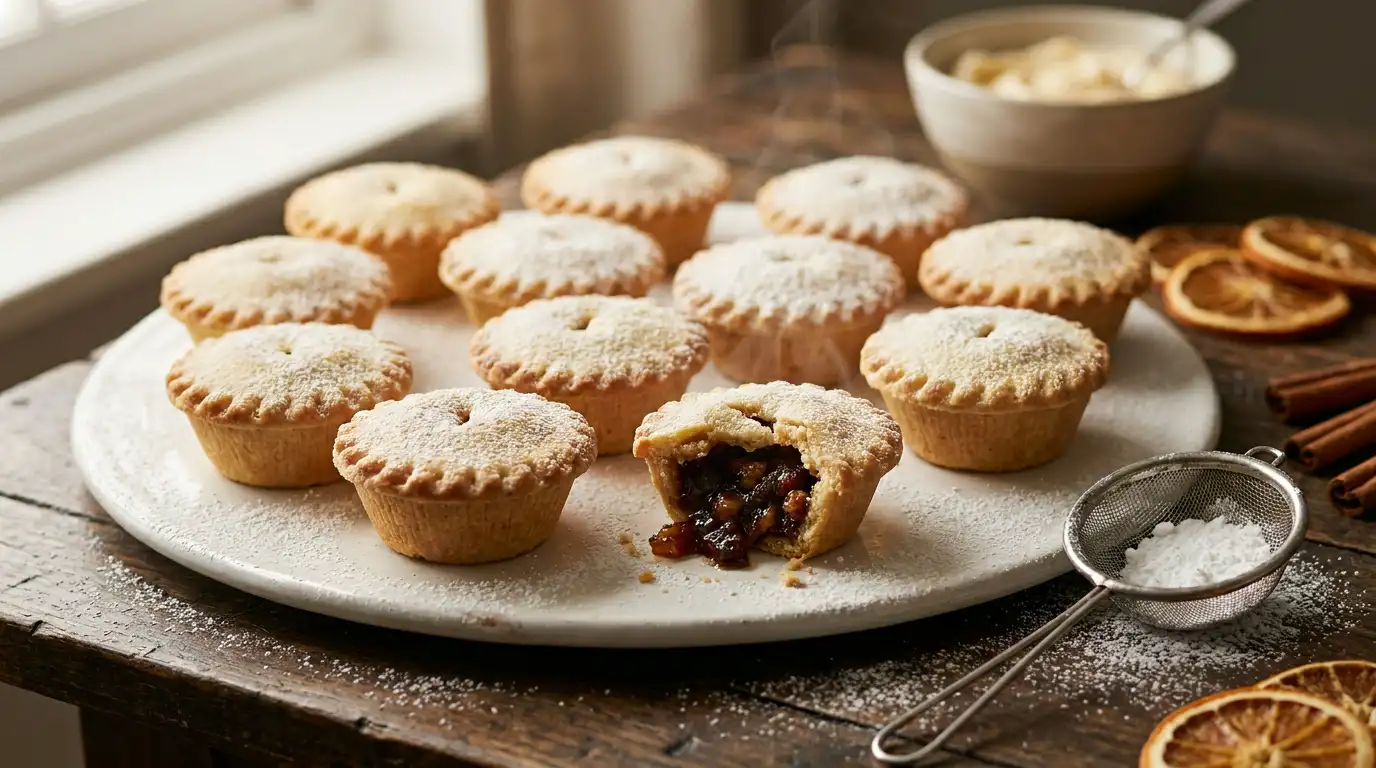
Mary Berry mince pies have a crisp, buttery shortcrust pastry shell with a crumbly, golden finish that gives way to a warmly spiced, fruity mincemeat centre. The filling is fragrant with cinnamon and mixed peel, and the pastry holds its shape beautifully without cracking or shrinking. These are the kind of mince pies that hold together cleanly when lifted from the tin, with a short, tender bite that dissolves without being greasy.
This version keeps things achievable for home bakers, using a straightforward rubbed shortcrust that does not require a food processor. The pastry rests just long enough to relax the gluten, making it far easier to handle than chilled shop-bought alternatives. From start to finish, including chilling time, these are ready in around 1 hour 30 minutes.
Ingredients
For the shortcrust pastry
- 225g plain flour, plus extra for dusting
- 140g cold unsalted butter, cut into small cubes
- 50g icing sugar, sifted
- 1 large egg yolk
- 2 to 3 tablespoons cold water
- Pinch of fine salt
For the mincemeat filling
- 350g good-quality ready-made mincemeat
- Zest of 1 small orange
- Half teaspoon ground cinnamon
To finish
- 1 egg, beaten, for glazing
- Icing sugar, for dusting
How to Make Mary Berry Mince Pies
- Make the pastry: Tip the flour, salt, and icing sugar into a large bowl and add the cold butter cubes. Rub the butter into the flour using your fingertips until the mixture resembles fine, pale breadcrumbs with no visible lumps of butter remaining. Working quickly keeps the butter cold, which is what gives the pastry its short, crumbly texture.
- Bring the dough together: Add the egg yolk and one tablespoon of cold water at a time, cutting through the mixture with a palette knife until it begins to clump. Turn onto a lightly floured surface and press gently into a disc. Do not knead, as overworking the dough will make the pastry tough rather than short.
- Chill the pastry: Wrap the dough disc in cling film and refrigerate for at least 30 minutes. This resting period firms up the butter and relaxes the gluten, making the dough much easier to roll without tearing.
- Prepare the tin and oven: Preheat the oven to 200°C (180°C fan). Lightly grease a 12-hole deep bun tin. Remove the pastry from the fridge and roll it out on a floured surface to around 3mm thickness.
- Cut and line the tin: Use a round cutter, roughly 8cm in diameter, to cut 12 base circles and press each one gently into the tin holes. Avoid stretching the pastry down into the tin as this causes shrinkage during baking.
- Mix and fill: Stir the mincemeat together with the orange zest and cinnamon in a bowl. Spoon a heaped teaspoon of filling into each pastry case, keeping it level with the top of the pastry. Overfilling causes the mixture to bubble over the edges and can stick the pies to the tin.
- Top the pies: Re-roll the remaining pastry and use a slightly smaller cutter, around 6cm, to cut 12 lids. Press each lid gently onto the filled cases and use your fingertip to seal the edges together. Use a small sharp knife to pierce a steam hole in the centre of each lid.
- Glaze and bake: Brush each pie lightly with beaten egg for a deep golden colour. Bake in the centre of the preheated oven for 18 to 20 minutes, until the pastry is a warm, even gold on the top and sides.
- Cool and dust: Leave the pies in the tin for 5 minutes before carefully lifting them onto a wire rack. Once cool, dust generously with icing sugar just before serving.
Tips for the Best Mary Berry Mince Pies
Why does my shortcrust pastry keep cracking when I roll it out?
The dough is likely too cold or too dry. Allow it to sit at room temperature for 5 minutes after removing from the fridge, then press it with your palm a few times to soften it slightly before rolling. If it still cracks at the edges, brush the cracks with a tiny amount of cold water and press them back together.
Why is my pastry shrinking away from the sides of the tin during baking?
Shrinkage happens when the pastry has been stretched into the tin rather than pressed in gently. Always lower the pastry rounds into the holes and ease them into the shape with a light touch, letting the pastry settle naturally without pulling it.
Why is the mincemeat bubbling over the edges and burning?
The cases are being overfilled. One heaped teaspoon per case is the right amount, sitting just below the rim of the pastry. A tight-fitting lid, sealed firmly at the edges, also keeps the filling contained as it heats and expands.
Why are the bottoms of my mince pies soft and pale rather than crisp?
The tin may not be getting enough direct heat from below. Place the tin on the lowest shelf of the oven for the final 5 minutes of baking to help the base colour up properly. A metal tin, rather than silicone, also conducts heat more effectively.
How do I stop the pastry lids from doming and cracking in the oven?
Make sure to pierce a small steam hole in the centre of each lid before baking. Without an escape for the steam from the hot mincemeat, the pressure builds under the pastry and pushes it upward or splits it along the edges.
Serving Suggestions
- Serve warm with a spoonful of brandy butter alongside for a traditional Christmas finish.
- Dust with a thick layer of icing sugar and arrange on a tiered stand for a festive afternoon tea spread.
- Pair with a cup of strong Assam or Darjeeling tea, which balances the sweetness of the mincemeat filling well.
- Offer alongside a small jug of lightly whipped double cream for guests to spoon over themselves.
- Serve at room temperature as part of a dessert platter with shortbread fingers and sliced Christmas cake.
Storage
Room Temperature
Store cooled mince pies in an airtight tin or container at room temperature for up to 3 days.
Refrigerator
Place the pies in an airtight container and refrigerate for up to 5 days. Bring them to room temperature for 20 minutes before serving, as cold pastry loses its short, crumbly texture and can taste dense straight from the fridge.
Freezing
Arrange the fully cooled pies in a single layer on a baking tray, freeze until solid, then transfer to a freezer-safe container or bag with sheets of baking paper between layers. They will keep well for up to 3 months. To defrost, leave them overnight in the fridge or at room temperature for 2 hours, then warm through in a 160°C oven for 8 minutes before serving.
Nutrition
- Calories: 195 kcal
- Carbohydrates: 27g
- Protein: 2.5g
- Fat: 9g
- Saturated Fat: 5.5g
- Sodium: 55mg
Nutrition values are estimates based on standard ingredient quantities and may vary depending on the specific brand of mincemeat used and actual serving size.
FAQs
Can I use shop-bought shortcrust pastry instead of making it from scratch?
Yes, a block of ready-made all-butter shortcrust pastry works well and saves considerable time. Roll it to around 3mm and use it in exactly the same way as the homemade version. Avoid pre-rolled sheets, which are often too thin for a deep bun tin and may split during baking.
Can I make the pastry ahead of time and refrigerate it overnight?
The pastry dough can be made up to 2 days in advance and kept tightly wrapped in the fridge. It can also be frozen at the wrapped disc stage for up to a month. Defrost in the fridge overnight before rolling.
Can I add alcohol to the mincemeat for a richer flavour?
A tablespoon of brandy, rum, or sherry stirred into the mincemeat before filling adds depth and warmth to the finished pies. The alcohol cooks off during baking, leaving behind a rounded, slightly boozy flavour without any harsh edge.
What size cutter works best for a standard 12-hole bun tin?
An 8cm cutter for the bases and a 6cm cutter for the lids works reliably for most standard deep bun tins. If your tin is shallower, reduce the base cutter to 7cm so the pastry does not fold too high up the sides and leave less room for filling.
Can I make these mince pies without a lid for a more open-top style?
Yes. Cut small star or holly shapes from the remaining pastry and press one gently onto the surface of the mincemeat filling in each case before baking. This gives an attractive finish and still allows steam to escape without any additional piercing.
Conclusion
These Mary Berry mince pies deliver exactly what a good festive bake should: a crisp, buttery shortcrust pastry with a warmly spiced mincemeat centre that holds its shape from tin to table. The recipe makes 12 pies, which is a practical batch for gifting, entertaining, or keeping on hand throughout the Christmas period. The method is straightforward enough for a confident beginner, yet the results are properly finished and bakery-worthy.
Whether served warm with brandy butter or cooled and dusted with icing sugar for an afternoon tea spread, these pies are a reliable centrepiece for any festive occasion. If this recipe was helpful, leave a comment below with how yours turned out, or share it with someone who bakes every Christmas. If you enjoyed making this, you might also like the Mary Berry Millionaire Shortbread Recipe, another classic buttery bake that goes down beautifully alongside a cup of tea.
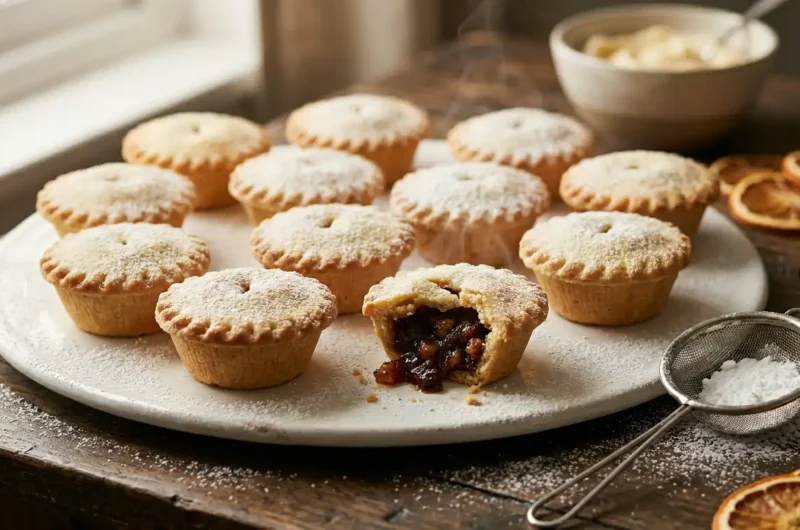
Mary Berry Mince Pies Recipe
Course: DessertCuisine: BritishDifficulty: Easy12
servings40
minutes20
minutes195
kcal1
hour30
minutesA classic festive bake with a crisp, buttery shortcrust pastry shell and a warmly spiced mincemeat filling. These mince pies hold their shape beautifully, with a short, tender bite and a golden finish that makes them perfect for Christmas entertaining and gifting.
Ingredients
225g plain flour, plus extra for dusting
140g cold unsalted butter, cut into small cubes
50g icing sugar, sifted
1 large egg yolk
2 to 3 tablespoons cold water
pinch of fine salt
350g good-quality ready-made mincemeat
zest of 1 small orange
half teaspoon ground cinnamon
1 egg, beaten, for glazing
icing sugar, for dusting
Instructions
- Tip the flour, salt, and icing sugar into a large bowl and add the cold butter cubes. Rub the butter into the flour using your fingertips until the mixture resembles fine, pale breadcrumbs with no visible lumps of butter remaining.
- Add the egg yolk and one tablespoon of cold water at a time, cutting through the mixture with a palette knife until it begins to clump. Turn onto a lightly floured surface and press gently into a disc without kneading.
- Wrap the dough disc in cling film and refrigerate for at least 30 minutes.
- Preheat the oven to 200 degrees Celsius (180 degrees fan). Lightly grease a 12-hole deep bun tin. Roll the chilled pastry out on a floured surface to around 3mm thickness.
- Use a round cutter roughly 8cm in diameter to cut 12 base circles and press each one gently into the tin holes.
- Stir the mincemeat together with the orange zest and cinnamon in a bowl. Spoon a heaped teaspoon of filling into each pastry case, keeping it level with the top of the pastry.
- Re-roll the remaining pastry and use a 6cm cutter to cut 12 lids. Press each lid gently onto the filled cases, seal the edges, and pierce a small steam hole in the centre of each lid.
- Brush each pie lightly with beaten egg and bake in the centre of the oven for 18 to 20 minutes, until the pastry is a warm, even golden colour.
- Leave the pies in the tin for 5 minutes before lifting onto a wire rack. Dust generously with icing sugar before serving.
Notes
- Work quickly when rubbing in the butter to keep it cold for a short, crumbly pastry texture.
- Do not knead the dough as overworking it will make the pastry tough.
- Allow chilled pastry to sit at room temperature for 5 minutes before rolling if it feels too firm.
- Do not overfill the cases as the mincemeat expands during baking and can bubble over the edges.
- Place the tin on the lowest shelf for the final 5 minutes if the pastry bases are pale.
- A tablespoon of brandy or rum stirred into the mincemeat adds extra depth of flavour.