Mary Berry Meringue Recipe
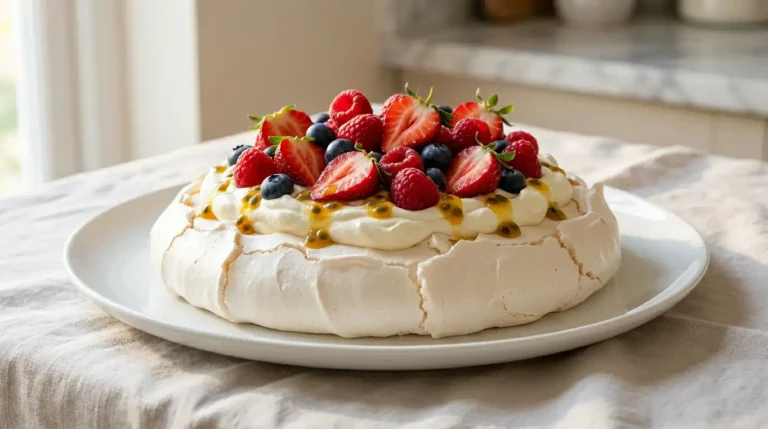
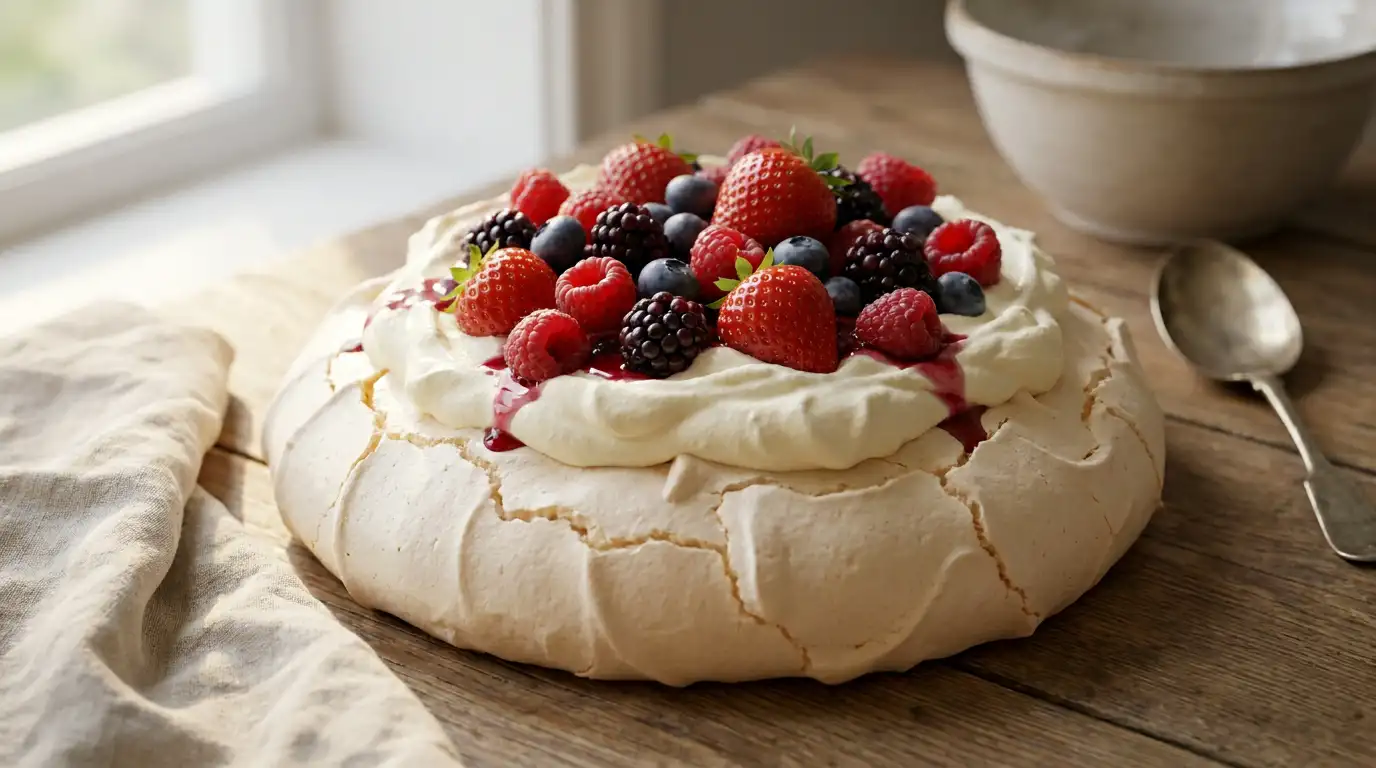
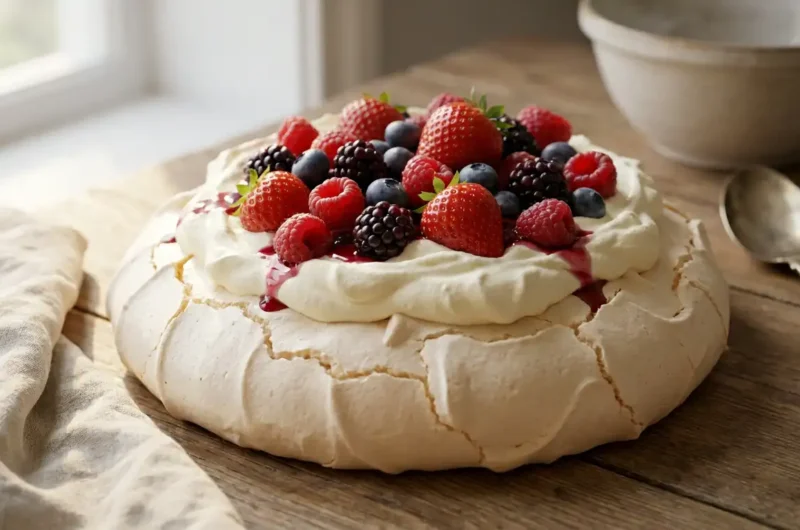
This Mary Berry meringue recipe produces a crisp, snow-white shell that gives way to a soft, marshmallowy centre with every bite. The method is short, the ingredients are few, and the result looks far more impressive than the effort involved. It works equally well as a base for a pavlova or served simply with fruit and cream.
From start to finish, including cooling time in the oven, it is ready in around 2 hours 30 minutes.
Ingredients
For the meringue
- 4 large egg whites, at room temperature
- 225g caster sugar
- 1 tsp cornflour
- 1 tsp white wine vinegar
- 1/2 tsp vanilla extract
How to Make Mary Berry Meringue
- Prepare the oven and tray: Preheat the oven to 140C (120C fan) and line a large baking tray with baking parchment.
- Check the bowl is clean: Wipe a large, grease-free bowl with a little vinegar on kitchen paper before adding the egg whites, as any trace of fat will stop the whites from whisking properly.
- Whisk the whites: Whisk the egg whites on medium speed until they form soft peaks that hold their shape but still look glossy.
- Add the sugar gradually: Add the caster sugar one tablespoon at a time, whisking well between each addition, so the sugar dissolves fully and the mixture stays thick and stable.
- Check the texture: Rub a small amount of the mixture between two fingers; it should feel completely smooth, not gritty, before you move on.
- Fold in the extras: Sift the cornflour over the meringue, then add the vinegar and vanilla extract, folding gently with a metal spoon to keep as much air in the mixture as possible.
- Shape the meringue: Spoon or pipe the mixture onto the lined tray in one large circle, or several individual nests, building the edges slightly higher than the centre.
- Bake low and slow: Bake for around 1 hour 15 minutes until the outside is pale, crisp and firm to touch, then turn off the oven.
- Cool inside the oven: Leave the meringue in the switched-off oven with the door slightly ajar until completely cold, as a sudden change in temperature can cause cracking.
Tips for the Best Mary Berry Meringue
Why did my meringue weep or turn watery?
This usually happens when the sugar was not fully dissolved before baking, so whisk thoroughly between each addition and test the texture between your fingers.
Why did my meringue crack on top?
Cracking is often caused by too high an oven temperature or a sudden draught of cold air, so keep the oven low and let the meringue cool slowly with the door ajar.
Why is my meringue chewy instead of crisp all the way through?
A soft, marshmallowy centre is normal for this style of meringue thanks to the cornflour and vinegar; for a fully crisp meringue throughout, leave out these two ingredients.
Why did my egg whites not whisk up properly?
Any grease or trace of yolk in the bowl will stop the whites from forming stiff peaks, so always use a clean, dry bowl and separate the eggs carefully.
How do I know when the meringue is fully cooked?
The base should lift cleanly away from the parchment and sound slightly hollow when tapped underneath.
Serving Suggestions
- Serve with lightly whipped double cream and fresh strawberries for a simple pavlova
- Top with passion fruit pulp and sliced mango for a fresher, tangy finish
- Crush into shards and layer through cream and berries for an Eton mess
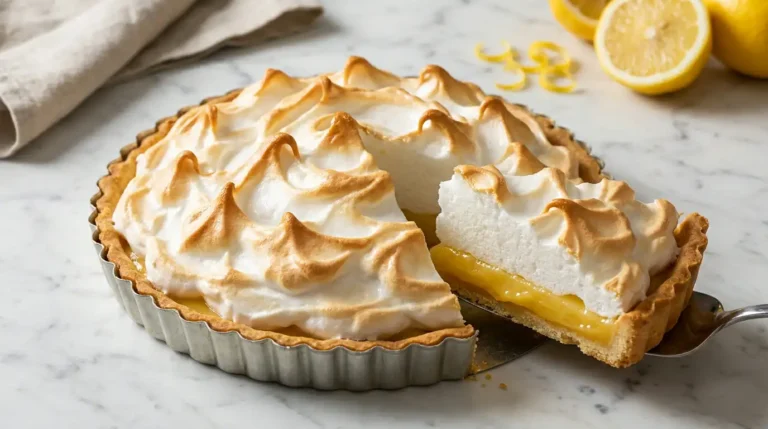
- Sandwich two meringue nests together with cream and lemon curd
- Serve alongside coronation chicken as part of a summer buffet spread
Storage
Room temperature
Store the unfilled meringue in an airtight container for up to 5 days.
Refrigerator
Once filled with cream, keep the meringue in the fridge and eat within 24 hours; bring it out ten minutes before serving so the cream softens slightly.
Freezing
Freeze unfilled meringue shells in a rigid container, separated with baking parchment, for up to 2 months. Defrost at room temperature for around an hour before filling and serving.
Nutrition
- Calories: 120 kcal
- Carbohydrates: 28g
- Protein: 2g
- Fat: 0g
- Saturated Fat: 0g
- Sodium: 25mg
Nutrition values are estimated and will vary depending on the exact ingredients and portion sizes used.
FAQs
Can I use caster sugar instead of granulated sugar for meringue?
Caster sugar is best because the fine grains dissolve quickly; granulated sugar can leave a gritty texture and is not recommended.
Can I make this meringue recipe ahead of time?
Yes, the unfilled meringue can be made up to 5 days in advance and stored in an airtight container, ready to fill just before serving.
Can I freeze meringue?
Unfilled meringue freezes well for up to 2 months, though filled meringue with cream does not freeze successfully.
What size baking tray works best for this recipe?
A large flat baking tray, around 30cm by 40cm, gives enough room to shape one large meringue base or several individual nests with space between them.
Is this meringue recipe suitable for a gluten-free diet?
Yes, this recipe is naturally gluten-free, though it is worth checking that the cornflour used is labelled gluten-free if this is a concern.
Conclusion
This Mary Berry meringue recipe delivers a reliably crisp shell with a soft, chewy centre, using nothing more than egg whites, sugar and a few storecupboard extras. It suits everything from a simple family pudding to a centrepiece pavlova for a special occasion, and the slow, gentle bake makes it far more forgiving than many bakers expect.
The recipe makes one large pavlova base or around 6 individual meringue nests. Give it a try, then leave a comment below to share how yours turned out, or pass the recipe on to a friend who loves baking. If you enjoyed this, you might also like mary berry coronation chicken recipe for another classic to add to your table.
Mary Berry Meringue Recipe
Course: DessertCuisine: BritishDifficulty: Easy6
servings15
minutes1
hour15
minutes120
kcal2
hours30
minutesA classic Mary Berry meringue recipe with a crisp, snow-white shell and a soft, marshmallowy centre. This simple method uses just a handful of ingredients and works beautifully as a pavlova base or a standalone dessert.
Ingredients
4 large egg whites, at room temperature
225g caster sugar
1 tsp cornflour
1 tsp white wine vinegar
1/2 tsp vanilla extract
Instructions
- Preheat the oven to 140C (120C fan) and line a large baking tray with baking parchment.
- Wipe a large, grease-free bowl with a little vinegar on kitchen paper before adding the egg whites.
- Whisk the egg whites on medium speed until they form soft peaks that hold their shape but still look glossy.
- Add the caster sugar one tablespoon at a time, whisking well between each addition until fully dissolved.
- Rub a small amount of the mixture between two fingers to check it feels smooth, not gritty.
- Sift the cornflour over the meringue, then add the vinegar and vanilla extract, folding gently with a metal spoon.
- Spoon or pipe the mixture onto the lined tray in one large circle or several individual nests.
- Bake for around 1 hour 15 minutes until the outside is pale, crisp and firm to touch, then turn off the oven.
- Leave the meringue in the switched-off oven with the door slightly ajar until completely cold.
Notes
- Use a completely clean, grease-free bowl for whisking egg whites.
- Dissolve the sugar fully to avoid a weeping or watery meringue.
- Cool the meringue slowly in the oven to prevent cracking.
- Leave out the cornflour and vinegar for a fully crisp meringue throughout.
- Fill with cream only just before serving to keep the shell crisp.