Mary Berry Salmon en Croute Recipe
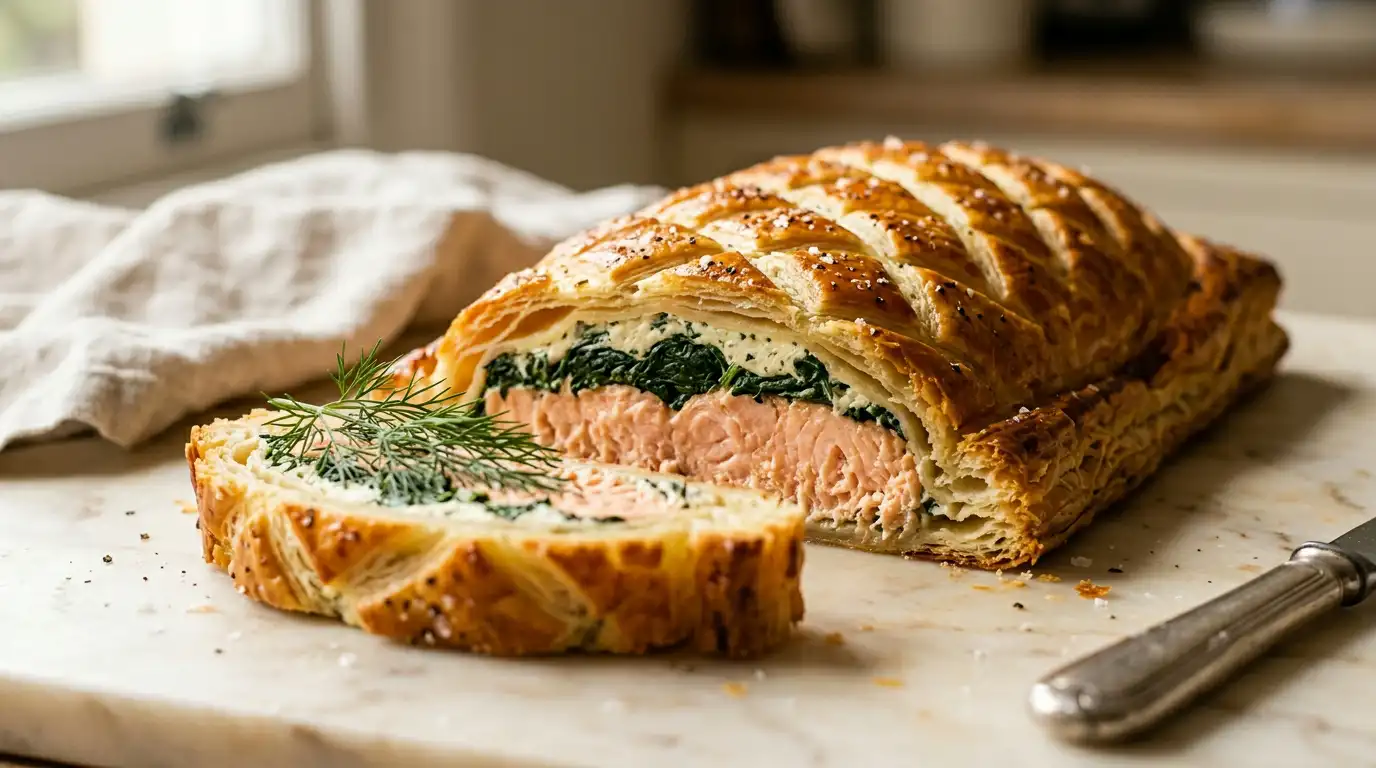
Mary Berry salmon en croute is a showstopping centrepiece of golden, flaky puff pastry wrapped around a thick fillet of salmon and a herby cream cheese filling that melts into the fish as it bakes. The pastry turns deep amber at the edges, the filling stays creamy and fragrant, and the salmon inside remains tender and just cooked through. It is the kind of dish that looks far more demanding than it actually is.
This version keeps the process straightforward without cutting corners on flavour. The combination of cream cheese, dill, and lemon zest works beautifully against the richness of the salmon, and the whole parcel can be assembled ahead of time, making it ideal for a dinner party or a relaxed Sunday lunch. From start to finish, it is ready in around 1 hour.
Ingredients
For The Pastry Parcel
- 500g ready-rolled all-butter puff pastry
- 2 salmon fillets, skinless and boneless, approximately 200g each
- 1 egg, beaten, for glazing
For The Filling
- 150g full-fat cream cheese, at room temperature
- 2 tablespoons fresh dill, finely chopped
- 1 tablespoon fresh flat-leaf parsley, finely chopped
- 1 teaspoon lemon zest, finely grated
- 1 teaspoon lemon juice
- 1 small garlic clove, finely grated
- Salt and freshly ground black pepper, to taste
To Finish
- A small handful of fresh spinach leaves, stems removed
- Flaky sea salt, for sprinkling
How to Make Mary Berry Salmon en Croute
- Preheat the oven: Heat the oven to 200C (180C fan, gas 6) and line a large baking tray with baking parchment. Getting the oven fully up to temperature before the parcel goes in ensures the pastry puffs and crisps immediately rather than turning greasy.
- Make the filling: In a small bowl, combine the cream cheese, dill, parsley, lemon zest, lemon juice, and garlic. Season generously with salt and black pepper, then mix until smooth and evenly combined.
- Prepare the pastry: Unroll the puff pastry on a lightly floured surface and cut it into two rectangles, each roughly 25cm x 18cm. Place one rectangle on the lined baking tray. This becomes the base of the parcel.
- Layer the filling: Arrange the spinach leaves in a single layer down the centre of the base pastry, leaving a 3cm border all the way around. Spoon half the cream cheese mixture over the spinach and spread it lightly. The spinach acts as a barrier, preventing the pastry base from becoming wet during baking.
- Position the salmon: Lay both salmon fillets side by side on top of the cream cheese layer, placing them close together so the finished parcel holds a neat shape when sliced. Season the top of the fish lightly with salt and pepper, then spread the remaining cream cheese mixture over the fillets.
- Seal the parcel: Brush the 3cm border of the base pastry generously with beaten egg. Lay the second pastry rectangle over the top, pressing down firmly around the edges to seal. Use the back of a fork to crimp all the way around the edge, making sure there are no gaps. Trim away any excess pastry with a sharp knife to neaten the shape.
- Glaze and score: Brush the entire surface of the parcel with beaten egg. Using the tip of a sharp knife, lightly score a crosshatch or diagonal pattern across the top, cutting only into the surface and not through the pastry. Scatter a little flaky sea salt over the top. Scoring allows steam to escape and gives the finished parcel an attractive, bakery-style finish.
- Bake until golden: Place the tray in the centre of the preheated oven and bake for 28 to 32 minutes, until the pastry is deep golden brown and crisp all over. Leave the parcel to rest for 5 minutes before slicing, which allows the filling to settle slightly and makes cutting much cleaner.
Tips for the Best Mary Berry Salmon en Croute
Why is the pastry base soggy underneath?
The spinach layer is the key defence here, but it must be completely dry before going into the parcel. Pat the leaves with kitchen paper to remove any surface moisture. A thin smear of cream cheese directly onto the base pastry, before adding spinach, can also help create a barrier.
How do I stop the filling leaking out of the sides during baking?
The most common cause is an inadequate seal. Press the pastry edges firmly together before crimping, and make sure the egg wash reaches right to the very edge of the border. Any small gap will allow the filling to bubble out as the pastry heats up.
How do I know when the salmon is cooked through without cutting into the parcel?
Insert a thin metal skewer into the centre of the parcel for five seconds, then carefully touch it to the inside of your wrist. If it feels warm rather than cool, the salmon is cooked. For fillets of this size at 200C, 28 to 32 minutes is reliably sufficient.
Why did my pastry not puff up evenly?
Uneven puffing usually comes from pressing down too firmly on the top of the parcel when sealing, which compresses the layers and prevents them from rising. Only press along the very border, and handle the rest of the pastry surface as lightly as possible.
How do I get a really deep golden colour on the pastry?
Two coats of egg glaze give a richer, more even colour than one. Apply the first coat before scoring, allow it to dry for two to three minutes, then apply a second coat just before the tray goes into the oven.
Serving Suggestions
- Serve in thick slices alongside tender stem broccoli or fine green beans blanched in salted water until just tender.
- Offer a small jug of hollandaise or a simple lemon butter sauce on the side for a more indulgent finish.
- Pair with a crisp watercress and cucumber salad dressed with white wine vinegar and a little olive oil to cut through the richness of the pastry.
- Plate with small boiled new potatoes tossed in butter and fresh mint for a complete and satisfying main course.
- For a lighter summer table, serve at room temperature with a grain salad of pearl barley, roasted red peppers, and flat-leaf parsley.
Storage
Room Temperature
The baked parcel can sit at room temperature for up to 2 hours before serving, making it suitable for a buffet or relaxed lunch setting.
Refrigerator
Wrap any leftover slices tightly in cling film or place in an airtight container and refrigerate for up to 2 days. Allow the parcel to come back to room temperature for 20 minutes before eating cold, or reheat individual slices in an oven preheated to 180C for around 10 minutes until warmed through and the pastry has crisped up again.
Freezing
The assembled but unbaked parcel freezes well for up to 1 month. Wrap it securely in two layers of cling film and a layer of foil, then freeze flat on a tray. To cook from frozen, unwrap, glaze, and bake at 190C for 40 to 45 minutes, covering loosely with foil for the first 15 minutes to prevent over-browning before the centre is hot.
Nutrition
- Calories: 610 kcal
- Carbohydrates: 38g
- Protein: 34g
- Fat: 36g
- Saturated Fat: 16g
- Sodium: 490mg
Nutrition values are estimates and may vary depending on the specific ingredients used and the exact serving size.
FAQs
Can I use shortcrust pastry instead of puff pastry for salmon en croute?
Puff pastry is the traditional and recommended choice because it creates that characteristic layered, flaky finish. Shortcrust will work in terms of structure, but the result will be denser and less tender. If using shortcrust, reduce the oven temperature slightly to 190C to prevent the pastry base from over-browning.
Can I make salmon en croute the night before?
Yes, the assembled, uncooked parcel can be wrapped in cling film and refrigerated overnight. Take it out of the fridge 20 minutes before baking, then apply the egg glaze and bake as directed. This actually makes it an excellent choice for entertaining because all the preparation is done in advance.
Can I use frozen salmon fillets for this recipe?
Frozen salmon works well, but it must be completely defrosted and thoroughly patted dry before use. Any residual moisture will make the pastry base soggy and can prevent the parcel from sealing properly at the edges.
Can I add spinach alternatives or change the filling ingredients?
Thinly sliced courgette or blanched asparagus tips both work well in place of spinach. For the filling, smoked salmon pate or a soft goats cheese can replace the cream cheese, though the texture will be richer. Tarragon or chives can substitute for dill if preferred.
What size salmon fillets work best for this recipe?
Fillets of approximately 180g to 220g each give the best result, as they cook evenly within the baking time without overcooking before the pastry is golden. Very thick fillets over 250g may benefit from an extra 5 minutes in the oven.
Conclusion
Mary Berry salmon en croute delivers a genuinely impressive result with a manageable method. The crisp, golden pastry, the herby cream cheese filling, and the tender salmon inside make it a versatile dish that works equally well for a weeknight dinner or a dinner party centrepiece. This recipe serves 4 people comfortably, with each portion cut as a generous thick slice from the finished parcel.
If the step-by-step process has made this feel achievable, give it a go and share how it turns out in the comments below. Homemade en croute is one of those recipes that looks complex but rewards any cook who follows the steps carefully. If you enjoyed this recipe, you might also like this mary berry vegetable lasagne recipe for another reliable and satisfying main course.
Mary Berry Salmon en Croute Recipe
Course: Main CourseCuisine: BritishDifficulty: Easy4
servings25
minutes32
minutes610
kcal1
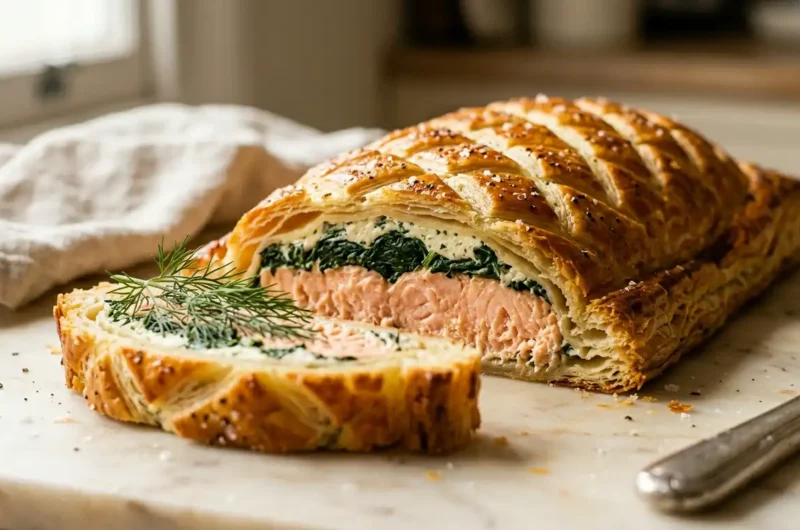
hourA golden, flaky puff pastry parcel wrapped around tender salmon fillets and a herby cream cheese filling with dill, lemon, and garlic. Elegant enough for a dinner party and straightforward enough for a relaxed Sunday lunch.
Ingredients
500g ready-rolled all-butter puff pastry
2 salmon fillets skinless and boneless approximately 200g each
1 egg beaten for glazing
150g full-fat cream cheese at room temperature
2 tablespoons fresh dill finely chopped
1 tablespoon fresh flat-leaf parsley finely chopped
1 teaspoon lemon zest finely grated
1 teaspoon lemon juice
1 small garlic clove finely grated
salt and freshly ground black pepper to taste
a small handful of fresh spinach leaves stems removed
flaky sea salt for sprinkling
Instructions
- Heat the oven to 200C (180C fan, gas 6) and line a large baking tray with baking parchment.
- In a small bowl, combine the cream cheese, dill, parsley, lemon zest, lemon juice, and garlic. Season generously with salt and black pepper and mix until smooth.
- Unroll the puff pastry on a lightly floured surface and cut into two rectangles each roughly 25cm x 18cm. Place one rectangle on the lined baking tray.
- Arrange the spinach leaves in a single layer down the centre of the base pastry, leaving a 3cm border all the way around. Spoon half the cream cheese mixture over the spinach and spread lightly.
- Lay both salmon fillets side by side on top of the cream cheese layer. Season lightly with salt and pepper, then spread the remaining cream cheese mixture over the fillets.
- Brush the 3cm border of the base pastry with beaten egg. Lay the second pastry rectangle over the top and press firmly around the edges to seal. Crimp all the way around with the back of a fork and trim any excess pastry.
- Brush the entire surface with beaten egg. Score a crosshatch or diagonal pattern across the top with a sharp knife, cutting only into the surface. Scatter flaky sea salt over the top.
- Bake in the centre of the oven for 28 to 32 minutes until the pastry is deep golden brown and crisp all over. Rest for 5 minutes before slicing.
Notes
- Pat spinach completely dry before use to prevent a soggy pastry base.
- Apply two coats of egg glaze for a deeper, more even golden colour.
- The assembled unbaked parcel can be refrigerated overnight and baked the next day.
- Use salmon fillets between 180g and 220g each for the most reliable cooking time.
- Press the pastry seal firmly at the border only, handling the top surface as lightly as possible to allow even puffing.