Mary Berry Pavlova Recipe
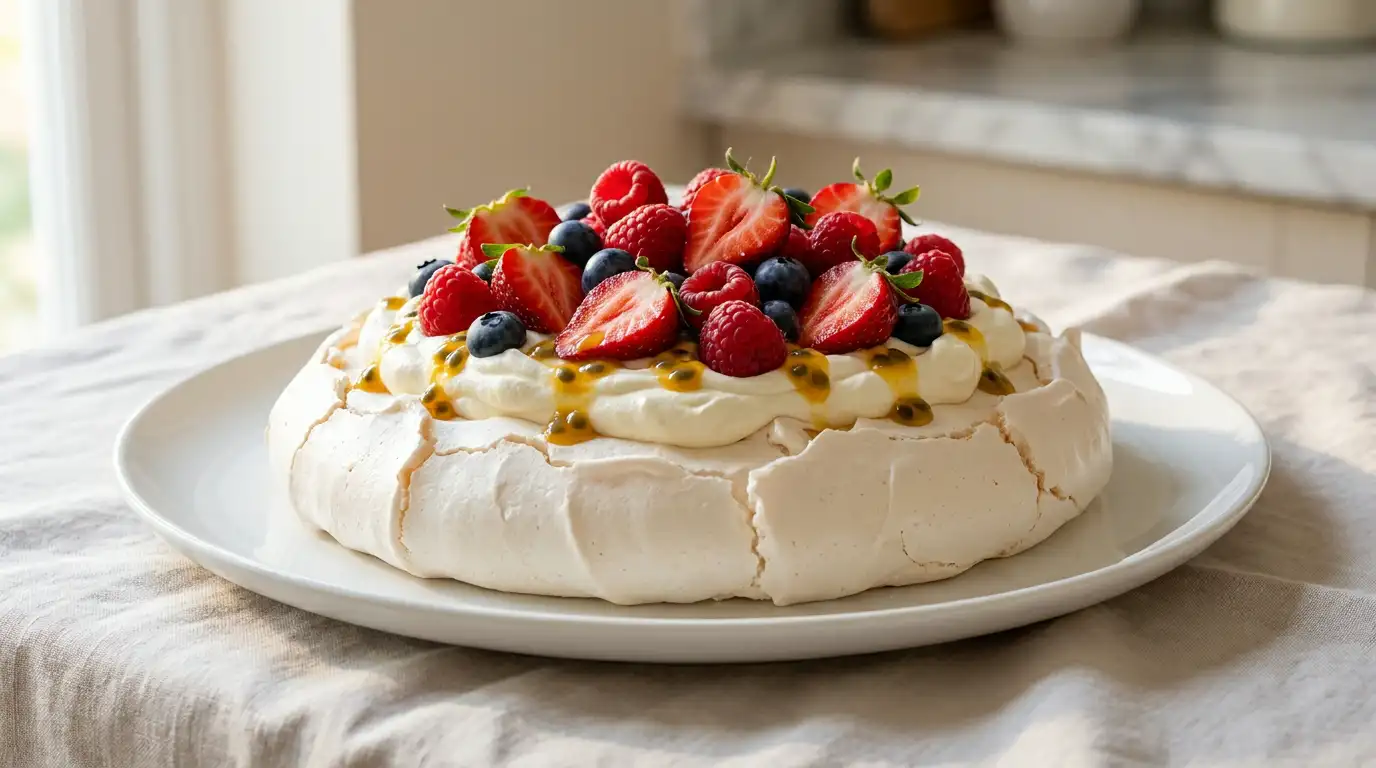
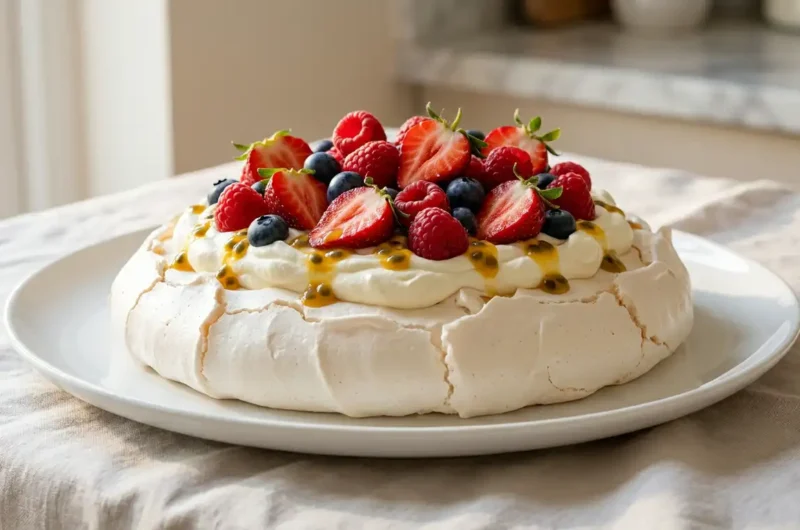
This pavlova is a cloud-white meringue shell with a crisp, papery outer crust that gives way to a soft, marshmallow-like centre. The surface holds a generous layer of softly whipped cream, topped with bright, jewel-toned summer fruits. It is a showstopper that feels celebratory without being fussy. From start to finish, including cooling time, it is ready in around 2 hours 30 minutes.
What sets this version apart is its reliability. The method keeps things straightforward, using a few careful techniques that prevent cracking and weeping, so even a first-time meringue maker can achieve a pavlova that holds its shape beautifully on the plate.
Ingredients
For the meringue
- 4 large egg whites, at room temperature
- 225g caster sugar
- 1 tsp white wine vinegar
- 1 tsp cornflour
- 1 tsp vanilla extract
For the topping
- 300ml double cream
- 1 tbsp icing sugar, sifted
- 150g strawberries, hulled and halved
- 100g raspberries
- 75g blueberries
- 1 passion fruit, pulp scooped out (optional)
How to Make Mary Berry Pavlova Recipe
- Preheat and prepare: Set the oven to 150C (130C fan, gas mark 2). Line a large flat baking tray with non-stick baking parchment, then draw a 23cm circle on the paper and flip it over so the pencil mark faces down.
- Whisk the egg whites: Place the egg whites in a large, grease-free bowl and whisk with an electric hand mixer on a medium speed until they form stiff, glossy peaks that hold their shape when the beaters are lifted. This stage usually takes 3 to 4 minutes, and the bowl must be completely clean, as even a trace of fat will prevent the whites from rising.
- Add the sugar gradually: With the mixer running on high speed, add the caster sugar one tablespoon at a time, waiting about 20 seconds between each addition. Once all the sugar is incorporated, the meringue should be thick, very glossy, and feel smooth between two fingers with no graininess.
- Fold in the finishing ingredients: Sift the cornflour over the meringue, then add the white wine vinegar and vanilla extract. Using a large metal spoon, fold everything in with slow, careful strokes, keeping as much air in the mixture as possible. The cornflour and vinegar work together to create that soft, chewy centre characteristic of a good pavlova.
- Shape the meringue: Spoon the meringue onto the prepared circle on the baking parchment. Use the back of the spoon to spread it out to the edges of the circle, building the sides up slightly higher than the centre to form a shallow nest that will hold the cream and fruit.
- Bake and cool: Place in the centre of the oven and immediately reduce the temperature to 140C (120C fan, gas mark 1). Bake for 1 hour 15 minutes. Once the time is up, turn the oven off and leave the pavlova inside with the door closed until the oven is completely cold, ideally overnight. This slow cooling prevents cracking caused by a sudden change in temperature.
- Whip the cream: Just before serving, pour the double cream and icing sugar into a chilled bowl. Whisk to soft peaks, meaning the cream holds its shape but still has a gentle, pillowy look. Avoid over-whipping, as the cream should be billowy and soft rather than stiff.
- Assemble and serve: Carefully transfer the cooled meringue base to a serving plate or stand. Spoon the whipped cream into the centre hollow. Arrange the prepared strawberries, raspberries, and blueberries over the top, then drizzle with passion fruit pulp if using. Serve immediately once assembled.
Tips for the Best Mary Berry Pavlova
Why did my pavlova crack badly across the top?
Some fine surface cracking is completely normal and will be hidden by the cream. Deep, structural cracking usually happens when the oven temperature was too high or the pavlova cooled too quickly. Always turn the oven off and leave the door closed until the meringue reaches room temperature inside the oven.
Why is my meringue weeping a sticky liquid underneath?
Weeping, or syneresis, happens when undissolved sugar draws moisture from the air. Make sure to add the sugar very slowly during whisking, and always use caster sugar rather than granulated, as its finer crystals dissolve more reliably into the whites.
Why did my pavlova collapse after I took it out of the oven?
A pavlova that collapses or sinks in the centre has usually been under-baked. The outer shell should feel dry and set to the touch before the oven is turned off. If in doubt, give it an additional 10 to 15 minutes, as a slightly longer bake does no harm.
How do I stop the cream from making the meringue go soggy?
Only add the whipped cream and fruit topping immediately before serving. Assembled pavlova does not hold well as the moisture from the cream softens the crust quickly. Keep the meringue base and the cream separate until the last moment.
Why did my egg whites not stiffen properly?
Any trace of egg yolk, grease, or water in the bowl or on the beaters will prevent the whites from whipping. Wipe the bowl and whisk attachments with a piece of kitchen paper dampened with a little white wine vinegar before starting. Using room-temperature egg whites also helps them achieve a greater volume.
Serving Suggestions
- Serve at the table whole, then slice at the last moment so the cream stays in place for presentation.
- Pair with a small pot of coulis made from blended and sieved raspberries for guests who prefer a sharper fruit flavour alongside the sweet meringue.
- Scatter a handful of toasted flaked almonds over the cream for a subtle crunch and a golden contrast against the white surface.
- Serve alongside a pot of freshly brewed Earl Grey tea for an afternoon garden party setting.
- Add a small drizzle of good quality runny honey over the fruit just before serving for a floral, amber finish.
Storage
Room temperature
Store the undecorated meringue base in an airtight container at room temperature for up to 2 days.
Refrigerator
Once assembled with cream and fruit, the pavlova can be refrigerated for up to 4 hours before serving, though the crust will soften over time. Remove from the fridge 15 minutes before serving so the cream loses its chill and sits more softly on the plate.
Freezing
The undecorated meringue base freezes well, wrapped tightly in a double layer of cling film and then placed in a freezer bag, for up to 1 month. Defrost at room temperature for 2 to 3 hours before topping and serving, and avoid refrigerating it after defrosting as condensation will soften the shell.
Nutrition
- Calories: 320 kcal
- Carbohydrates: 42g
- Protein: 3g
- Fat: 15g
- Saturated Fat: 9g
- Sodium: 55mg
Nutrition values are estimates based on the ingredients listed and may vary depending on the specific brands used and actual serving size.
FAQs
Can I make the pavlova meringue base the day before?
Yes, and in fact it is recommended. Leaving the baked meringue inside the switched-off oven overnight gives it the ideal slow cool. Store it in an airtight container the next day and top with cream and fruit just before serving.
Can I use frozen fruit on a pavlova?
Fresh fruit works best as frozen fruit releases a lot of liquid once thawed, which can make the cream runny and cause the meringue to weep faster. If fresh berries are not available, tinned fruit in juice, well drained, is a more stable alternative.
Can I make a smaller pavlova with this recipe?
This recipe makes one large 23cm pavlova, which serves 8 to 10 people. To make individual mini pavlovas instead, spoon the meringue into 8 smaller rounds and reduce the baking time to 45 to 50 minutes at the same temperature, leaving them to cool in the oven as usual.
Can I use granulated sugar instead of caster sugar in pavlova?
Caster sugar is strongly recommended here because it dissolves far more readily into the egg whites. Granulated sugar has larger crystals that may not fully dissolve, which can lead to a grainy texture and a meringue that weeps during baking.
Is pavlova suitable for a gluten-free diet?
Yes, this pavlova is naturally gluten-free as it contains no flour or wheat-based ingredients. Always check the cornflour packaging to confirm it is certified gluten-free if cooking for someone with coeliac disease, as some brands are processed in facilities that handle gluten.
Conclusion
This Mary Berry Pavlova Recipe produces a meringue with a properly crisp shell, a soft and chewy marshmallow interior, and a clean, sweet flavour that lets the cream and fresh fruit topping take centre stage. The recipe makes one large 23cm pavlova, serving 8 to 10 people generously, making it ideal for a summer gathering, a celebration dinner, or a bank holiday lunch table.
With a handful of key techniques, such as slow sugar addition, low oven temperature, and a patient cool-down in the oven, this is a pavlova that delivers consistent results. If this recipe has been useful, leave a comment below with how yours turned out, or share it with someone who has been nervous about making meringue for the first time. If you enjoyed this, you might also like the Mary Berry Lancashire Hotpot Recipe for a comforting, crowd-pleasing main course to precede your pavlova at a dinner party spread.
Mary Berry Pavlova Recipe
Course: DessertCuisine: BritishDifficulty: Easy10
servings20
minutes1
hour15
minutes320
kcal2
hours30
minutesA cloud-white meringue shell with a crisp outer crust and soft marshmallow centre, topped with billowy whipped cream and fresh summer berries. Reliable, beginner-friendly, and perfect for celebrations.
Ingredients
4 large egg whites, at room temperature
225g caster sugar
1 tsp white wine vinegar
1 tsp cornflour
1 tsp vanilla extract
300ml double cream
1 tbsp icing sugar, sifted
150g strawberries, hulled and halved
100g raspberries
75g blueberries
1 passion fruit, pulp scooped out (optional)
Instructions
- Set the oven to 150C (130C fan, gas mark 2). Line a large flat baking tray with non-stick baking parchment, draw a 23cm circle on the paper and flip it over so the pencil mark faces down.
- Place the egg whites in a large, grease-free bowl and whisk with an electric hand mixer on a medium speed until they form stiff, glossy peaks that hold their shape when the beaters are lifted.
- With the mixer running on high speed, add the caster sugar one tablespoon at a time, waiting about 20 seconds between each addition, until the meringue is thick, very glossy, and smooth between two fingers with no graininess.
- Sift the cornflour over the meringue, then add the white wine vinegar and vanilla extract. Fold everything in with slow, careful strokes using a large metal spoon, keeping as much air in the mixture as possible.
- Spoon the meringue onto the prepared circle on the baking parchment. Use the back of the spoon to spread it to the edges, building the sides up slightly higher than the centre to form a shallow nest.
- Place in the centre of the oven and immediately reduce the temperature to 140C (120C fan, gas mark 1). Bake for 1 hour 15 minutes, then turn the oven off and leave the pavlova inside with the door closed until completely cold.
- Just before serving, pour the double cream and icing sugar into a chilled bowl and whisk to soft peaks.
- Transfer the cooled meringue base to a serving plate, spoon the whipped cream into the centre, arrange the berries over the top, and drizzle with passion fruit pulp if using. Serve immediately.
Notes
- Add the sugar very slowly during whisking to prevent weeping.
- Wipe the bowl and beaters with white wine vinegar before starting to remove any grease.
- Leave the pavlova to cool inside the switched-off oven overnight for best results.
- Only add the cream and fruit topping immediately before serving.
- Some fine surface cracking is normal and will be hidden under the cream.
- Use caster sugar, not granulated, for a smooth and stable meringue.