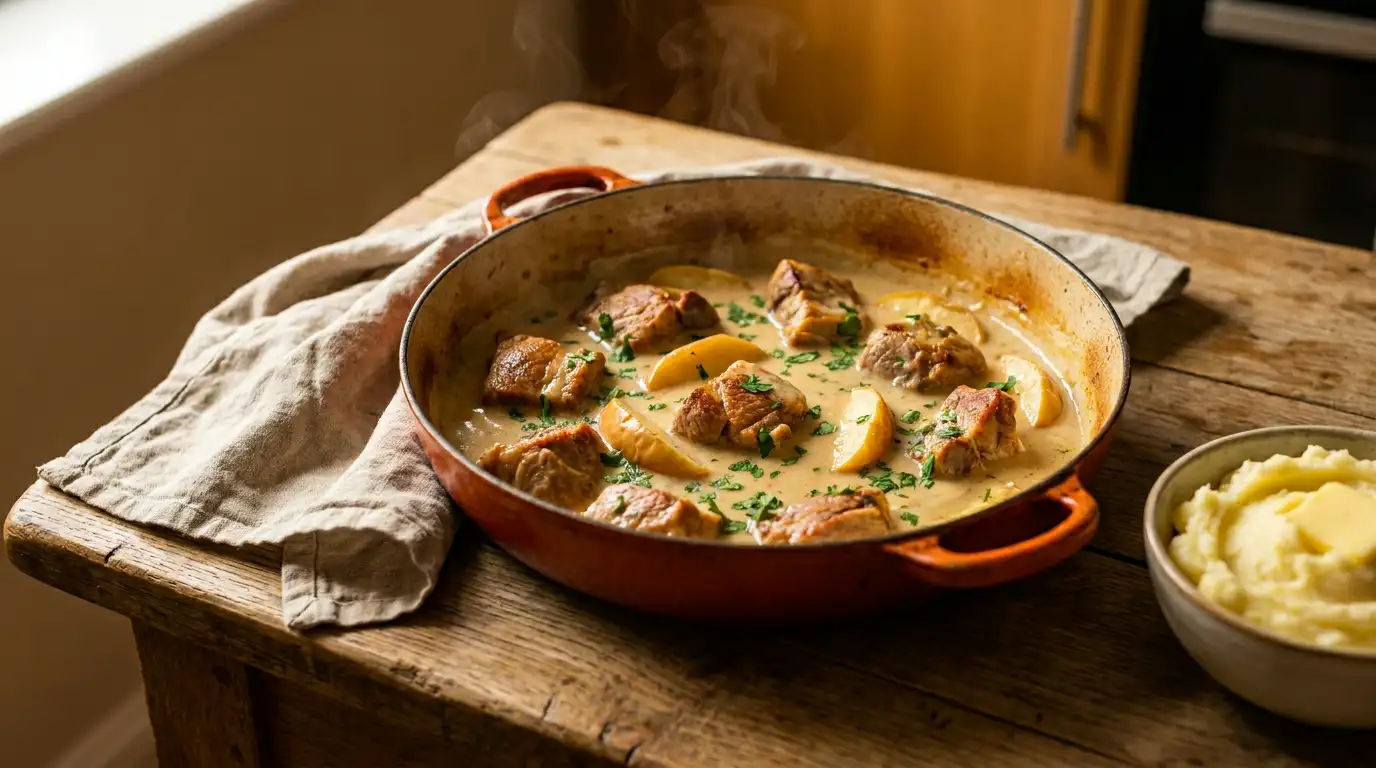
Mary Berry Normandy Pork Casserole Recipe
This Mary Berry Normandy pork casserole is a slow-cooked, golden-brown pork dish finished in a cream and apple sauce that turns silky and pale as it simmers down into the meat. The sauce carries a gentle tartness from dry cider, balanced by the sweetness of softened apple slices and a rounded depth from wholegrain mustard. It is a casserole that fills the kitchen with a warm, savoury aroma long before it reaches the table.
What makes this version reliable is the method. The pork is sealed properly before anything else goes into the pot, which locks in the juices and gives the finished dish a rich, amber colour rather than a pale, watery result. It works well for a relaxed Sunday lunch or a midweek dinner when something hearty is needed. From start to finish, it is ready in around 1 hour 45 minutes.
Ingredients
For the pork
- 700g pork shoulder, cut into 4cm chunks
- 2 tbsp plain flour
- 1 tsp fine sea salt
- ½ tsp ground black pepper
- 2 tbsp sunflower oil
For the casserole base
- 1 large onion, roughly chopped
- 2 garlic cloves, finely sliced
- 2 medium eating apples, peeled, cored, and cut into wedges
- 300ml dry cider
- 200ml chicken stock
- 1 tbsp wholegrain mustard
- 1 tsp dried thyme
- 1 bay leaf
For the finish
- 150ml double cream
- 1 tbsp flat-leaf parsley, finely chopped
How to Make Mary Berry Normandy Pork Casserole
- Preheat the oven: Set the oven to 170°C (150°C fan, Gas 3). Place the rack in the lower-middle position so the casserole dish sits away from the direct heat of the top element.
- Coat the pork: Tip the pork chunks into a large bowl. Add the flour, salt, and pepper, then toss until every piece is evenly coated. Shake off any excess before cooking, as too much flour will make the sauce gluey rather than silky.
- Brown the pork: Heat the sunflower oil in a large, lidded, ovenproof casserole dish over a high heat. Add the pork in two batches, leaving space between each piece, and cook for 3 to 4 minutes per batch without stirring until each side turns a deep golden brown. Transfer the browned pork to a plate and set aside.
- Soften the onion and garlic: Reduce the heat to medium. Add the onion to the same pot and cook for 5 minutes, stirring occasionally, until it softens and turns translucent. Add the garlic and cook for a further minute until fragrant.
- Build the sauce: Pour in the dry cider and use a wooden spoon to scrape up any browned bits from the base of the pot, as these carry most of the flavour. Add the chicken stock, wholegrain mustard, dried thyme, and bay leaf, then stir to combine.
- Add the apples and return the pork: Nestle the apple wedges into the sauce, then place the browned pork on top, along with any resting juices from the plate. The juices add extra body to the finished sauce.
- Slow cook in the oven: Place the lid on the casserole and transfer to the preheated oven. Cook for 1 hour to 1 hour 15 minutes, until the pork is completely tender when pressed with a fork and the sauce has reduced slightly.
- Finish with cream: Remove the casserole from the oven and place it back on the hob over a low heat. Discard the bay leaf. Pour in the double cream and stir gently, allowing the sauce to warm through for 2 to 3 minutes until it turns smooth and pale ivory. Do not boil the cream once added, as this can cause it to split.
- Garnish and serve: Scatter the chopped flat-leaf parsley over the top just before bringing the dish to the table. Serve directly from the casserole pot.
Tips for the Best Mary Berry Normandy Pork Casserole
Why is my pork casserole sauce thin and watery rather than creamy?
This usually happens when the pork was not patted dry before flouring, or when too much liquid was added. Make sure the pork pieces are as dry as possible before coating, and measure the cider and stock carefully rather than estimating.
Why did my cream split when I stirred it into the hot sauce?
The heat was too high when the cream was added. Always return the casserole to a low heat before pouring in the cream, and stir slowly without letting the sauce return to a boil.
Why does my pork still feel tough after the full cooking time?
Pork shoulder can vary in thickness. If the pieces are larger than 4cm or the oven runs slightly cool, add an extra 15 to 20 minutes with the lid on. The meat should break apart easily when pressed.
Why are my apple pieces mushy and completely dissolved in the sauce?
Cooking apples like Bramley break down much faster than eating apples. Use a firm eating apple variety such as Cox or Braeburn, and cut the wedges no thinner than 1.5cm so they hold their shape through the long oven time.
Why did the bottom of my casserole catch and burn before the oven stage?
The hob heat was too high during the browning stage. Use a heavy-based casserole dish such as cast iron or enamelled steel, which distributes heat more evenly and reduces the risk of hot spots catching the flour coating.
Serving Suggestions
- Spoon over a mound of buttery mashed potato, letting the cream sauce soak into the edges.
- Serve alongside steamed green beans or tenderstem broccoli for a clean contrast to the rich, pale sauce.
- Offer crusty white bread at the table to mop up the sauce from the bowl.
- Pair with a lightly dressed watercress salad if serving as part of a larger spread.
- Serve with fluffy white rice for an easy midweek alternative to mashed potato.
Storage
Room temperature
Keep leftovers in an airtight container at room temperature for no more than 2 hours before refrigerating.
Refrigerator
Transfer the cooled casserole to an airtight container and refrigerate for up to 3 days. Reheat gently in a saucepan over a low heat, stirring occasionally, and bring to room temperature for 20 minutes before reheating so the sauce warms evenly without splitting.
Freezing
Portion the cooled casserole into freezer-safe containers, seal tightly, and freeze for up to 2 months. Defrost overnight in the refrigerator and reheat on the hob over a low heat, adding a small splash of chicken stock if the sauce has thickened too much during freezing.
Nutrition
- Calories: 420 kcal
- Carbohydrates: 16g
- Protein: 35g
- Fat: 24g
- Saturated Fat: 11g
- Sodium: 520mg
Nutrition values are estimates and will vary depending on the specific ingredients and brands used, as well as the serving size.
FAQs
Can I use pork loin instead of pork shoulder for this casserole?
Shoulder is recommended because its higher fat content keeps the meat moist through long, slow cooking. Loin is leaner and can dry out during the oven stage, though it will work if the cooking time is reduced to around 45 minutes and the heat is kept low.
Can I make this Normandy pork casserole ahead of time?
Yes, and it actually improves overnight as the flavours settle into the sauce. Cook the casserole fully, allow it to cool, and refrigerate. Reheat the next day over a low heat on the hob, adding the cream fresh during reheating rather than reheating it already in the sauce.
Can I use apple juice instead of dry cider?
Apple juice can be used, but it is sweeter and lacks the slight acidity that balances the cream. If using apple juice, add a small squeeze of lemon juice to the sauce before the oven stage to bring back some of that balance.
Can I make this recipe in a slow cooker instead of the oven?
Yes. Brown the pork and soften the onion on the hob first, then transfer everything except the cream to a slow cooker. Cook on low for 6 to 7 hours or high for 3 to 4 hours. Stir in the cream in the final 15 minutes with the lid off.
Is this Normandy pork casserole suitable for gluten-free diets?
It can be made gluten-free by replacing the plain flour coating with a gluten-free flour blend or cornflour, and by checking that the stock used is certified gluten-free. All other ingredients in this recipe are naturally gluten-free.
Conclusion
This Mary Berry Normandy pork casserole brings together tender pork shoulder, soft apple wedges, and a cream and cider sauce into a dish that is warming, satisfying, and well-suited to both relaxed entertaining and everyday cooking. The method is straightforward: brown well, build the sauce carefully, and let the oven do the work. The result is a creamy, flavour-forward casserole that serves four generously and reheats beautifully the next day.
This recipe yields 4 portions. If you try it, leave a comment below to share how it turned out, and feel free to pass the recipe on to anyone who enjoys a proper slow-cooked pork dish. For something on the sweeter side to follow, you might also enjoy the Mary Berry Apple Strudel Recipe, which uses many of the same warming autumn flavours in a completely different way.

Mary Berry Normandy Pork Casserole Recipe
Course: Main CourseCuisine: FrenchDifficulty: Easy4
servings20
minutes1
hour25
minutes420
kcal1
hour45
minutesA slow-cooked pork shoulder casserole simmered in dry cider and chicken stock, finished with double cream and wholegrain mustard. Tender, golden, and full of rich, savoury flavour.
Ingredients
700g pork shoulder, cut into 4cm chunks
2 tbsp plain flour
1 tsp fine sea salt
half tsp ground black pepper
2 tbsp sunflower oil
1 large onion, roughly chopped
2 garlic cloves, finely sliced
2 medium eating apples, peeled, cored, and cut into wedges
300ml dry cider
200ml chicken stock
1 tbsp wholegrain mustard
1 tsp dried thyme
1 bay leaf
150ml double cream
1 tbsp flat-leaf parsley, finely chopped
Instructions
- Set the oven to 170 degrees C, 150 degrees C fan, Gas 3, and place the rack in the lower-middle position.
- Tip the pork chunks into a large bowl, add the flour, salt, and pepper, and toss until every piece is evenly coated. Shake off any excess before cooking.
- Heat the sunflower oil in a large lidded ovenproof casserole dish over a high heat. Add the pork in two batches and cook for 3 to 4 minutes per batch until each side is a deep golden brown. Transfer to a plate and set aside.
- Reduce the heat to medium, add the onion to the same pot, and cook for 5 minutes until softened and translucent. Add the garlic and cook for a further minute until fragrant.
- Pour in the dry cider and scrape up any browned bits from the base of the pot. Add the chicken stock, wholegrain mustard, dried thyme, and bay leaf, then stir to combine.
- Nestle the apple wedges into the sauce, then place the browned pork on top along with any resting juices from the plate.
- Place the lid on the casserole and transfer to the preheated oven. Cook for 1 hour to 1 hour 15 minutes until the pork is completely tender.
- Remove from the oven, discard the bay leaf, and place the pot on the hob over a low heat. Pour in the double cream and stir gently for 2 to 3 minutes until the sauce turns smooth and pale ivory.
- Scatter the chopped flat-leaf parsley over the top and serve directly from the casserole pot.
Notes
- Pat the pork dry before flouring to help achieve a deep golden sear.
- Brown the pork in two batches to avoid steaming rather than searing.
- Use a firm eating apple such as Cox or Braeburn so the wedges hold their shape during cooking.
- Do not boil the sauce after adding the cream as this can cause it to split.
- Scrape all browned bits from the base of the pot when adding the cider as these carry most of the flavour.
- The casserole tastes even better the next day once the flavours have settled.